

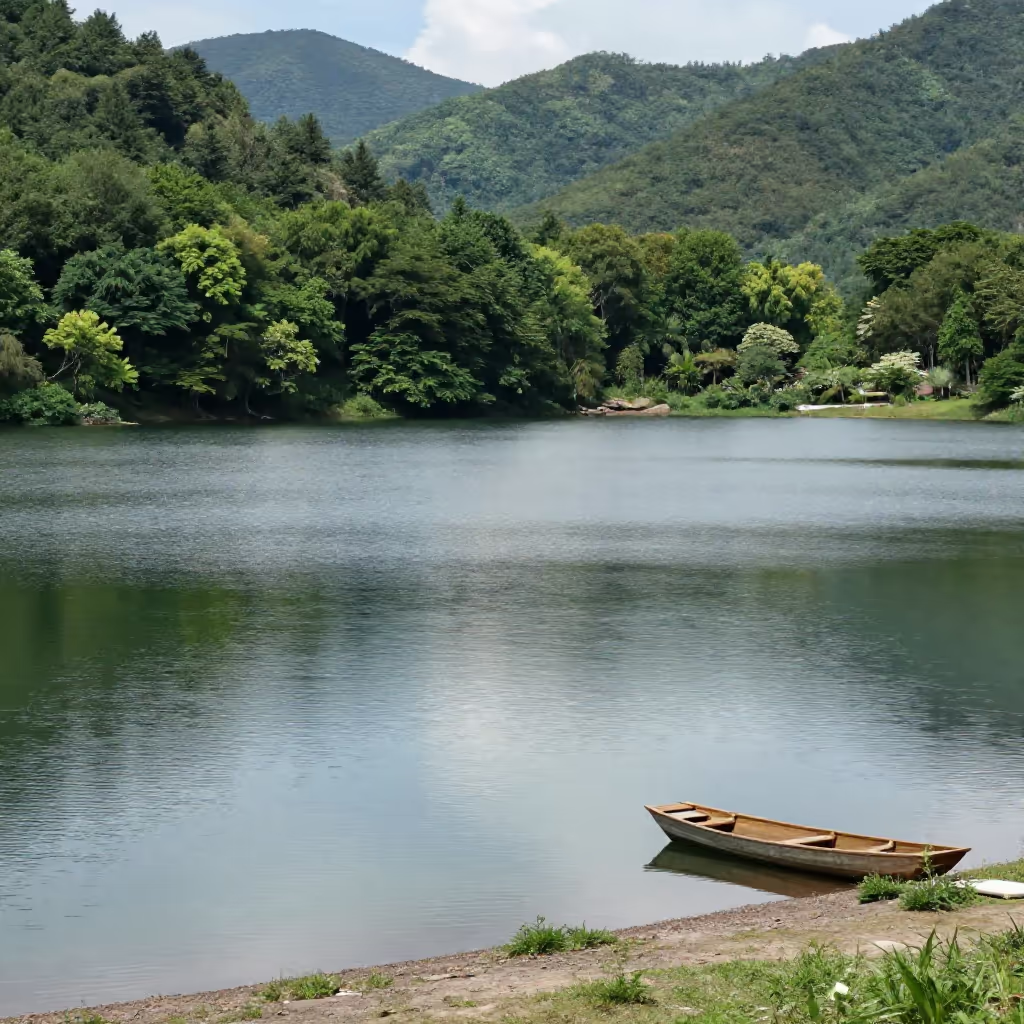
der See
lake
A large, standing body of water in a depression on the land surface, surrounded by land.
EXAMPLE
Im Sommer fahren wir oft zum Schwimmen an den See.
In summer, we often go to the lake to swim.
lake
Loading your saved state.
lake
A large, standing body of water in a depression on the land surface, surrounded by land.
Im Sommer fahren wir oft zum Schwimmen an den See.
In summer, we often go to the lake to swim.
The word 'See' has a completely different meaning depending on the article. 'Der See' (masculine) is an inland body of water, like a lake in the mountains. 'Die See' (feminine) means the sea or the oceans.
Der Chiemsee ist der größte See in Bayern.
Lake Chiemsee is the largest lake in Bavaria.
To describe a location at the lake, you use 'am See' (at the lake) with dative. To express movement toward it, you use 'an den See' (to the lake) with accusative.
Wir treffen uns am See.
We're meeting at the lake.
The word 'See' is often the second part of proper names for lakes or of compound nouns. This can often help you recognize that it refers to a lake.
Der Bodensee grenzt an Deutschland, Österreich und die Schweiz.
Lake Constance borders Germany, Austria, and Switzerland.
pond
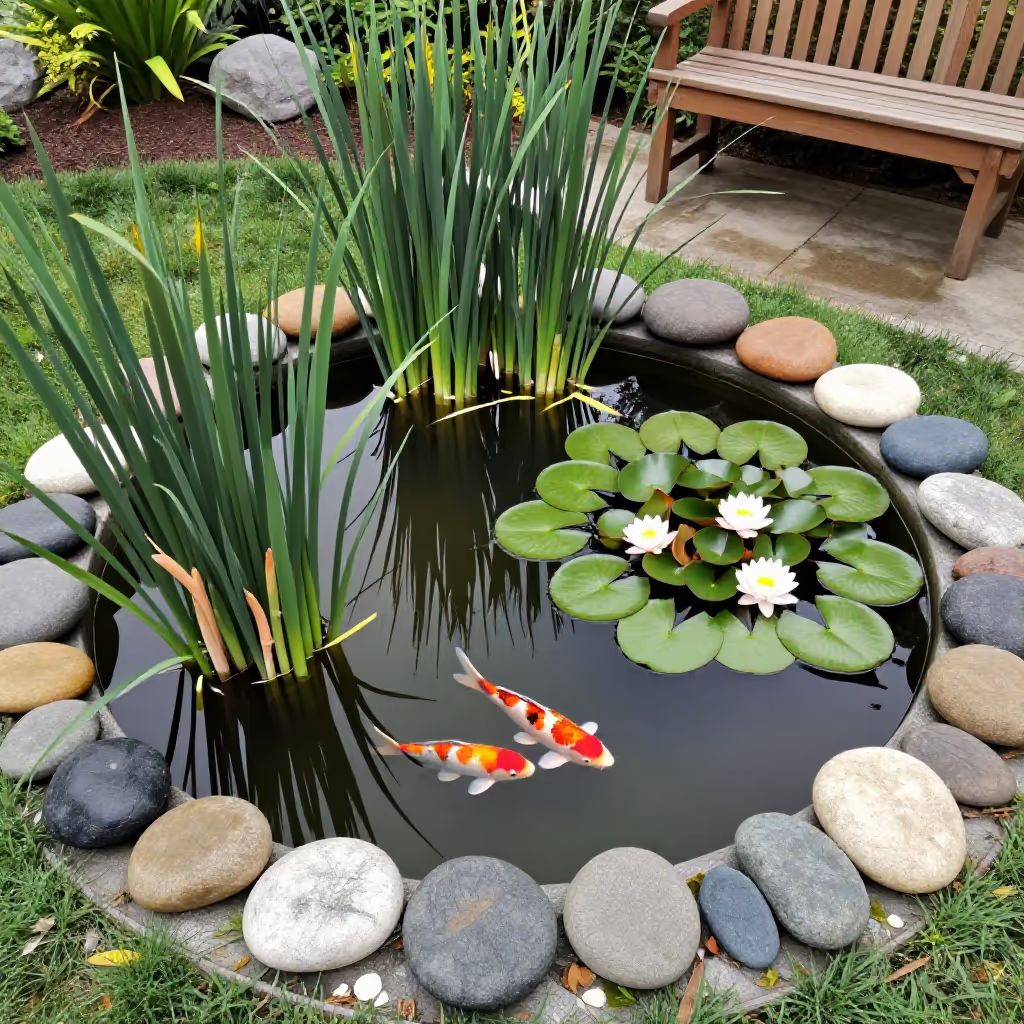
Der See is usually larger and deeper than a Teich. A Teich is small and often artificially created, but it can also have formed naturally. Since the boundaries between small bodies of water are not clear-cut, size, depth, and origin help determine which word to use.
Der See am Ortsrand ist natürlich entstanden und mehrere Meter tief.
The lake on the edge of town formed naturally and is several meters deep.
Der Teich am Ortsrand ist flach und wurde für die Fischzucht angelegt.
The pond on the edge of town is shallow and was created for fish farming.