


das Segel
sail
A large piece of cloth made of sturdy fabric that is attached to a mast in order to propel a ship using the force of the wind.
EXAMPLE
Der starke Wind blähte das weiße Segel des Bootes.
The strong wind filled the boat's white sail.
sail
Loading your saved state.
sail
A large piece of cloth made of sturdy fabric that is attached to a mast in order to propel a ship using the force of the wind.
Der starke Wind blähte das weiße Segel des Bootes.
The strong wind filled the boat's white sail.

to give up
A fixed expression meaning to give up, capitulate, or consider a plan to have failed.
Angesichts der unüberwindbaren Schwierigkeiten musste er die Segel streichen.
In view of the insurmountable difficulties, he had to give up.
The noun 'das Segel' (sail) is the basis for the verb 'segeln' (to sail). When you sail, you travel in a sailboat.
Im Sommer segeln wir oft auf dem See.
In summer, we often sail on the lake.
In connection with sailboats, there are fixed verb combinations. You can 'die Segel setzen' or 'hissen' (to set/hoist the sails, in order to set off) and 'die Segel einholen' or 'bergen' (to take in/lower the sails, in order to stop).
Als der Wind stärker wurde, mussten wir die Segel einholen.
When the wind got stronger, we had to take in the sails.
The idiom 'die Segel streichen' means 'to give up' or 'to capitulate'. In this expression, 'die Segel' remains unchanged; only the verb 'streichen' is conjugated.
Nachdem sein Plan zum dritten Mal scheiterte, strich er die Segel.
After his plan failed for the third time, he gave up.
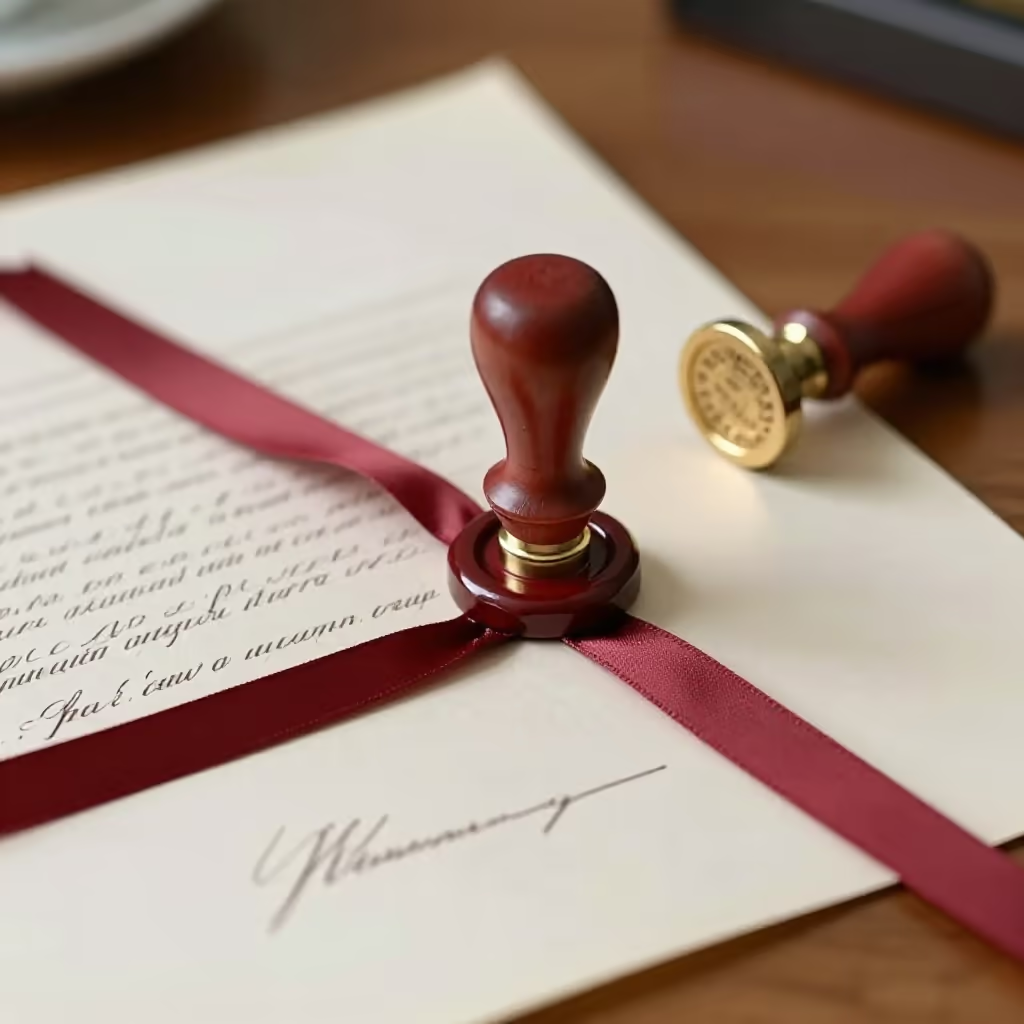
seal
Das Siegel is an official impression used for confirmation or security, whereas das Segel is a piece of cloth used to propel a ship. The words sound similar but refer to completely different objects. A document context points to Siegel, while a maritime context points to Segel.
Der Restaurator prüft vorsichtig das Segel am alten Schiff.
The restorer carefully examines the sail on the old ship.
Der Restaurator prüft vorsichtig das Siegel am alten Dokument.
The restorer carefully examines the seal on the old document.