

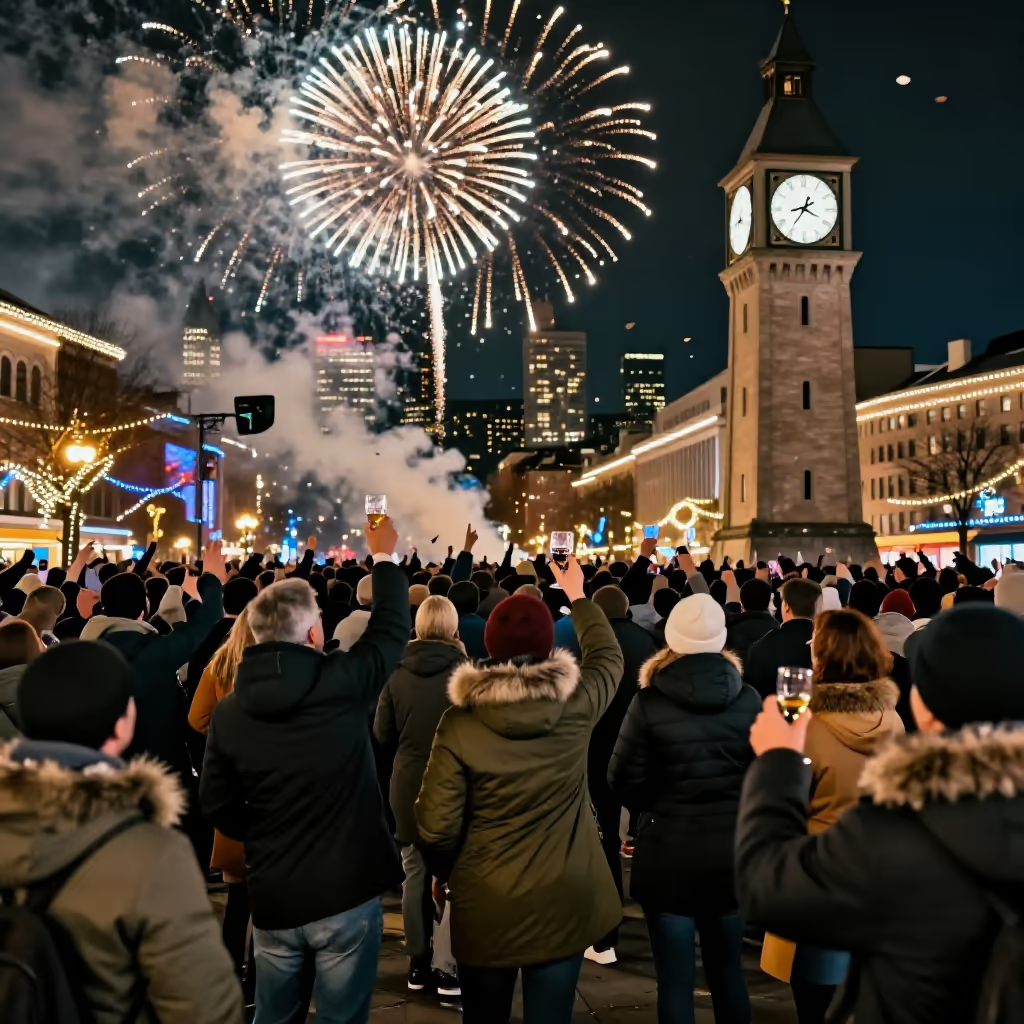
The night from December 31 to January 1, when the turn of the year is celebrated.
example
In der Silvesternacht gibt es in vielen Städten ein großes Feuerwerk.
On New Year's Eve night, there are big fireworks displays in many cities.
Usage tips
Compound word
The word consists of 'Silvester' and 'Nacht' (night). 'Silvester' is the German name for December 31, the last day of the year. The day is named after Pope Sylvester I.
EXAMPLE
Die Party an Silvester war fantastisch.
The party on New Year's Eve was fantastic.
Typical collocations
'Silvesternacht' (New Year's Eve night) is strongly associated culturally with certain activities. Typical verbs are 'feiern' (to celebrate), 'anstoßen' (to toast, with sparkling wine), and 'ein Feuerwerk ansehen' (to watch fireworks).
EXAMPLE
Um Mitternacht stoßen wir in der Silvesternacht auf das neue Jahr an.
At midnight on New Year's Eve night, we toast the new year.
Correct preposition
When you describe what happens on this night, use the preposition 'in' with the dative: 'in der Silvesternacht' (on New Year's Eve night).
EXAMPLE
Was habt ihr in der Silvesternacht gemacht?
What did you do on New Year's Eve night?
Compare with
near_synonym · confusable
Silvesternacht vs Jahreswechsel
turn of the year
'Jahreswechsel' and 'Silvesternacht' are very close in time and are often mentioned together. 'Silvesternacht' means exactly the night from December 31 to January 1. 'Jahreswechsel' is broader and means the transition from the old year to the new one, often including the days around New Year's Eve and New Year's Day. The words can be confused because the turn of the year is celebrated on New Year's Eve night. If you mean the night with celebrations, midnight, and fireworks, 'Silvesternacht' is the better fit. If you mean the general transition into the new year, 'Jahreswechsel' is better.
Silvesternacht
In der Silvesternacht waren die Straßen bis spät voll.
On New Year's Eve night, the streets were crowded until late.