

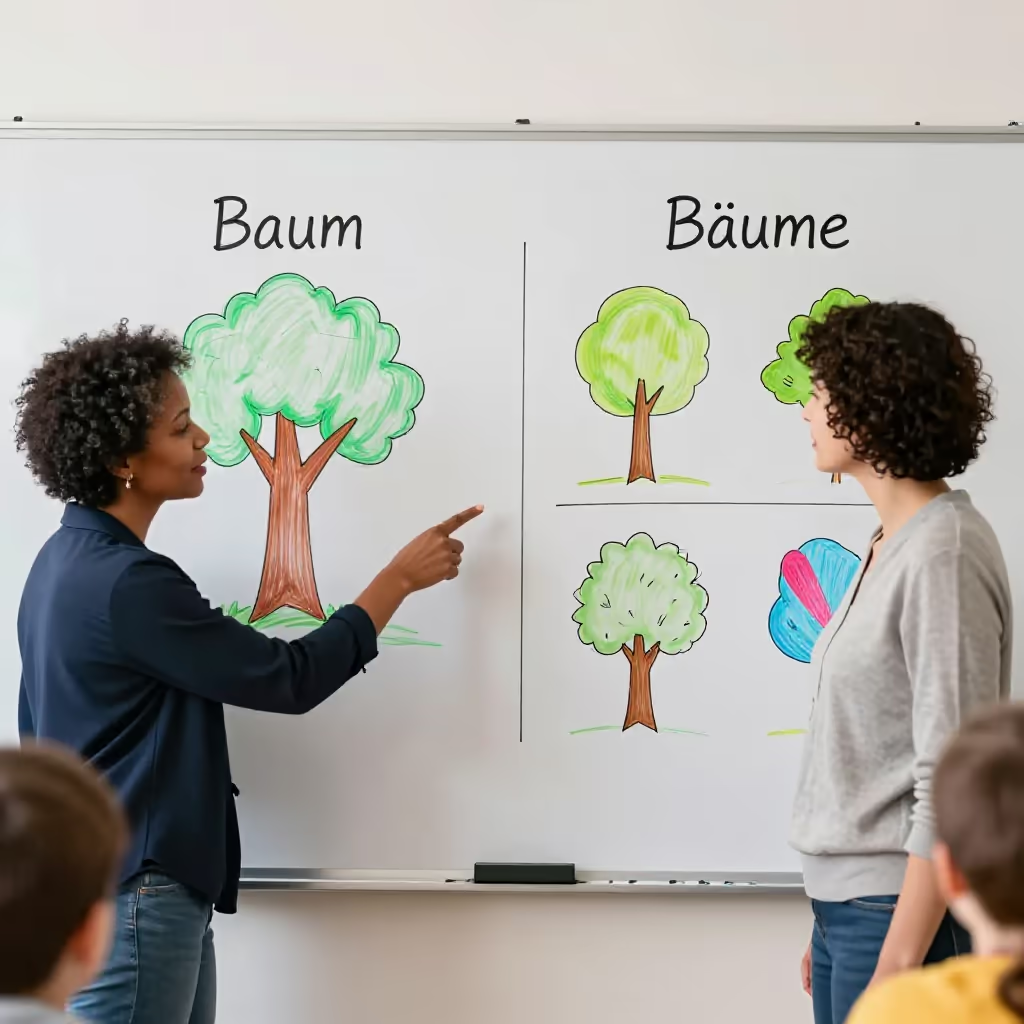
der Singular
singular
The grammatical form that indicates that only one unit of a person, object, or matter is meant. The singular form.
EXAMPLE
Der Singular von „Häuser“ ist „das Haus“.
The singular of 'Häuser' (houses) is 'das Haus' (the house).
singular
Loading your saved state.
singular
The grammatical form that indicates that only one unit of a person, object, or matter is meant. The singular form.
Der Singular von „Häuser“ ist „das Haus“.
The singular of 'Häuser' (houses) is 'das Haus' (the house).
'Singular' (singular) is a grammatical technical term from Latin. It is mainly used in language lessons or in linguistics.
Im Unterricht haben wir gelernt, wie man den Singular und Plural von Nomen bildet.
In class, we learned how to form the singular and plural of nouns.
To express that a word is in the singular form, you use the fixed phrase 'im Singular stehen' (to be in the singular).
Das Verb „geht“ steht in der dritten Person Singular.
The verb 'geht' (goes) is in the third person singular.
When you want to name the singular form of a word, you often use the structure: 'Der Singular von [Pluralwort] ist [Singularwort]' (The singular of [plural word] is [singular word]).
Der Singular von „die Kinder“ ist „das Kind“.
The singular of 'die Kinder' (the children) is 'das Kind' (the child).