

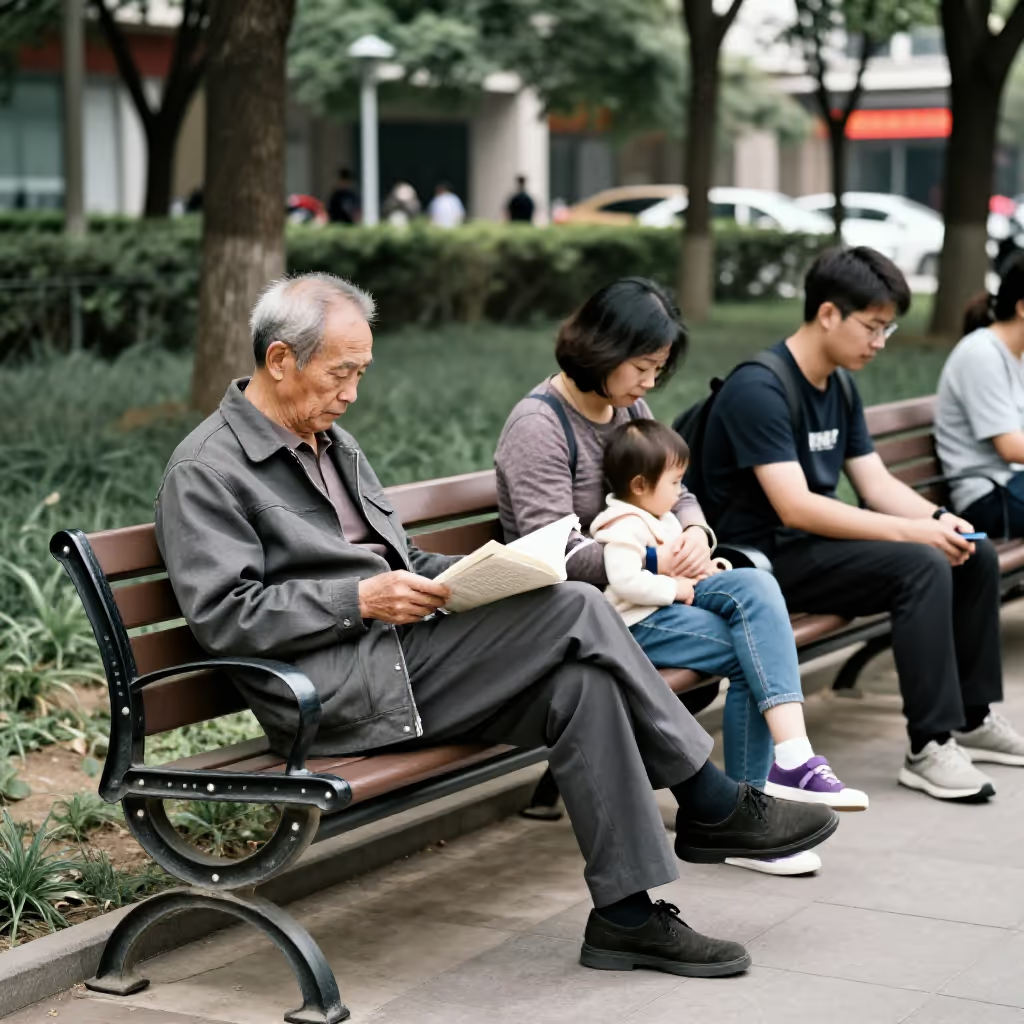
A long piece of furniture or fixed installation that provides seating for several people at the same time. Benches are often found in parks, at stops, or also in homes.
example
Im Park setzten wir uns auf eine sonnige Sitzbank und aßen ein Eis.
In the park, we sat down on a sunny bench and ate ice cream.
Usage tips
Word composition
The word 'Sitzbank' (bench) is made up of the stem of the verb 'sitzen' (to sit) and the noun 'die Bank' (bench). So it literally describes a bench that is meant for sitting.
EXAMPLE
Diese alte Sitzbank aus Holz stand schon im Garten meiner Großmutter.
This old wooden bench had already stood in my grandmother's garden.
Prepositions: location vs. direction
Pay attention to the case after the preposition 'auf' (on): you sit down 'auf die Sitzbank' (onto the bench; accusative, direction), but you are already sitting 'auf der Sitzbank' (on the bench; dative, location).
EXAMPLE
Komm, wir setzen uns auf die Sitzbank dort drüben.
Come on, let's sit down on that bench over there.
Typical places
To picture the word more easily, think of places where you typically find a bench. These include parks, gardens, bus stops, or even a dining nook in the kitchen.
EXAMPLE
An der Haltestelle warteten mehrere Leute auf einer Sitzbank auf den Bus.
At the stop, several people were waiting for the bus on a bench.
Compare with
near_synonym · confusable
Sitzbank vs Bank
bank / bench
'die Bank' and 'die Sitzbank' can both mean a long piece of furniture for sitting. 'Bank' is shorter and very common, but it has several meanings, including a financial institution. 'Sitzbank' is more precise because it clearly refers to a place to sit. Learners may confuse the words because 'Bank' on its own is not always unambiguous. If the context is not clear, 'Sitzbank' is safer.
Sitzbank
An der Haltestelle steht eine neue Sitzbank aus Holz.
There is a new wooden bench at the stop.
Bank
Im Park setzt sich Frau Demir kurz auf die Bank.
In the park, Ms. Demir sits down briefly on the bench.