

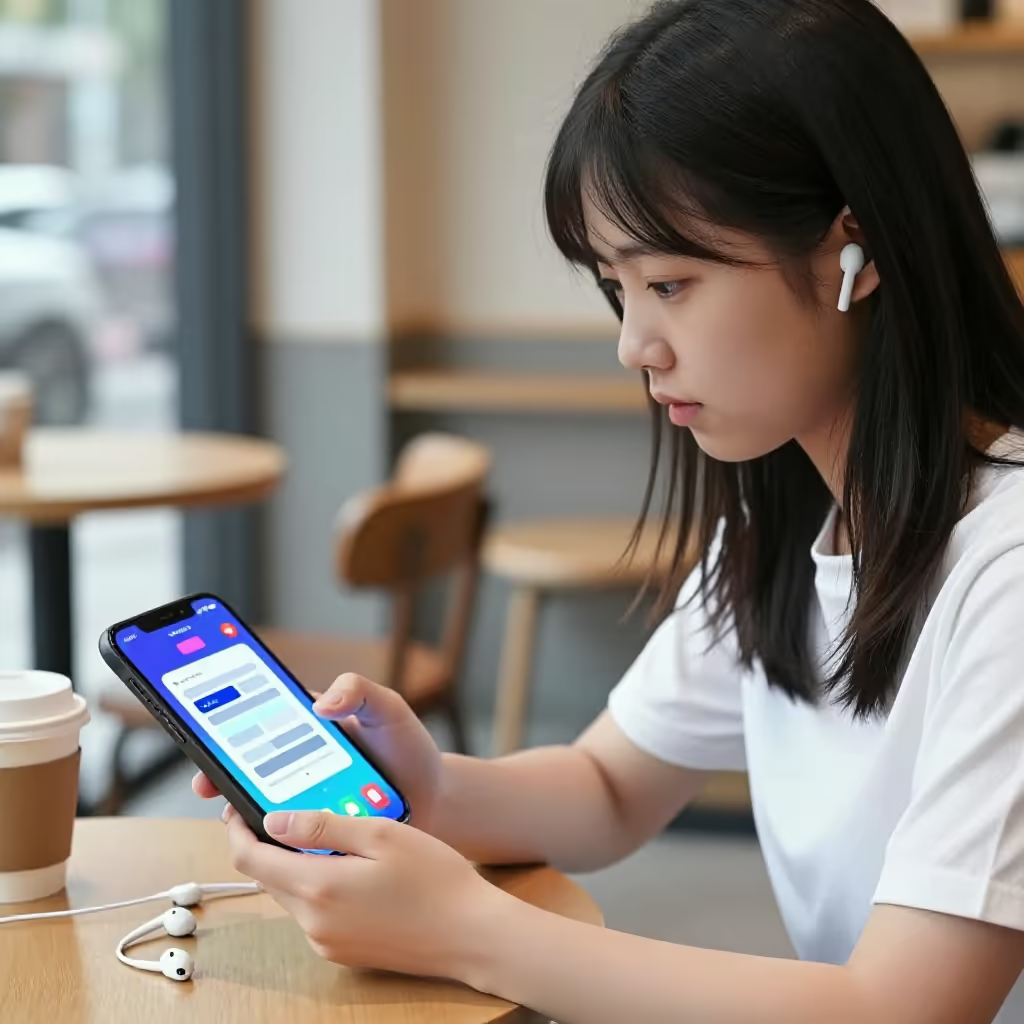
A mobile phone that offers not only calling functions but also computer-like functions, such as internet access, email, and the use of apps.
example
Mit meinem neuen Smartphone kann ich unterwegs meine Bankgeschäfte erledigen.
With my new smartphone, I can take care of my banking while I'm on the go.
Usage tips
Word structure
'Smartphone' is a loanword from English and is made up of 'smart' (klug, intelligent) and 'phone' (Telefon). So the literal meaning is 'intelligent phone'.
EXAMPLE
Das erste Smartphone kam vor über 20 Jahren auf den Markt.
The first smartphone came onto the market over 20 years ago.
Correct preposition
To describe an action on the device, you use the preposition 'auf' with the dative. To express that someone is busy with it, people often say colloquially 'am Smartphone sein/hängen' (to be on/glued to one's smartphone).
EXAMPLE
Ich habe die Nachricht auf meinem Smartphone gelesen.
I read the message on my smartphone.
Typical verbs
Common verbs connected with a smartphone are 'nutzen' (to use), 'entsperren' (to unlock), 'laden' (to charge), and 'einrichten' (to set up).
EXAMPLE
Ich muss mein Smartphone laden, der Akku ist fast leer.
I have to charge my smartphone; the battery is almost dead.
Compare with
near_synonym · confusable
Smartphone vs Handy
mobile phone / cell phone
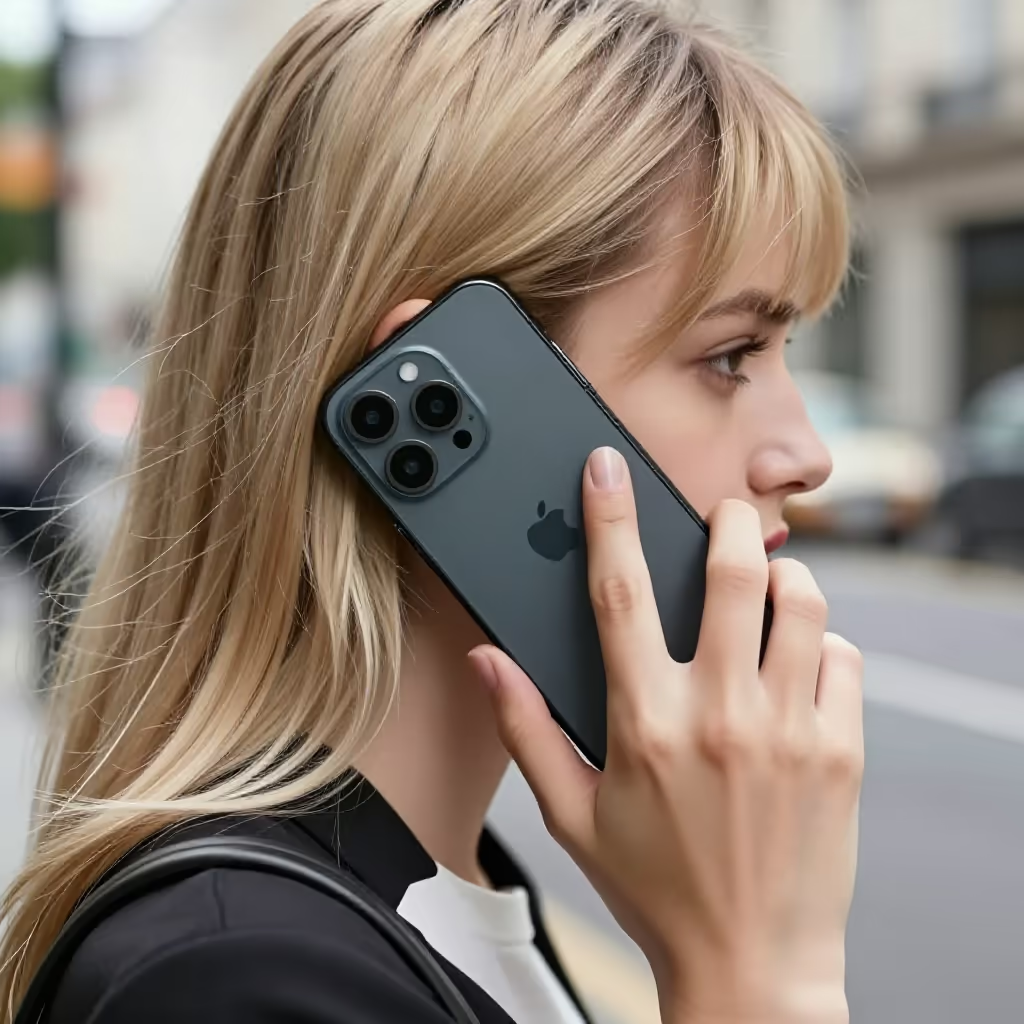
'das Handy' and 'das Smartphone' both mean a mobile phone. 'Handy' is the more general everyday word in German. It can simply mean a mobile phone or cell phone. 'Smartphone' is more precise when the device has internet, apps, and many computer-like functions. Today, many people also mean a smartphone when they say 'Handy', so the words can easily be confused. If the technical features are important, 'Smartphone' is more precise. If the point is simply that you can call someone or be reachable while on the go, 'Handy' is often enough.
Smartphone
Mit dem neuen Smartphone kann Mehmet seine E-Mails schneller lesen.
With the new smartphone, Mehmet can read his emails faster.