

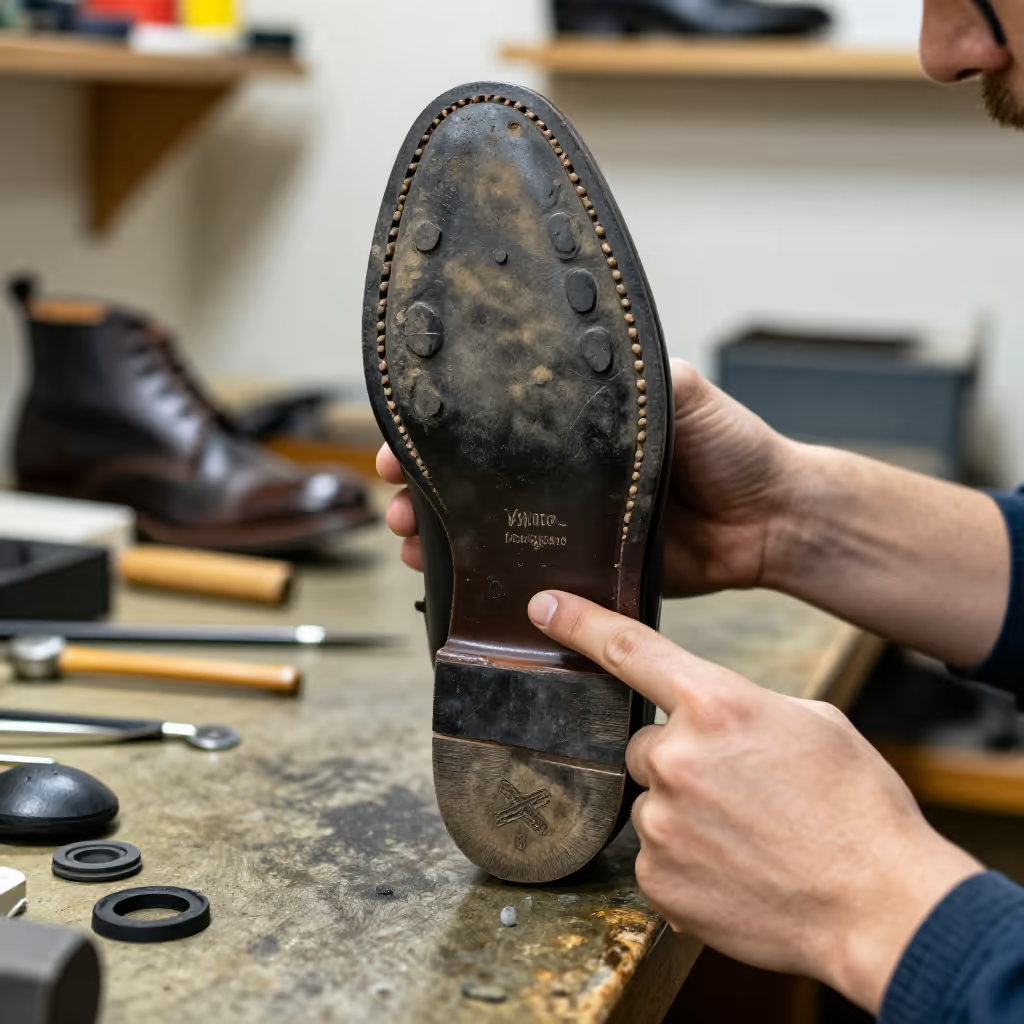
die Sohle
sole
The bottom part of a shoe that has direct contact with the ground.
EXAMPLE
Der Schuster muss die abgelaufene Sohle meiner Stiefel erneuern.
The cobbler has to replace the worn-out sole of my boots.
sole
Loading your saved state.
sole
The bottom part of a shoe that has direct contact with the ground.
Der Schuster muss die abgelaufene Sohle meiner Stiefel erneuern.
The cobbler has to replace the worn-out sole of my boots.

sole
The underside of a human or animal foot.
Nach der langen Wanderung brannten mir die Sohlen.
After the long hike, the soles of my feet were burning.

sole
A flatfish with firm, white flesh that is highly valued as a food fish.
Im Restaurant bestellte sie eine gebratene Sohle mit Salzkartoffeln.
At the restaurant, she ordered fried sole with boiled potatoes.

shoe leather
A colloquial, derogatory term for a tough, dry piece of fried or grilled meat.
Das Schnitzel war leider eine total zähe Sohle.
Unfortunately, the schnitzel was a really tough piece of shoe leather.
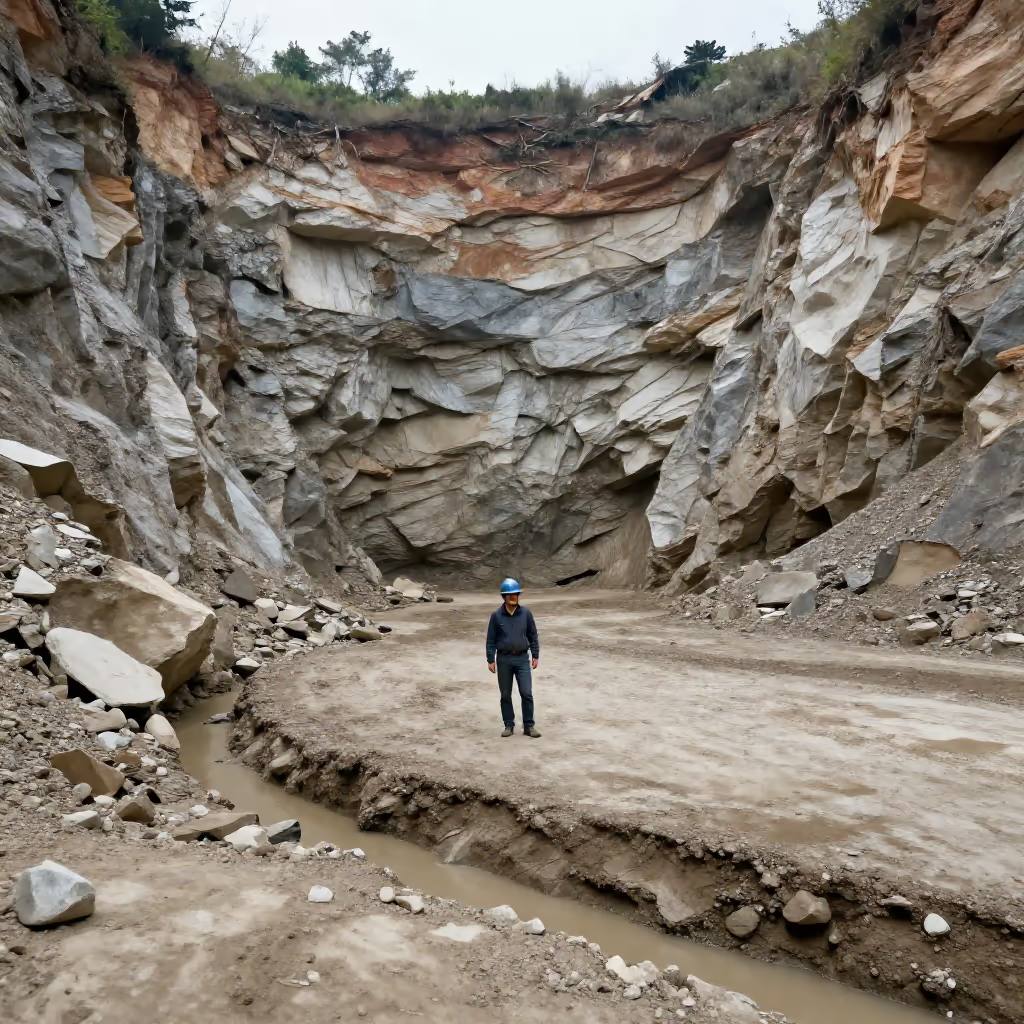
bottom / bed
The lowest area or floor of a valley, a mine tunnel, or a body of water.
Die Bergleute erreichten die tiefste Sohle des Bergwerks.
The miners reached the deepest level of the mine.
To recognize the correct meaning of 'Sohle' (sole), pay attention to the signal words in the sentence. 'Schuh' (shoe) or 'Stiefel' (boot) point to the shoe part, 'Fuß' (foot) to the body part, and words like 'essen' (to eat) or 'Restaurant' (restaurant) to the fish.
Die Sohlen meiner neuen Schuhe sind sehr bequem.
The soles of my new shoes are very comfortable.
When talking about shoes, people often speak of 'abgelaufenen' (worn-out), 'neuen' (new), or 'rutschfesten' (non-slip) soles. Typical verbs are 'besohlen' (to resole) or 'erneuern' (to replace/renew).
Der Schuster kann deine alten Schuhe neu besohlen.
The cobbler can resole your old shoes.
In relation to the foot, 'Sohle' (sole) is often connected with sensations. Typical phrases are 'brennende Sohlen haben' (to have burning soles) or 'sich die Sohlen wund laufen' (to walk until the soles of one's feet are sore).
Beim Barfußlaufen auf dem heißen Asphalt habe ich mir fast die Sohlen verbrannt.
Walking barefoot on the hot asphalt, I almost burned the soles of my feet.
The term 'Sohle' (sole) for tough meat is a vivid and colloquial put-down. It compares the texture of the food to that of a tough shoe sole.
Das Steak war so trocken, es war eine einzige zähe Sohle.
The steak was so dry; it was just one tough piece of shoe leather.
The meaning 'Boden eines Tals oder Bergwerks' (floor of a valley or mine) is used almost only in the technical language of geography or mining. In everyday language, this use is very rare.
Die Geologen untersuchten die Beschaffenheit der Talsohle.
The geologists examined the structure of the valley floor.
underside
Die Unterseite generally describes the downward-facing surface of an object. Sohle, by contrast, is the usual term for the bottom part of a shoe that touches the ground. For a shoe, Sohle is therefore usually the more appropriate and precise choice.

Die Sohle des Schuhs ist nach dem Spaziergang voller Sand.
The sole of the shoe is full of sand after the walk.
Die Unterseite des Schuhs ist nach dem Spaziergang voller Sand.
The underside of the shoe is full of sand after the walk.