

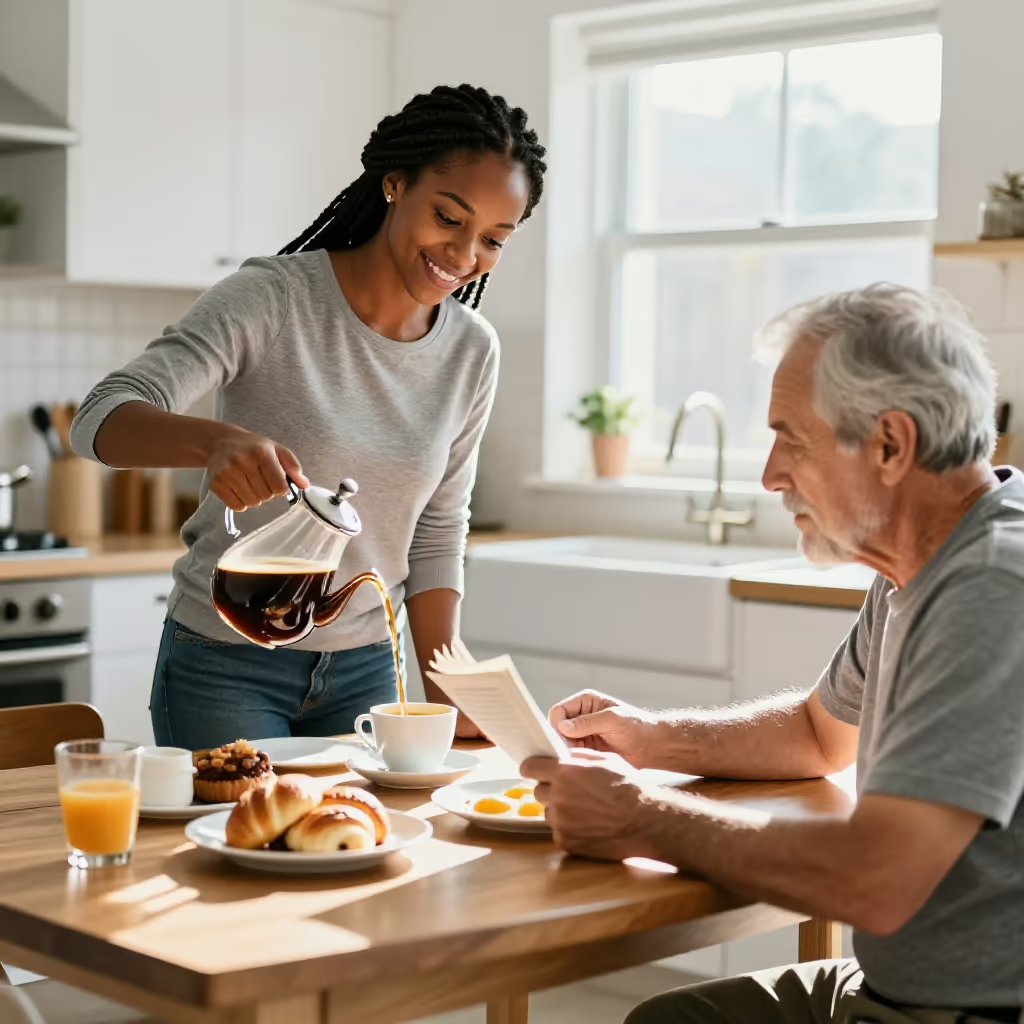
The time on the morning of a Sunday, often associated with quiet, free time, or special rituals such as a late breakfast.
example
Wir genießen den ruhigen Sonntagmorgen immer mit frischen Brötchen und der Zeitung.
We always enjoy the quiet Sunday morning with fresh rolls and the newspaper.
Usage tips
Compound word
The word is simply made up of 'Sonntag' (Sunday) and 'Morgen' (morning). So it literally refers to the morning of a Sunday.
EXAMPLE
Ein typischer deutscher Sonntagmorgen beginnt oft mit einem langen Frühstück.
A typical German Sunday morning often begins with a long breakfast.
Correct preposition
To describe an action at this point in time, you use the preposition 'an' with the dative, which merges into 'am': 'am Sonntagmorgen' (on Sunday morning).
EXAMPLE
Am Sonntagmorgen gehe ich gerne im Park spazieren.
On Sunday morning, I like to go for a walk in the park.
Typical collocations
The word is often associated with quiet and free time. Typical verbs are 'genießen' (to enjoy), 'ausschlafen' (to sleep in), or 'gemütlich frühstücken' (to have a leisurely breakfast).
EXAMPLE
Für viele ist der Sonntagmorgen die schönste Zeit der Woche, um auszuschlafen.
For many people, Sunday morning is the best time of the week to sleep in.
Compare with
antonym
Sonntagmorgen vs Sonntagabend
Sunday evening
'der Sonntagabend' and 'der Sonntagmorgen' both refer to a time on a Sunday. The difference is the part of the day: 'der Sonntagmorgen' is the early part of Sunday, often associated with breakfast, quiet, or free time. 'der Sonntagabend' is the late part at the end of Sunday, often shortly before the start of the new week. So the words are clear opposites in terms of time: in the morning, the Sunday day begins; in the evening, it comes to an end.
Sonntagmorgen
Den Sonntagmorgen verbringt meine Freundin gern mit einem langen Frühstück.
My friend likes to spend Sunday morning having a long breakfast.
Sonntagabend
Am Sonntagabend bereitet Lisa ihre Tasche für die Arbeit vor.
On Sunday evening, Lisa gets her bag ready for work.