

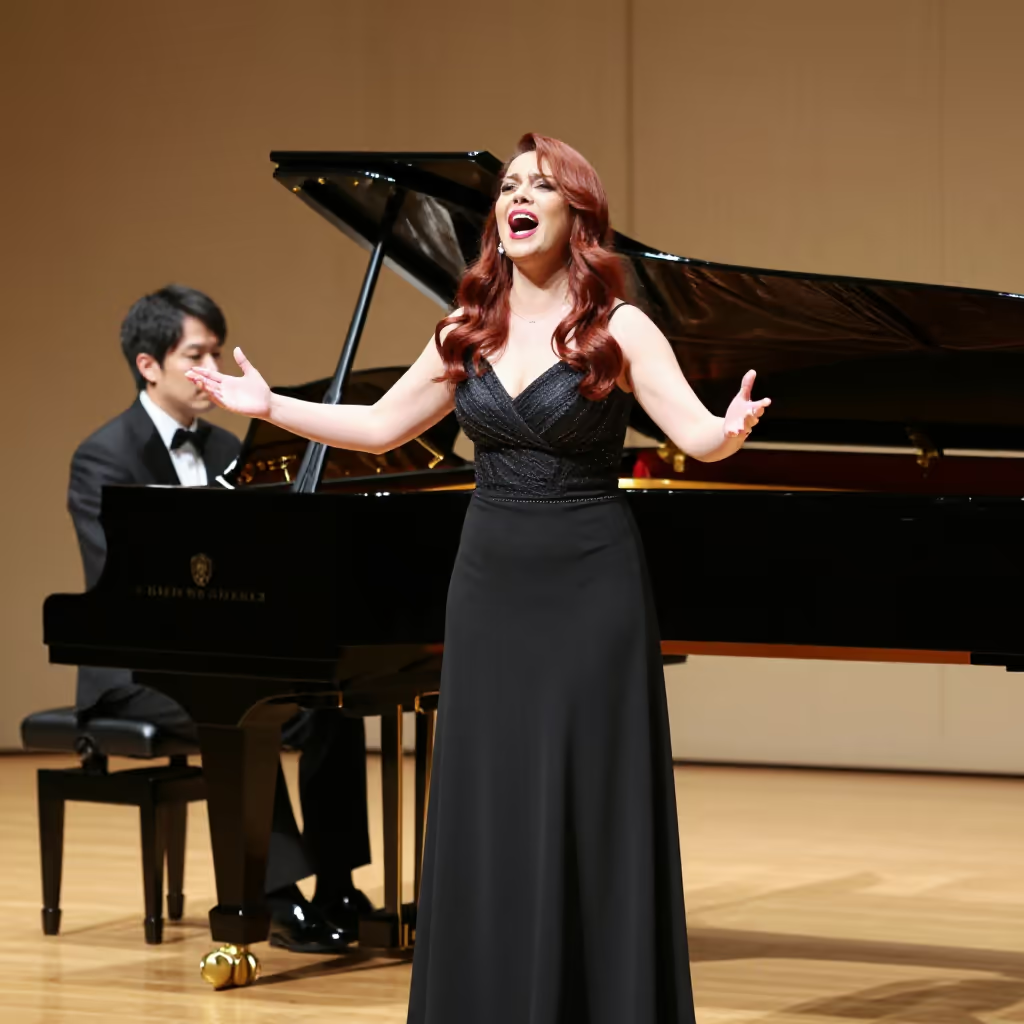
der Sopran
soprano
The highest human vocal range, typically sung by women or boys. Also a person who sings in this vocal range.
EXAMPLE
Die Sängerin hat einen klaren, kräftigen Sopran.
The singer has a clear, powerful soprano.
soprano
Loading your saved state.
soprano
The highest human vocal range, typically sung by women or boys. Also a person who sings in this vocal range.
Die Sängerin hat einen klaren, kräftigen Sopran.
The singer has a clear, powerful soprano.
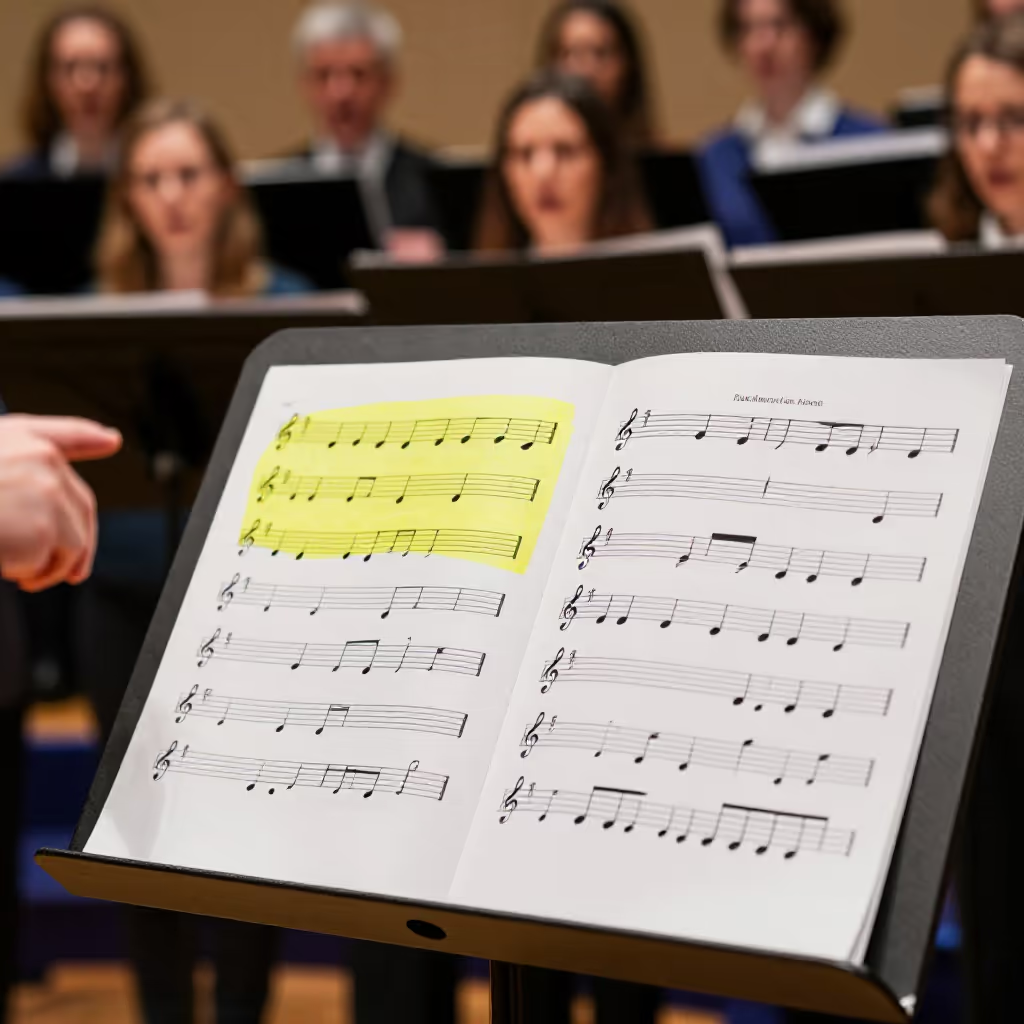
soprano part
The musical voice or part in a polyphonic piece of music that is written for the soprano voice.
Im Chor singt meine Schwester den Sopran.
In the choir, my sister sings the soprano part.
You can recognize the meaning from the verb and the preposition. When someone 'im Sopran singt' (sings in the soprano section), the musical voice or part is meant. When someone 'ein Sopran ist' (is a soprano) or 'einen Sopran hat' (has a soprano), the person or the vocal range is meant.
Im Weihnachtskonzert singt sie im Sopran.
In the Christmas concert, she sings in the soprano section.
The word 'Sopran' (soprano) can refer both to the person with this voice and to the vocal range itself. The context makes clear what is meant.
Der Sopran des Chores ist heute leider krank.
The choir's soprano is unfortunately ill today.
To describe the quality of the voice, 'Sopran' (soprano) is often combined with adjectives such as 'klar' (clear), 'hoch' (high), 'hell' (bright), 'lyrisch' (lyric), or 'dramatisch' (dramatic).
Die Opernsängerin ist für ihren dramatischen Sopran berühmt.
The opera singer is famous for her dramatic soprano.
When referring to the musical part in a choir or ensemble, the fixed expression 'im Sopran singen' (to sing in the soprano section) is used.
Obwohl ich eine tiefe Sprechstimme habe, singe ich im Chor im Sopran.
Although I have a low speaking voice, I sing in the soprano section in the choir.