

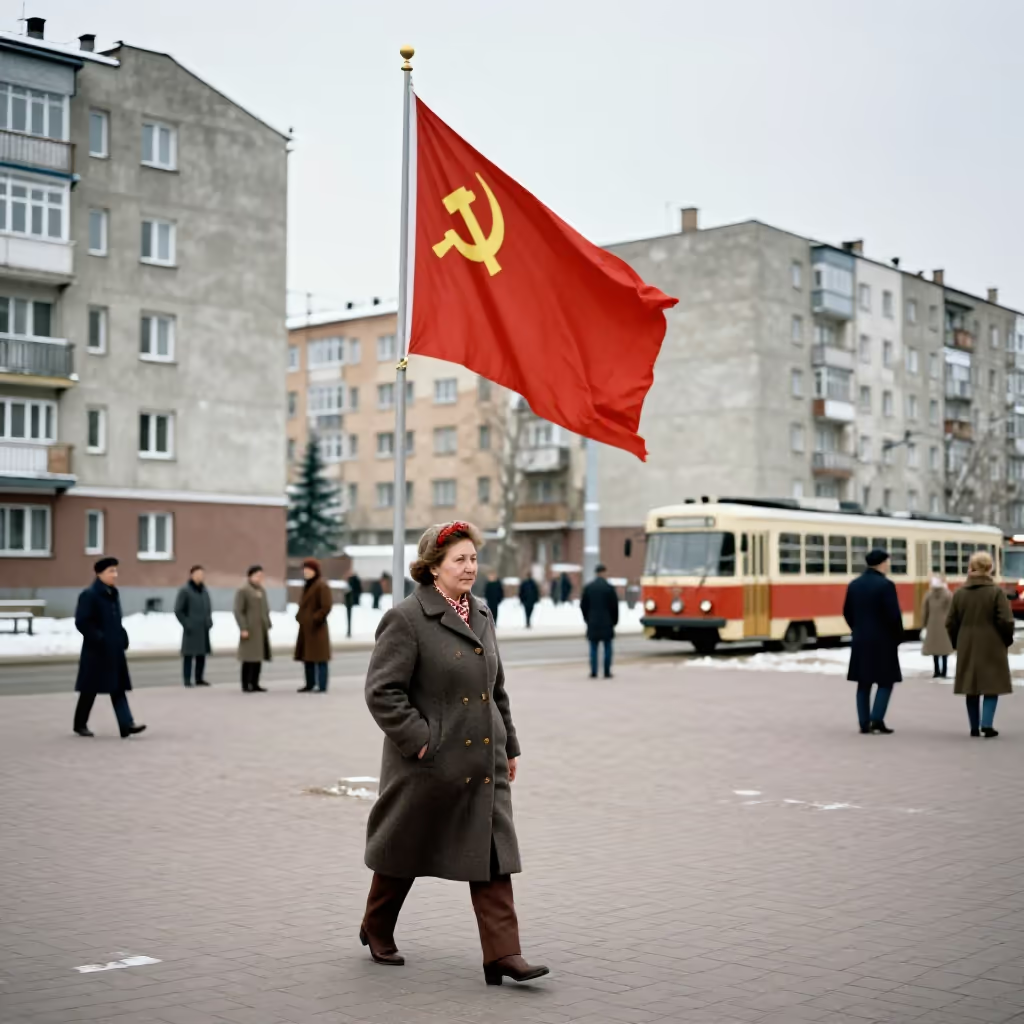
sowjetisch
Soviet
Relating to the Soviet Union (USSR), its citizens, its politics, or its culture.
EXAMPLE
Die sowjetische Armee zog 1994 aus Ostdeutschland ab.
The Soviet army withdrew from East Germany in 1994.
Soviet
Loading your saved state.
Soviet
Relating to the Soviet Union (USSR), its citizens, its politics, or its culture.
Die sowjetische Armee zog 1994 aus Ostdeutschland ab.
The Soviet army withdrew from East Germany in 1994.

soviet
Relating to the soviets (workers' and soldiers' councils) as organs of self-government during the Russian Revolution. This meaning is very specific and historical.
Das sowjetische Modell der Räterepublik war anfangs eine basisdemokratische Idee.
The soviet model of the council republic was initially a grassroots democratic idea.
The adjective is derived from the Russian word 'Sowjet' (совет), which means 'council'. The ending '-isch' is a typical German ending for forming adjectives from nouns.
Das ist eine typisch deutsche Angewohnheit.
That is a typically German habit.
The adjective 'sowjetisch' (Soviet) almost always refers to the Soviet Union (USSR), a state that existed from 1922 to 1991. It is used for anything connected with that state.
Viele Gebäude aus der sowjetischen Zeit stehen heute unter Denkmalschutz.
Many buildings from the Soviet period are now protected as historical monuments.
'Sowjetisch' (Soviet) is often combined with nouns that refer to the state, the military, or culture, for example 'die sowjetische Regierung' (the Soviet government), 'ein sowjetischer Autor' (a Soviet author), or 'die sowjetische Raumfahrt' (Soviet space travel).
Der erste Mensch im All war ein sowjetischer Kosmonaut.
The first person in space was a Soviet cosmonaut.
The original meaning, which refers to the workers' and soldiers' councils ('Sowjets' — soviets), is very rare today. It is used only in specific historical texts about the Russian Revolution.
Die Machtübernahme durch die Bolschewiki basierte auf dem sowjetischen System der Räte.
The Bolsheviks' seizure of power was based on the soviet system of councils.
Russian
Russisch and sowjetisch can refer to the history, culture, or people of this region. russisch refers to Russia, its population, culture, or language; sowjetisch refers to the former Soviet Union and its political and governmental context. So check whether Russia or the USSR is meant.
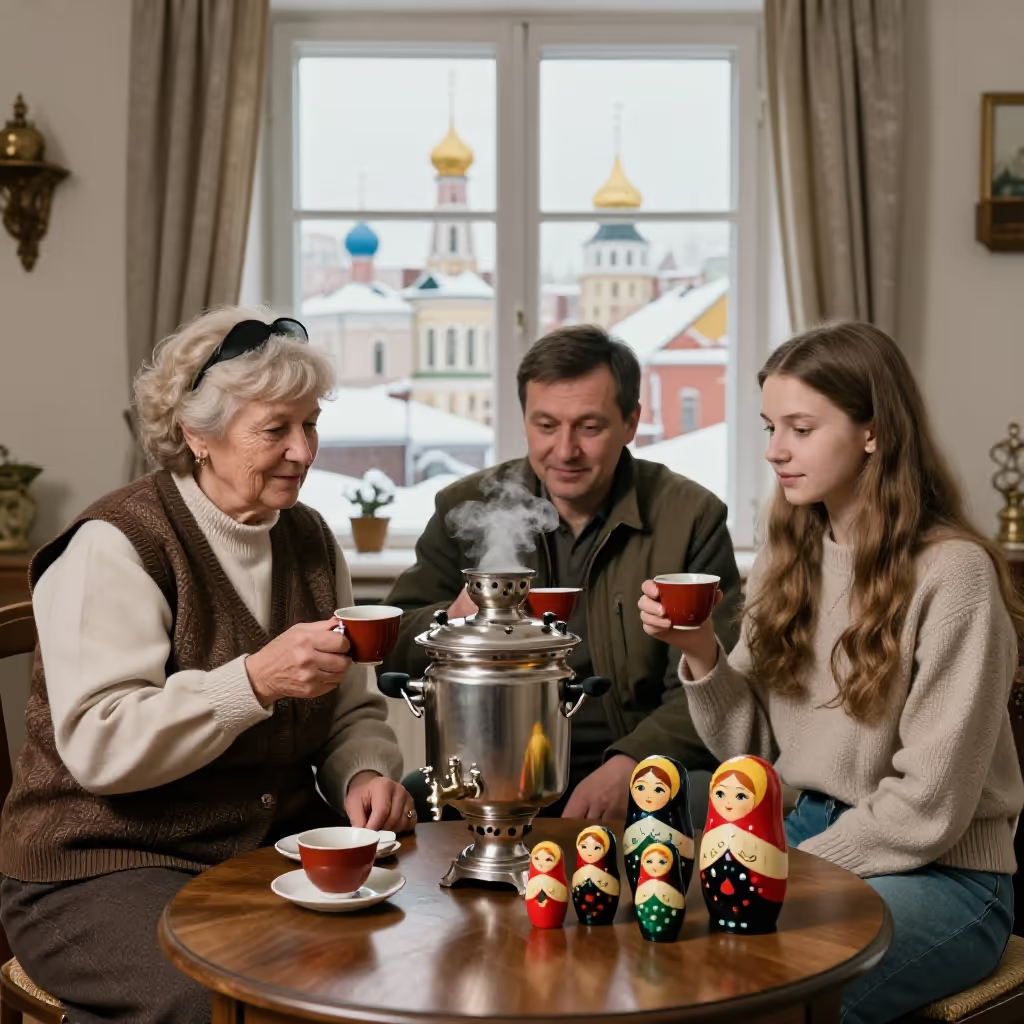
Die Ausstellung zeigt sowjetische Plakate aus der Zeit der UdSSR.
The exhibition features Soviet posters from the time of the USSR.
Die Ausstellung zeigt russische Literatur aus dem heutigen Russland.
The exhibition features Russian literature from present-day Russia.