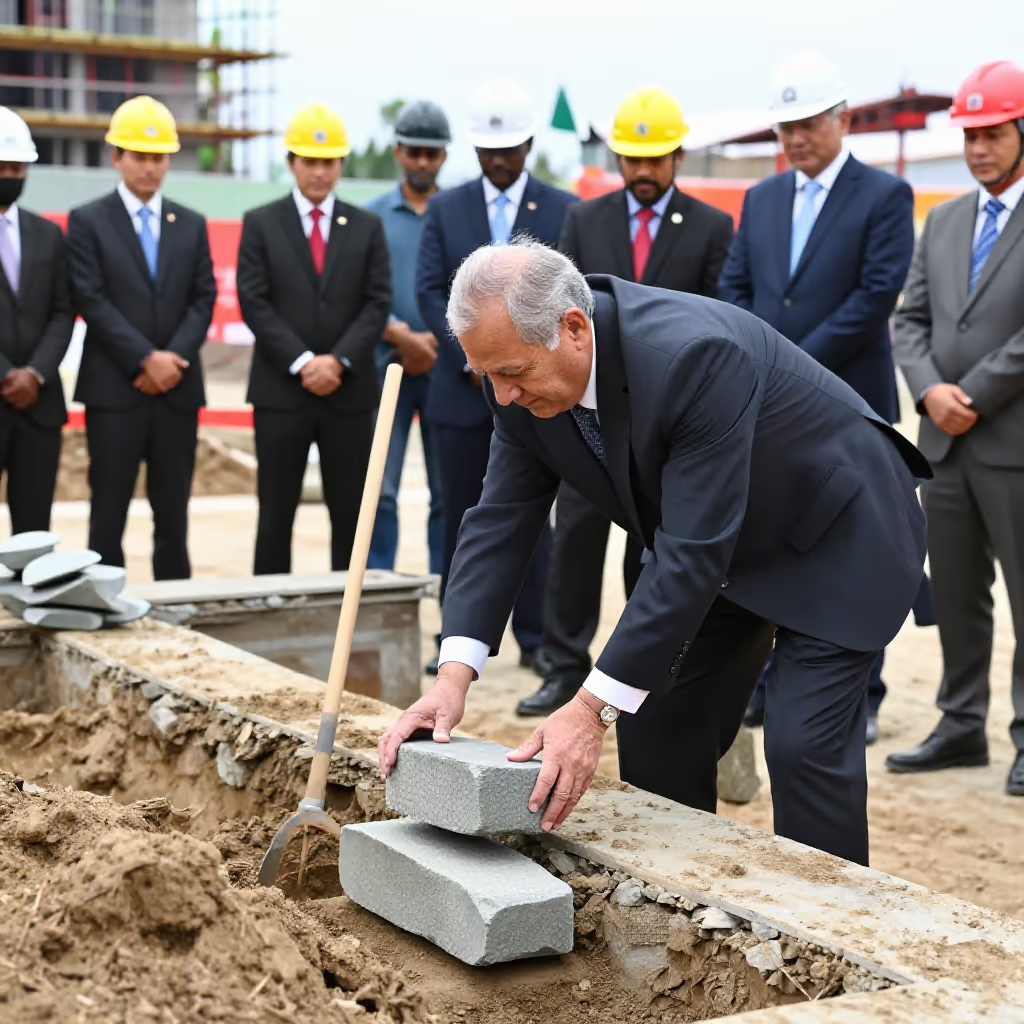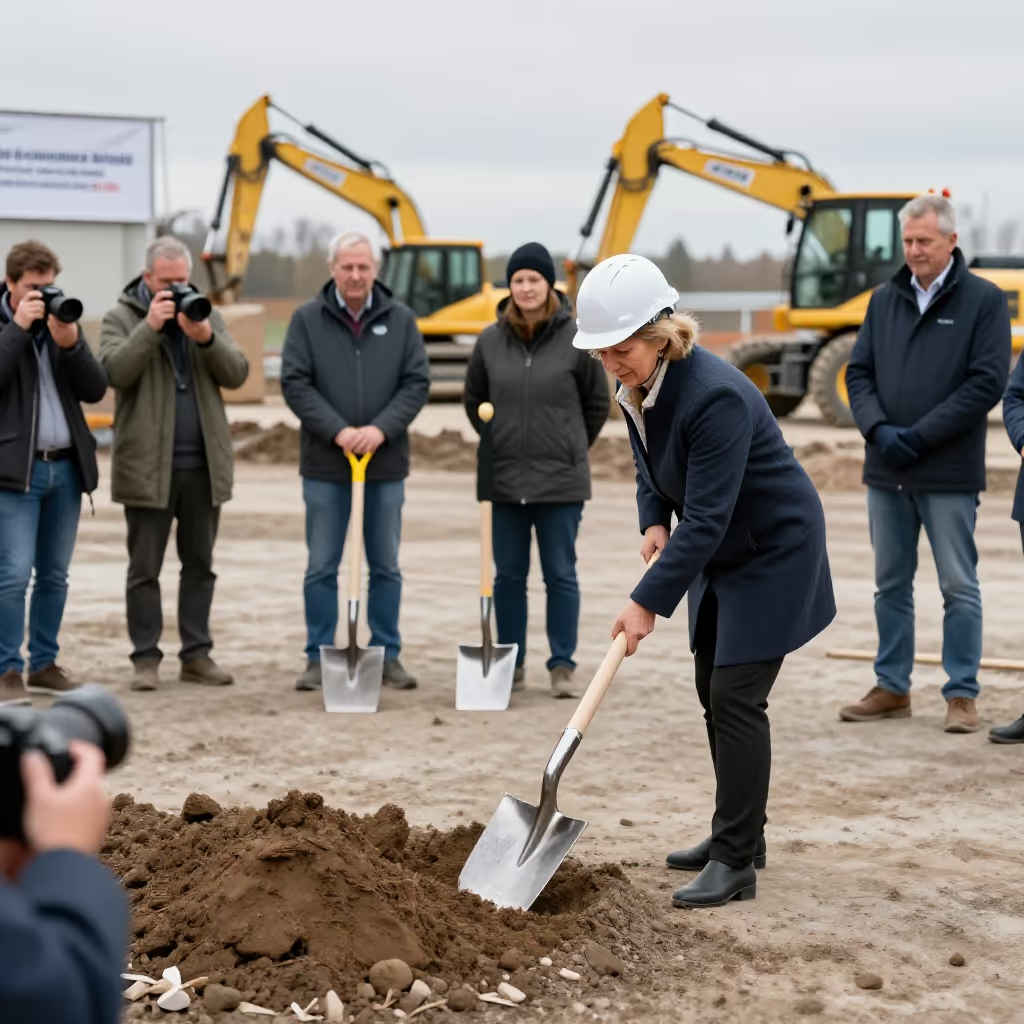
The ceremonial act with which the start of construction work for a new building or facility is officially celebrated.
example
Der Bürgermeister nahm am feierlichen Spatenstich für die neue Schule teil.
The mayor took part in the ceremonial groundbreaking for the new school.

Usage tips
Word composition
The word is made up of 'der Spaten' (spade, a gardening tool) and 'der Stich' (thrust/sting). The literal meaning is therefore a single thrust into the earth with a spade, from which the ceremonial meaning for the start of construction is derived.
EXAMPLE
Mit dem ersten Spatenstich beginnt nun der Bau der neuen Brücke.
With the first groundbreaking ceremony, construction of the new bridge now begins.
Context clue
The ceremonial meaning is by far the most common. You can recognize it from words like 'feierlich' (ceremonial), 'offiziell' (official), 'Baubeginn' (start of construction), or the presence of politicians and journalists.
EXAMPLE
Die Presse war eingeladen, über den feierlichen Spatenstich zu berichten.
The press was invited to report on the ceremonial groundbreaking.
Typical verbs
In the ceremonial context, 'Spatenstich' (groundbreaking ceremony) is often combined with certain verbs. Typical phrases are 'den Spatenstich machen' (to do the groundbreaking), 'den Spatenstich vornehmen' (to carry out the groundbreaking), or 'den Spatenstich vollziehen' (to perform the groundbreaking).
EXAMPLE
Der Minister vollzog persönlich den ersten Spatenstich für das Forschungsinstitut.
The minister personally performed the first groundbreaking ceremony for the research institute.
Cultural context
The 'Spatenstich' (groundbreaking ceremony) is an important public ceremony in Germany to mark the beginning of a construction project. It often serves as a photo opportunity for the media and symbolizes progress and investment.
EXAMPLE
Zum Spatenstich für die neue Fabrik reiste sogar die Geschäftsführung aus dem Ausland an.
Even the management traveled from abroad for the groundbreaking ceremony for the new factory.
Compare with
near_synonym · confusable
Spatenstich vs Baubeginn
start of construction
'der Baubeginn' and 'der Spatenstich' both refer to the beginning of a construction project. 'Baubeginn' is the factual term for the point when the real construction work starts. 'Spatenstich' often means the ceremonial act that officially marks this start. Literally, it can also simply mean thrusting a spade into the earth. The confusion arises because both often occur at the start of a construction project. When talking about construction planning, contracts, or dates, 'Baubeginn' is more natural. When it is about the celebration or the official sign, you say 'Spatenstich'.
Spatenstich
Zum Spatenstich für das neue Wohnhaus kamen viele Nachbarn.
Many neighbors came to the groundbreaking ceremony for the new apartment building.
Baubeginn
Vor dem Baubeginn müssen noch mehrere Genehmigungen vorliegen.
Before construction begins, several permits still need to be in place.