

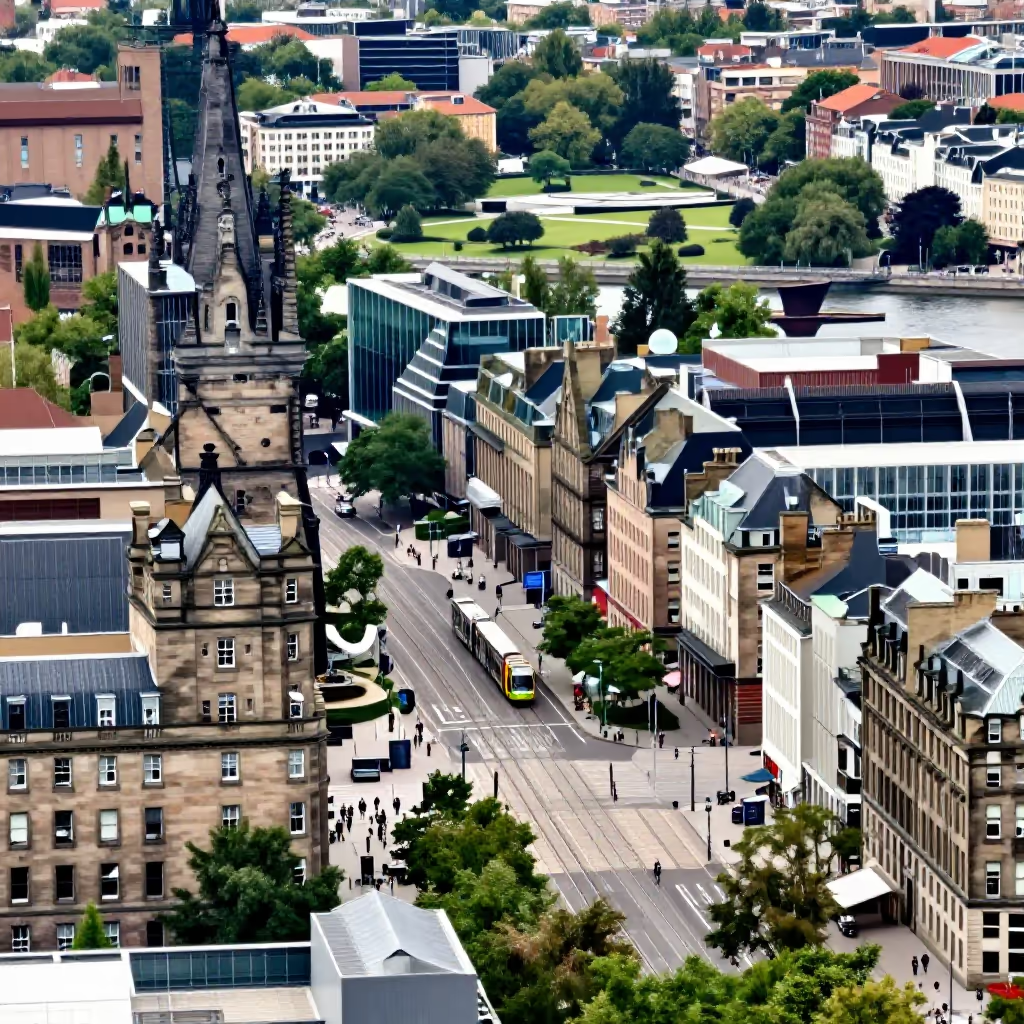
The overall visual impression of a city, shaped by its architecture, street layout, squares, and green spaces.
example
Die neuen Hochhäuser haben das Stadtbild nachhaltig verändert.
The new high-rises have permanently changed the cityscape.
Usage tips
Compound word
The word is made up of 'Stadt' (city) and 'Bild' (image/picture). So it literally describes the 'image' that a city presents to the viewer.
EXAMPLE
Die alten Fachwerkhäuser prägen das Stadtbild dieser Kleinstadt.
The old half-timbered houses shape the cityscape of this small town.
Typical verbs
'Stadtbild' (cityscape) is often used with verbs that describe a change or an influence. Common verbs are 'prägen' (to shape), 'verändern' (to change), 'beherrschen' (to dominate), or 'stören' (to disrupt).
EXAMPLE
Der neue Bahnhof wird das Stadtbild positiv prägen.
The new train station will positively shape the cityscape.
Usage context
This noun is used mainly in discussions about architecture, urban planning, tourism, or historic preservation to evaluate the visual character of a city.
EXAMPLE
In der Zeitung wird diskutiert, wie man das historische Stadtbild schützen kann.
The newspaper is discussing how the historic cityscape can be protected.
Compare with
near_synonym
Stadtbild vs Erscheinungsbild
appearance
'das Erscheinungsbild' and 'das Stadtbild' both describe how something appears from the outside. 'das Erscheinungsbild' is more general: it can refer to a person, a building, a product, or a thing. 'das Stadtbild' is more specific and means the visible overall impression of a city, for example through buildings, streets, squares, and parks. When it is generally about appearance, 'Erscheinungsbild' fits. When it is about the effect of an entire city, 'Stadtbild' is more precise.
Stadtbild
Die alten Brücken und engen Gassen prägen das Stadtbild.
The old bridges and narrow alleys shape the cityscape.
Erscheinungsbild
Das neue Logo verändert das Erscheinungsbild der Firma deutlich.
The new logo clearly changes the company's appearance.