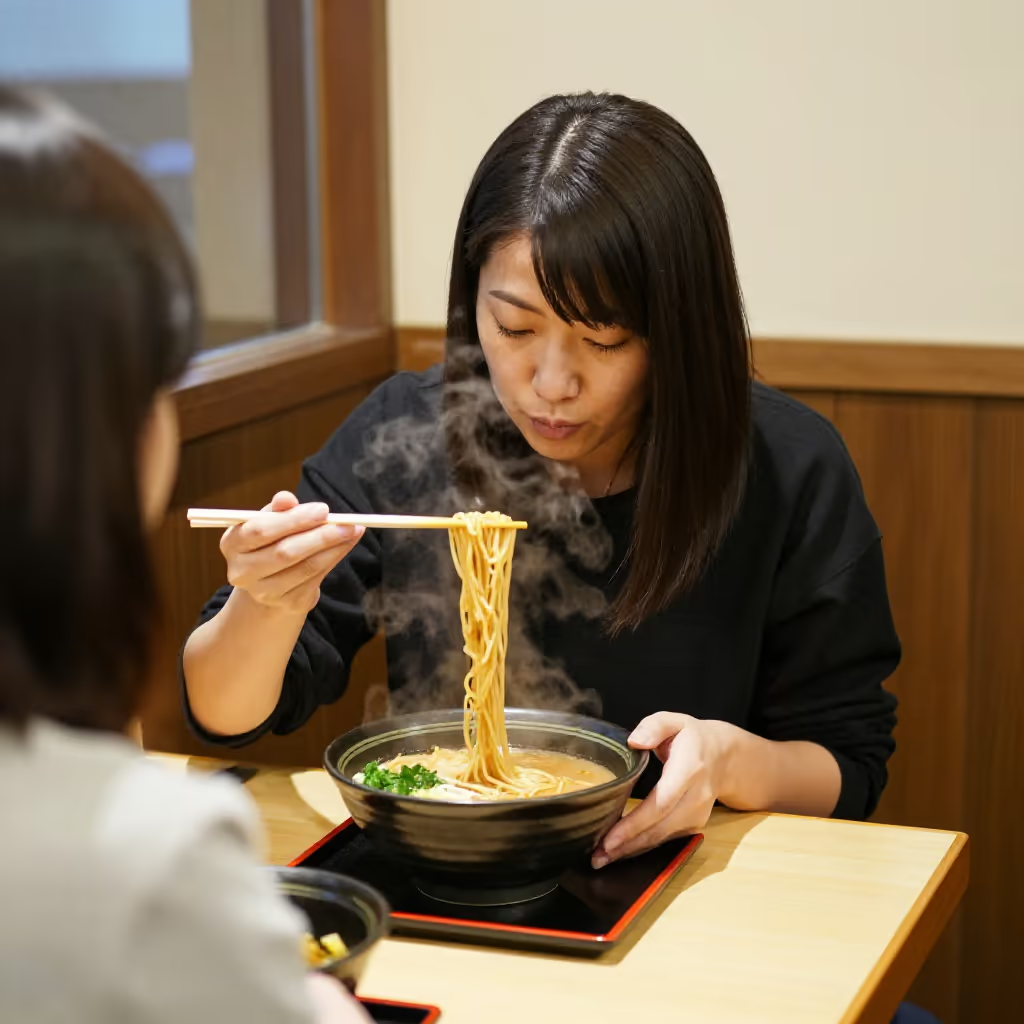
One of two thin sticks made of wood, bamboo, or plastic that are used as eating utensils in East Asia. Usually used in the plural.
example
Ich finde es schwierig, Reis mit Stäbchen zu essen.
I find it difficult to eat rice with chopsticks.
Usage tips
Word structure
'Stäbchen' (small stick) is the diminutive form of 'der Stab' (the stick/rod). The ending '-chen' makes the object small and cute and always changes the article to 'das'.
EXAMPLE
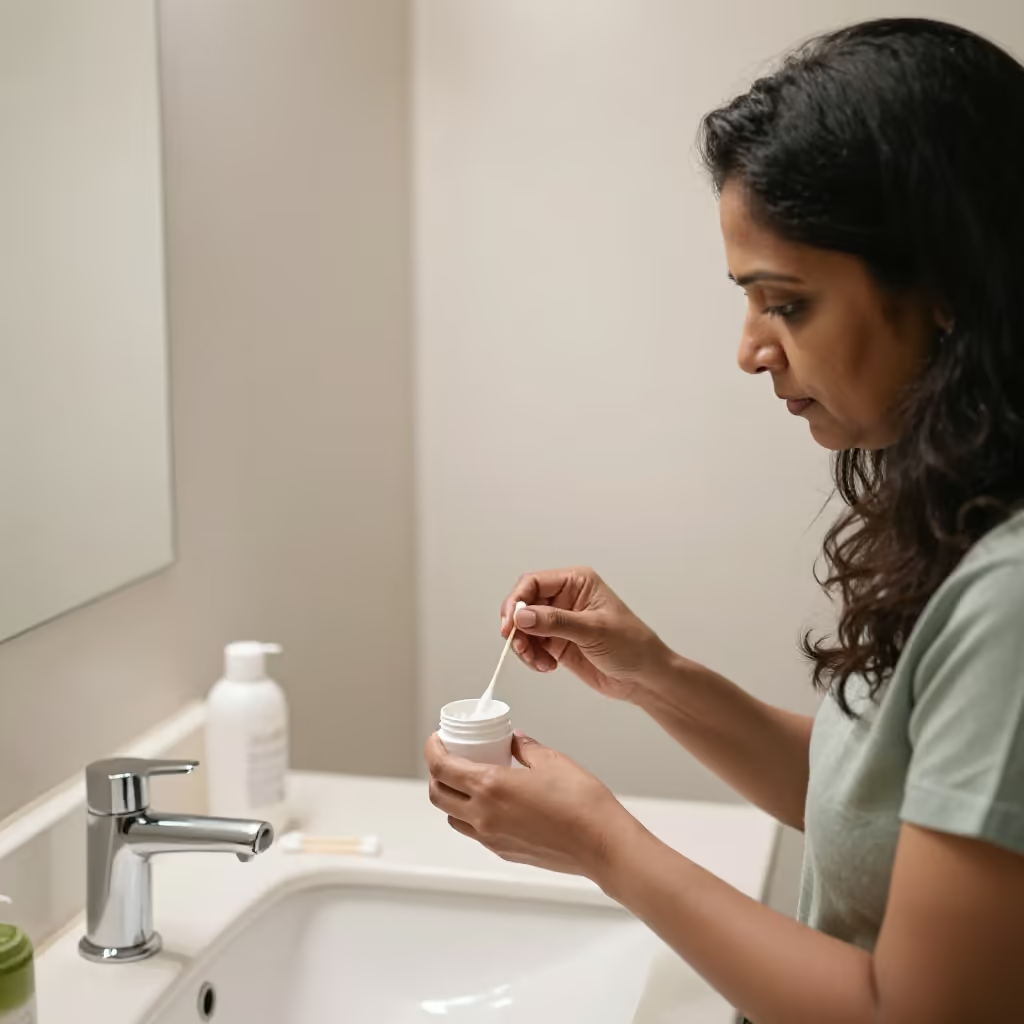
Der Arzt nahm mit einem langen Stäbchen eine Probe.
The doctor took a sample with a long little stick.
Typical use
When 'Stäbchen' (chopsticks) means eating utensils, it is almost always used in the plural. The most common fixed phrase is 'mit Stäbchen essen' (to eat with chopsticks).
EXAMPLE
Kannst du Suppe mit Stäbchen essen?
Can you eat soup with chopsticks?
Part of compounds
In its general meaning, 'Stäbchen' (small stick) is often the second part of a compound noun that describes the type of stick more precisely. Typical examples are 'Wattestäbchen' (cotton swab), 'Fischstäbchen' (fish stick), or 'Duftstäbchen' (incense stick).
EXAMPLE
Für die Party haben wir eine große Packung Fischstäbchen gekauft.
For the party, we bought a large pack of fish sticks.
Technical language
The meaning as a visual cell in the eye is a technical term from biology and medicine. In everyday conversations, this meaning practically does not occur.
EXAMPLE
Im Biologieunterricht haben wir über die Funktion der Stäbchen und Zapfen im Auge gelernt.
In biology class, we learned about the function of rods and cones in the eye.
Compare with
near_synonym · confusable
Stäbchen vs Stab
staff / rod
'der Stab' and 'das Stäbchen' can both refer to a thin, elongated object. The most important difference is the size, and often also the use. A 'Stab' tends to be long and sturdy, for example made of wood or metal. A 'Stäbchen' is small and thin; it often means chopsticks or small objects such as 'Wattestäbchen' (cotton swabs). Learners may confuse the words because 'Stäbchen' sounds like a small form of 'Stab'. As a practical rule: for a long, solid object, say 'Stab'; for small, thin things, 'Stäbchen' is more likely.
Stäbchen
Im Restaurant habe ich versucht, mit Stäbchen zu essen.
At the restaurant, I tried to eat with chopsticks.
Stab
Der Gärtner stützt die junge Pflanze mit einem langen Stab.
The gardener supports the young plant with a long stake.