

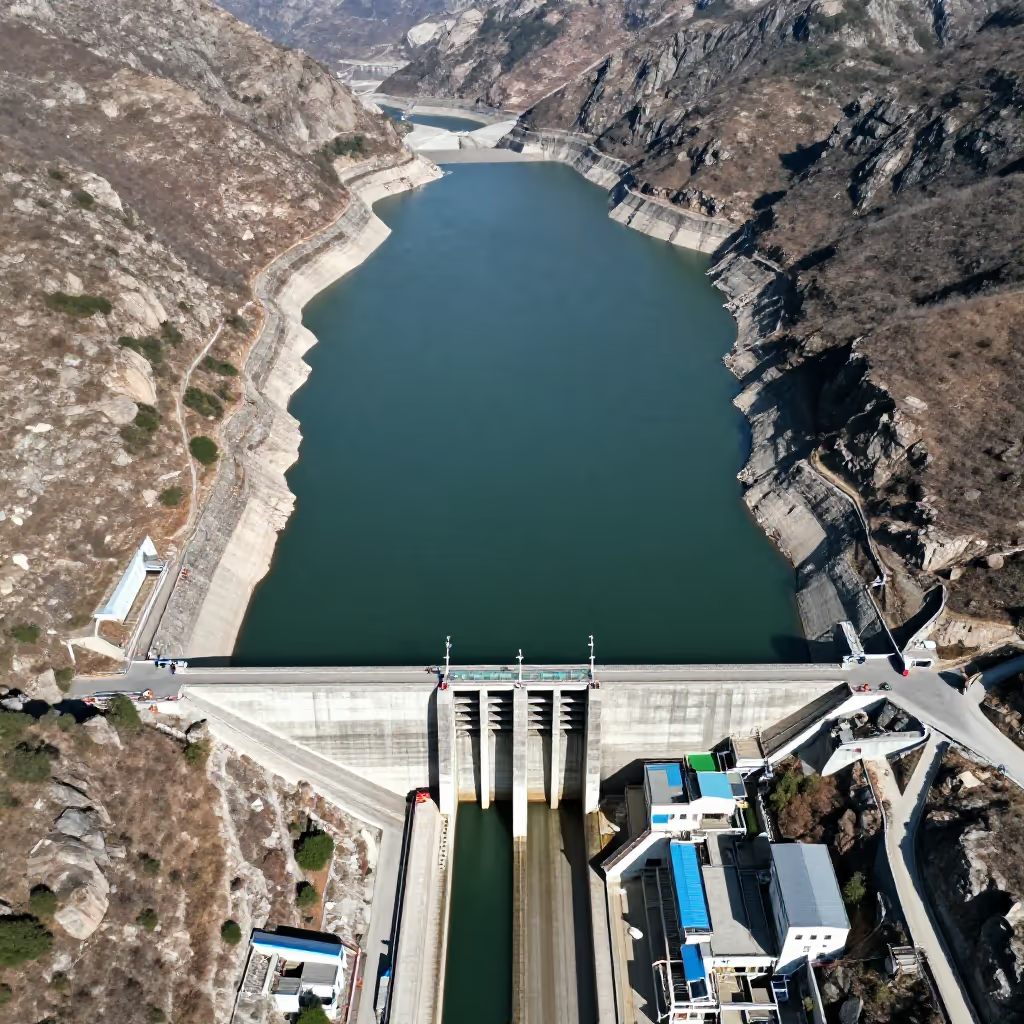
An artificial lake created by building a dam in order to store water, for example for generating electricity or as a drinking water reservoir.
example
Im Sommer fahren wir oft zum Schwimmen und Bootfahren an den nahegelegenen Stausee.
In the summer, we often go to the nearby reservoir to swim and go boating.
Usage tips
Word composition
'Stausee' (reservoir) is made up of 'stauen' (to dam up, hold back water) and 'See' (lake). So it is a lake whose water is artificially held back by a dam.
EXAMPLE
Dieser riesige Stausee versorgt die ganze Region mit Trinkwasser.
This huge reservoir supplies the whole region with drinking water.
Correct prepositions
To describe a position by the water, you use 'am Stausee' (at/by the reservoir). For movement into the water or being in it, you use 'in den' (into the) or 'im Stausee' (in the reservoir).
EXAMPLE
Wir haben am Stausee ein Picknick gemacht.
We had a picnic by the reservoir.
Typical context
Reservoirs are often mentioned in connection with two topics: leisure activities such as hiking or swimming, and the generation of energy through hydropower.
EXAMPLE
Das Kraftwerk am Stausee produziert sauberen Strom für Tausende Haushalte.
The power plant by the reservoir produces clean electricity for thousands of households.
Compare with
near_synonym · confusable
Stausee vs See
lake
'der See' and 'der Stausee' are both large standing bodies of water. 'See' is the more general word and can mean a natural lake. 'Stausee' is more specific: it is created by a dam and is used to store water, for example for electricity or drinking water. You can also think of a reservoir as a lake, but not every lake is a reservoir. The words can be confused if you only see the body of water. If the dam or the technical use is important, 'Stausee' is more natural and more precise.
Stausee
Das Wasser des Stausees wird für die Stromerzeugung genutzt.
The water from the reservoir is used to generate electricity.