

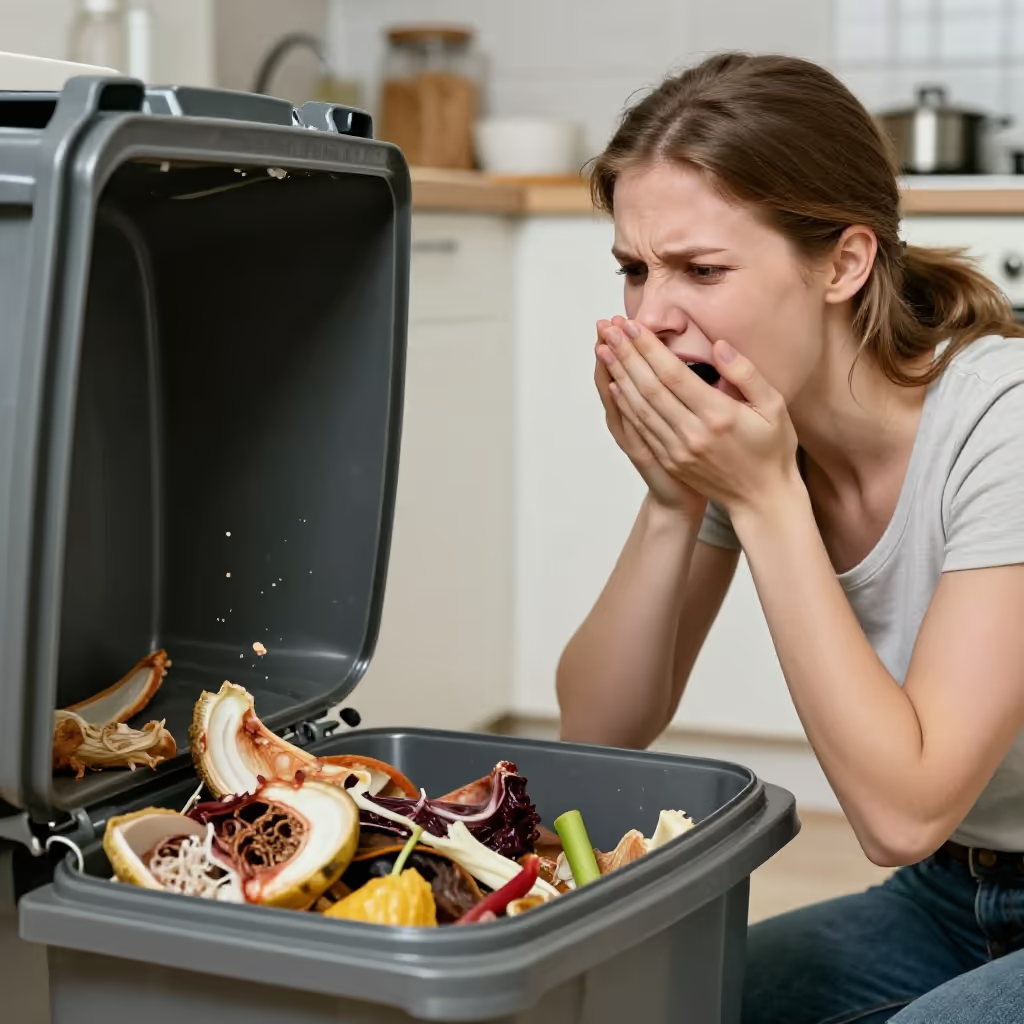
stinkend
stinking
Giving off a very unpleasant, strong smell.
EXAMPLE
Der Müll lag schon eine Woche in der Sonne und war einfach nur stinkend.
The garbage had been lying in the sun for a week and was simply stinking.
stinking
Loading your saved state.
stinking
Giving off a very unpleasant, strong smell.
Der Müll lag schon eine Woche in der Sonne und war einfach nur stinkend.
The garbage had been lying in the sun for a week and was simply stinking.

really / extremely
Colloquially used as an intensifier meaning 'very' or 'extremely', mostly in negative contexts.
Ich habe keine Lust aufzuräumen, ich bin heute stinkend faul.
I don't feel like cleaning up; I'm really lazy today.
'Stinkend' (stinking) is the present participle of the verb 'stinken' (to stink). Like many participles, it can be used as an adjective to describe a quality that is currently active.
Die Blumen in der Vase fangen an zu stinken.
The flowers in the vase are starting to stink.
When 'stinkend' (stinking) appears before a noun, it describes its smell. However, when it appears directly before another adjective, it is a colloquial intensifier and means 'very'.
Er warf die stinkenden Socken in die Wäsche.
He threw the stinking socks into the laundry.
In the meaning 'very' or 'extremely', 'stinkend' is used only colloquially. It functions as an invariable adverb before another adjective and is not declined.
Diese Aufgabe ist stinkend langweilig.
This task is extremely boring.
damn / damned
“Verdammt” and “stinkend” can colloquially mean “very.” “Stinkend” usually intensifies a negatively judged quality, while “verdammt” can also be used in positive contexts and at the same time sounds coarse. With a negative quality, both can therefore work.

Seit seinem Urlaub ist der Kollege stinkend faul.
The colleague has been incredibly lazy since his vacation.
Seit seinem Urlaub ist der Kollege verdammt faul.
The colleague has been damn lazy since his vacation.