

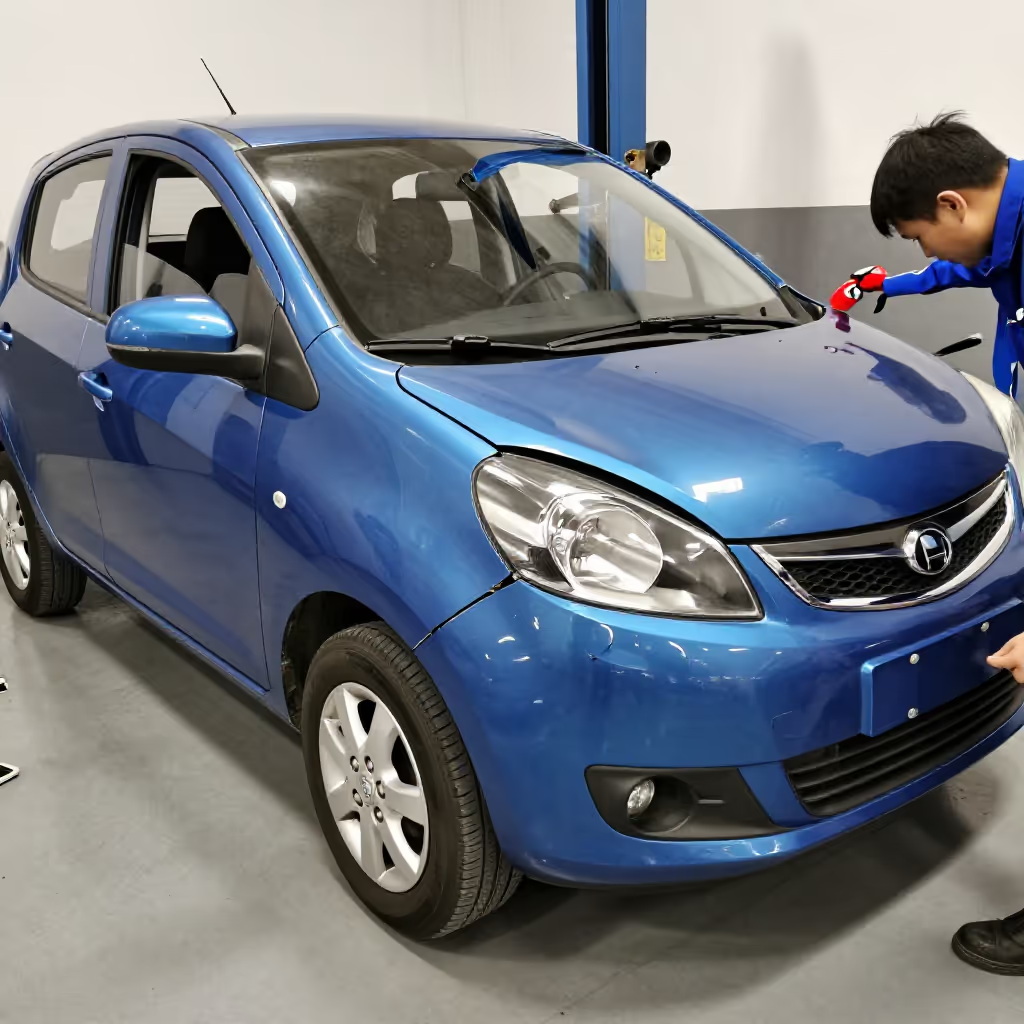
A component on the front and rear of a motor vehicle that serves to absorb impact energy in minor collisions and thus prevent greater damage to the body of the vehicle.
example
Beim Einparken habe ich leider die Stoßstange des anderen Autos leicht berührt.
While parking, I unfortunately lightly touched the bumper of the other car.
Usage tips
Word composition
The word is a combination of 'Stoß' (impact/bump, from 'stoßen' — to bump/push) and 'Stange' (bar). So literally it is a bar that absorbs an impact. That perfectly explains the function of this car part.
EXAMPLE
Die Stoßstange hat den größten Teil des Aufpralls abgefangen.
The bumper absorbed most of the impact.
Use in context
Since a car has two bumpers, people often specify with 'vordere Stoßstange' (front bumper) and 'hintere Stoßstange' (rear bumper).
EXAMPLE
An der vorderen Stoßstange ist ein kleiner Kratzer.
There is a small scratch on the front bumper.
Typical collocations
In connection with accidents or damage, the bumper is often described as 'verbeult' (dented), 'zerkratzt' (scratched), or 'beschädigt' (damaged). You can 'reparieren' (repair), 'austauschen' (replace), or 'polieren' (polish) it.
EXAMPLE
Nach dem kleinen Parkunfall war die Stoßstange leicht verbeult.
After the minor parking accident, the bumper was slightly dented.