

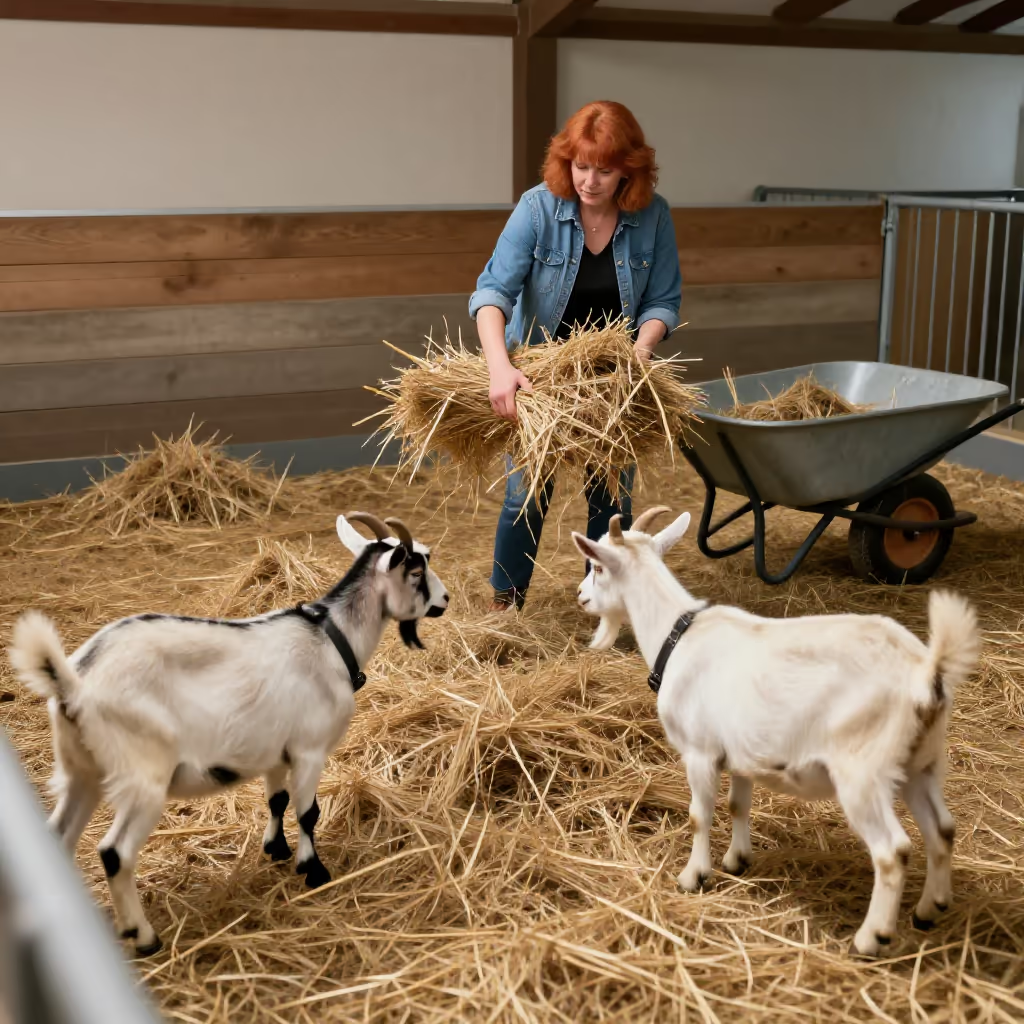
Material such as straw, sawdust, or special granules that is spread on the floor of stalls or cages to provide animals with a dry and clean surface.
example
Für den Hamsterkäfig brauchen wir noch frische Streu aus dem Tiergeschäft.
We still need fresh bedding from the pet store for the hamster cage.

Usage tips
Word family
The noun 'die Streu' (bedding/litter) is closely related to the verb 'streuen' (to scatter, to spread). Streu is therefore the material that you scatter, for example, in a cage or on a garden bed.
EXAMPLE
Der Bauer streut frisches Stroh in den Stall.
The farmer scatters fresh straw in the stable.
Use in the singular
'Streu' (bedding/litter) is a mass noun and is used almost exclusively in the singular, similar to 'Wasser' (water) or 'Sand' (sand). You say 'viel Streu' (a lot of bedding/litter), but not 'vielen Streuen'.
EXAMPLE
Im Käfig ist nicht mehr genug Streu.
There isn't enough bedding left in the cage.
Context clue
You can recognize the meaning from the context. If it is about animals, cages, or stalls, it means the surface material for animals. If it is about forests, soil, or ecology, it means the layer of leaves and needles.
EXAMPLE
Die neue Streu für das Kaninchen riecht nach Zitrone.
The new bedding for the rabbit smells like lemon.
Typical collocations
When talking about animals, typical actions are 'die Streu wechseln' (to change the bedding), 'frische Streu kaufen' (to buy fresh bedding), or 'Streu in den Käfig geben' (to put bedding in the cage).
EXAMPLE
Du musst heute unbedingt die Streu im Meerschweinchenkäfig wechseln.
You absolutely have to change the bedding in the guinea pig cage today.