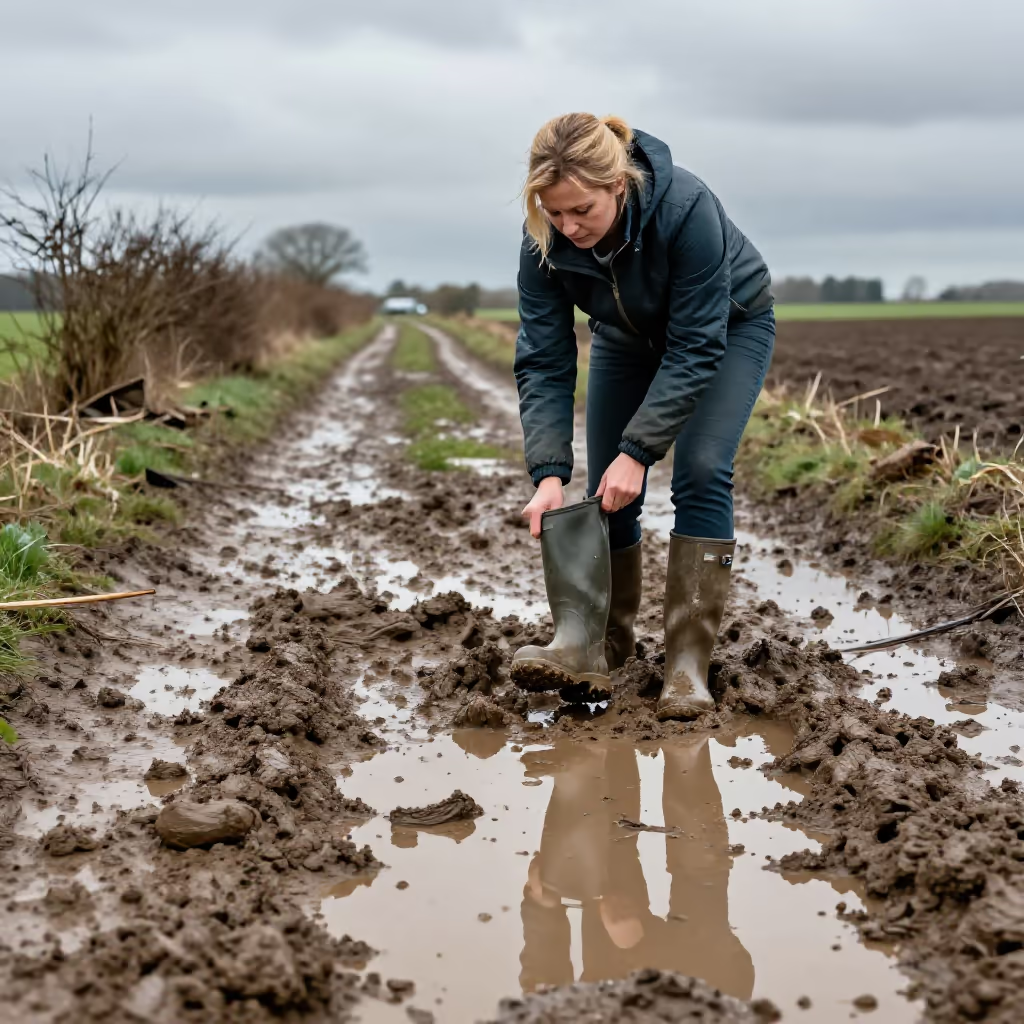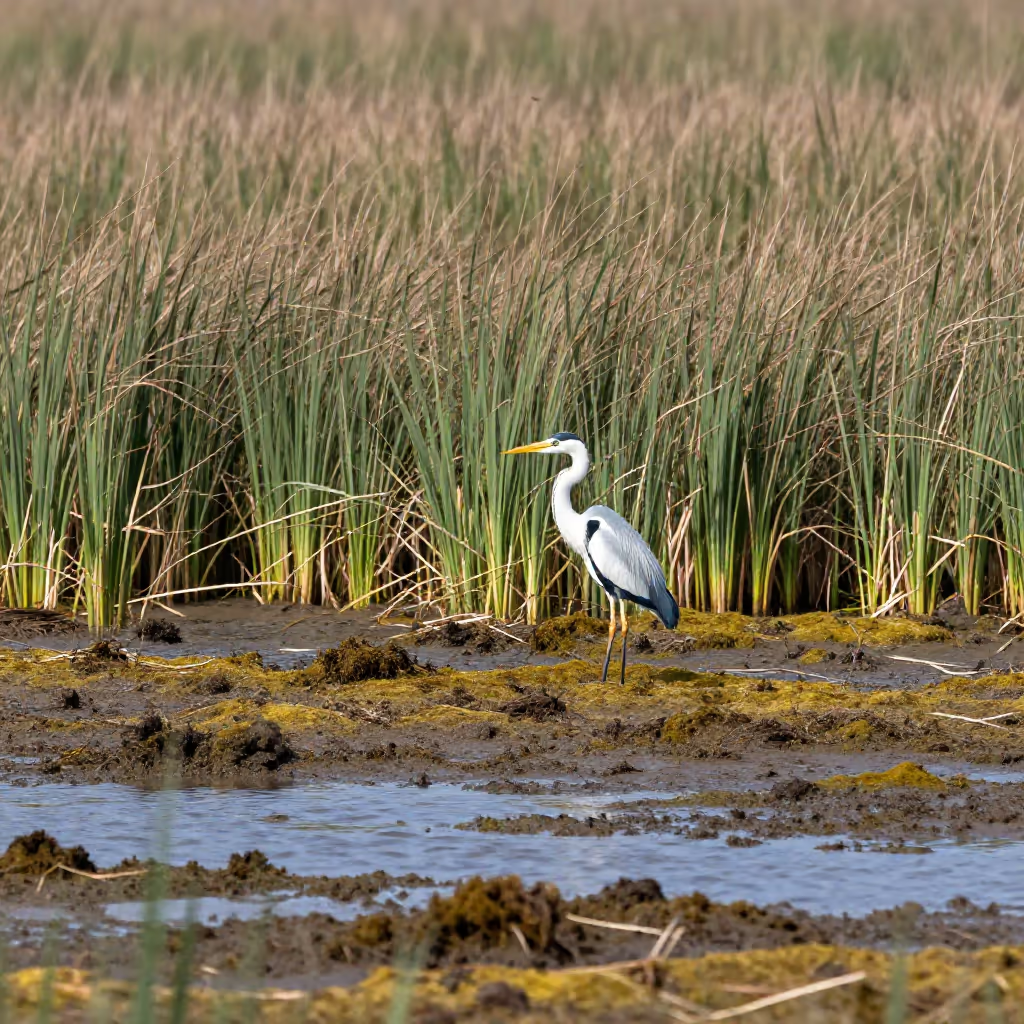
An area with permanently wet, muddy ground where certain plants such as reeds typically grow. Swamps are important ecosystems for many animal and plant species.
example
Viele seltene Vogelarten brüten in diesem Sumpf.
Many rare bird species breed in this swamp.

Usage tips
Context clue
The meaning of 'Sumpf' is clear from the context. If people are talking about nature, animals, and landscapes, it refers to the wetland. In texts about politics, crime, or morality, the term is used figuratively for a corrupt environment.
EXAMPLE
Im Biologieunterricht lernten wir über das Ökosystem Sumpf.
In biology class, we learned about the swamp ecosystem.
Prepositions
To describe movement into the swamp, you use the preposition 'in' with the accusative. To describe a state or position in the swamp, you use 'in' with the dative.
EXAMPLE
Der Wanderer ist versehentlich in den Sumpf getreten.
The hiker accidentally stepped into the swamp.
Figurative meaning
In this meaning, 'Sumpf' is used as a metaphor for a negative, morally reprehensible environment. It is a strong, vivid description for conditions perceived as dirty or opaque.
EXAMPLE
Er geriet in einen Sumpf aus Schulden und illegalen Geschäften.
He got caught up in a swamp of debt and illegal business dealings.
Typical collocations
In the figurative sense, 'Sumpf' is often combined with the verb 'trockenlegen' (to drain). It means eliminating criminal or corrupt structures. Combinations such as 'Sumpf aus Korruption' (swamp of corruption) or 'Sumpf der Kriminalität' (swamp of crime) are also common.
EXAMPLE
Die neue Bürgermeisterin will den Sumpf der Korruption im Rathaus trockenlegen.
The new mayor wants to drain the swamp of corruption in city hall.
Compare with
near_synonym · confusable
Sumpf vs Moor
moor / bog
'Sumpf' and 'Moor' both refer to wet landscapes where the ground is soft and damp. A 'Sumpf' is more of a muddy wetland, often with reeds or similar plants. A 'Moor' is more specific: there, peat has formed from plant remains over a long period of time. That is why 'Moor' is often more precise in texts about nature. The words can be confused because both are wet and difficult to walk through. Figuratively, both can also mean difficult or dark circumstances, but 'Sumpf' sounds especially like corruption or crime.
Sumpf
Im Urlaub ist mein Bruder mit einem Freund am Rand eines Sumpfes gewandert.
On vacation, my brother went hiking with a friend along the edge of a swamp.
Moor
Das Moor darf man nur auf dem Holzweg betreten, weil der Boden sehr weich ist.
You may only enter the moor on the wooden path because the ground is very soft.