

symbolisieren
to symbolize
To stand as a symbol for something; to visually represent or stand for an abstract idea, a quality, or a concept.
EXAMPLE
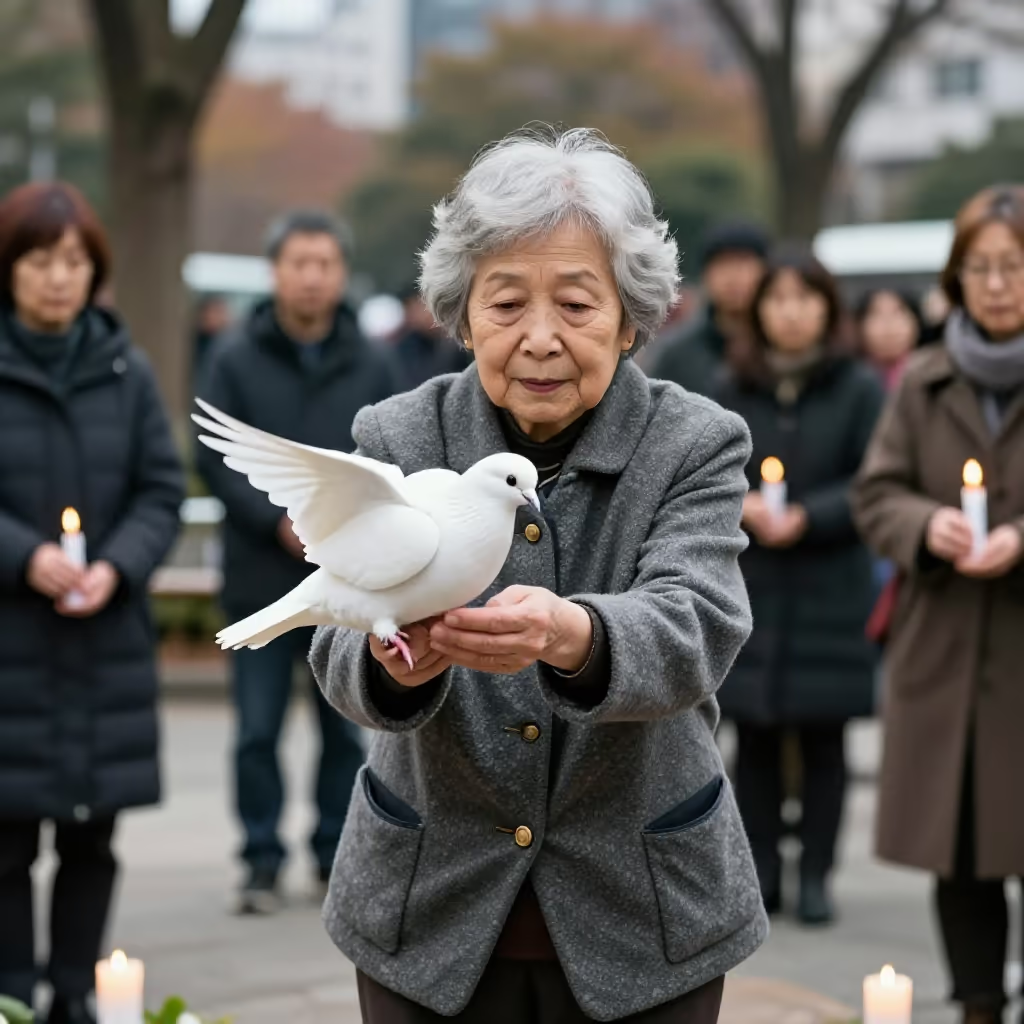
Die weiße Taube symbolisiert den Frieden.
The white dove symbolizes peace.
to symbolize
Loading your saved state.
to symbolize
To stand as a symbol for something; to visually represent or stand for an abstract idea, a quality, or a concept.
Die weiße Taube symbolisiert den Frieden.
The white dove symbolizes peace.
The verb ends in '-isieren', which is typical for verbs derived from a noun. It comes from the noun 'das Symbol' (the symbol).
Das Kreuz ist ein Zeichen, das für viele Menschen das Christentum symbolisiert.
The cross is a sign that symbolizes Christianity for many people.
The verb connects a concrete sign (subject) with an abstract idea (accusative object). The sentence structure is: Something concrete symbolizes something abstract.
Der Ring an ihrem Finger symbolisiert ihre ewige Liebe.
The ring on her finger symbolizes her eternal love.
The object of 'symbolisieren' (to symbolize) is almost always an abstract concept. Common examples are: 'den Frieden' (peace), 'die Liebe' (love), 'die Macht' (power), 'die Hoffnung' (hope), or 'die Freiheit' (freedom).
Die rote Rose symbolisiert in unserer Kultur die romantische Liebe.
In our culture, the red rose symbolizes romantic love.
to represent / portray / constitute
Both words can show an abstract idea through an image or symbol. „Darstellen“ generally describes presenting the idea visibly or figuratively, while „symbolisieren“ explicitly says that something stands as a sign for that idea. Use „symbolisieren“ when the symbolic function is the focus.

Der helle Morgenhimmel symbolisiert in dem Bild die Hoffnung.
In the painting, the bright morning sky symbolizes hope.
Das Bild stellt die Hoffnung durch einen hellen Morgenhimmel dar.
The painting represents hope through a bright morning sky.