

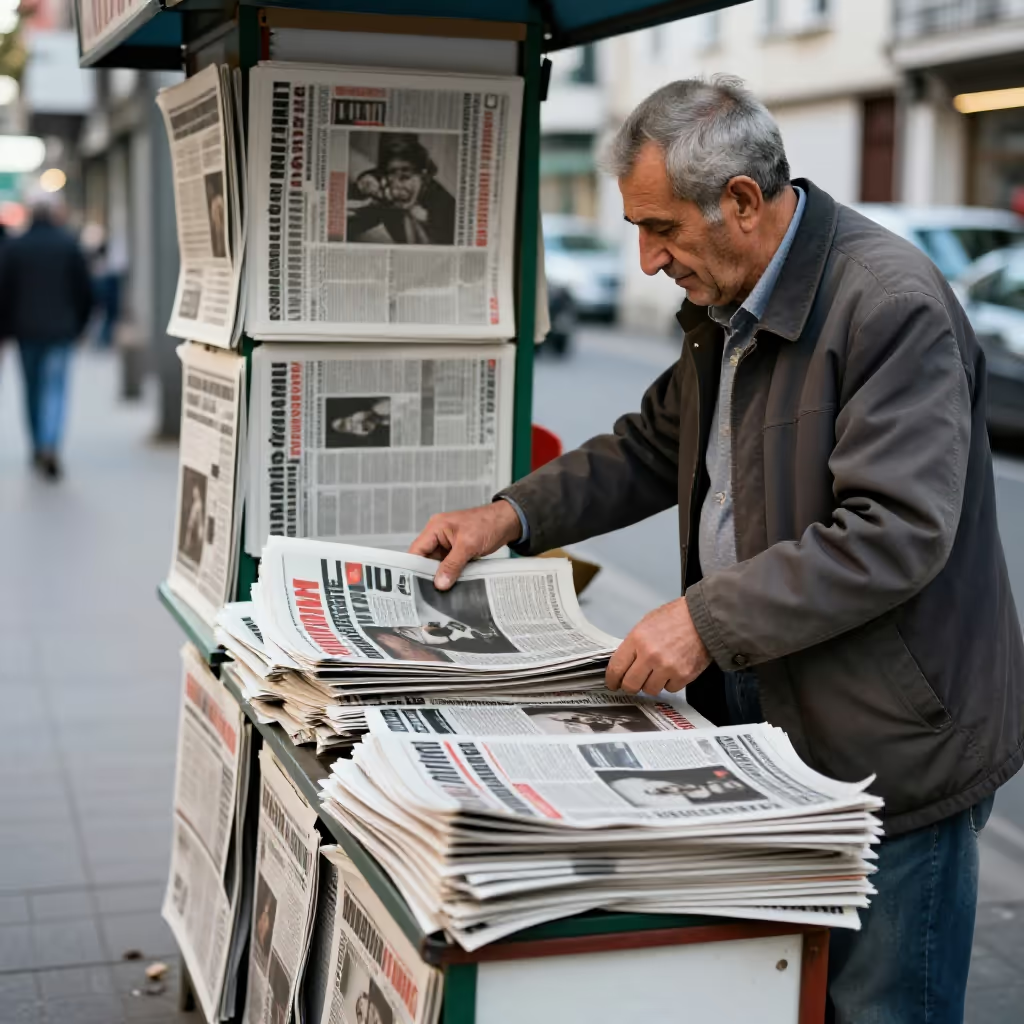
A newspaper that appears daily. The term is somewhat old-fashioned and is often used in the names of newspapers.
example
Er liest jeden Morgen beim Frühstück das lokale Tagblatt.
He reads the local daily newspaper every morning at breakfast.

Usage tips
Compound word
The word is made up of 'der Tag' (day) and 'das Blatt' (leaf/sheet). Besides 'Pflanzenblatt' (plant leaf), 'Blatt' can also mean 'a sheet of paper' or 'newspaper'. A 'Tagblatt' (daily newspaper) is therefore literally a 'paper for the day'.
EXAMPLE
Das „St. Galler Tagblatt“ ist eine bekannte Schweizer Zeitung.
The 'St. Galler Tagblatt' is a well-known Swiss newspaper.
Register and style
The term 'Tagblatt' (daily newspaper) is considered somewhat old-fashioned. Today, you mainly find it as a fixed part of the names of traditional newspapers, but less often in everyday language.
EXAMPLE
Der Name der Zeitung ist schon über 100 Jahre alt: „Reutlinger Tagblatt“.
The name of the newspaper is over 100 years old: 'Reutlinger Tagblatt'.
Typical verbs
As with other newspapers, you use verbs like 'lesen' (to read), 'abonnieren' (to subscribe to), or 'in etwas blättern' (to leaf through something). You can also say that a 'Tagblatt' (daily newspaper) 'erscheint' (appears/is published) daily.
EXAMPLE
Mein Großvater hat sein ganzes Leben lang das lokale Tagblatt abonniert.
My grandfather subscribed to the local daily newspaper his whole life.
Compare with
near_synonym · confusable
Tagblatt vs Zeitung
newspaper
'die Zeitung' and 'das Tagblatt' can both mean a newspaper. 'Zeitung' is the normal word for a printed or digital publication with current news. 'Tagblatt' more specifically means a newspaper that appears daily, but today it sounds rather old-fashioned. You often see the word in the names of newspapers. The words can be confused because a Tagblatt is a type of Zeitung. In normal conversation, people usually say 'Zeitung'; 'Tagblatt' fits better when that is the title, or when you want to emphasize its daily character.
Tagblatt
Frau Becker kauft jeden Morgen das Tagblatt, weil dort die lokalen Termine stehen.
Ms. Becker buys the daily newspaper every morning because it lists the local events.
Zeitung
Im Zug las er die Zeitung, weil er die Nachrichten noch nicht kannte.
On the train, he read the newspaper because he had not seen the news yet.