

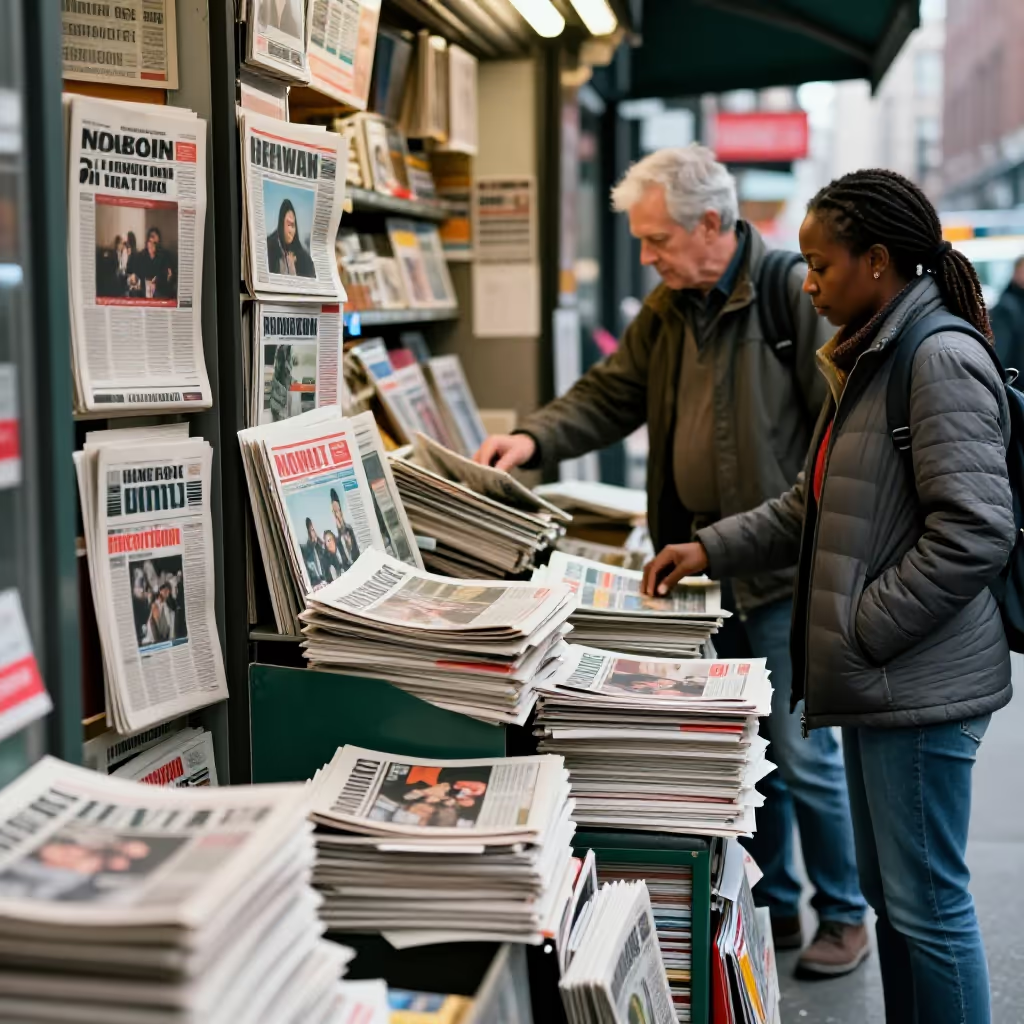
The entirety of the newspapers and magazines that appear daily. The term refers collectively to up-to-date print media.
example
Laut der heutigen Tagespresse wird der Kanzler morgen eine wichtige Erklärung abgeben.
According to today's daily press, the chancellor will make an important statement tomorrow.

Usage tips
Word composition
The word is made up of 'Tages-' (a form of 'der Tag' (the day)) and 'die Presse' (the press). So it literally refers to the press that is current for the day.
EXAMPLE
Die Tagespresse ist voll von Berichten über die Wahlen.
The daily press is full of reports about the elections.
Collective noun in the singular
'Tagespresse' (daily press) is a collective noun that refers to many newspapers, but grammatically it is singular. The verb therefore also stands in the singular.
EXAMPLE
Die deutsche Tagespresse berichtet ausführlich über das Ereignis.
The German daily press is reporting extensively on the event.
Typical collocations
Common phrases are 'in der Tagespresse lesen' (to read in the daily press), 'in der Tagespresse stehen' (to be in the daily press), or as a source reference 'laut Tagespresse' (according to the daily press).
EXAMPLE
Laut der Tagespresse von heute gibt es neue Entwicklungen.
According to today's daily press, there are new developments.
Compare with
near_synonym · confusable
Tagespresse vs Zeitung
newspaper
'die Zeitung' and 'die Tagespresse' are both connected with current printed media. 'Zeitung' usually means a single publication, for example a particular newspaper that you buy or read. 'Tagespresse', on the other hand, means all daily newspapers and similar print media collectively. The word sounds more factual and is often used in reports or discussions. They can be confused because both talk about current news. For a single copy or publication, 'Zeitung' fits; for many daily media taken together, 'Tagespresse' fits.
Tagespresse
Nach der Entscheidung berichtete die Tagespresse ausführlich über den Fall.
After the decision, the daily press reported on the case in detail.
Zeitung
Emil liest in der Küche die Zeitung, bevor er zur Arbeit geht.
Emil reads the newspaper in the kitchen before going to work.