

die Tanne
fir
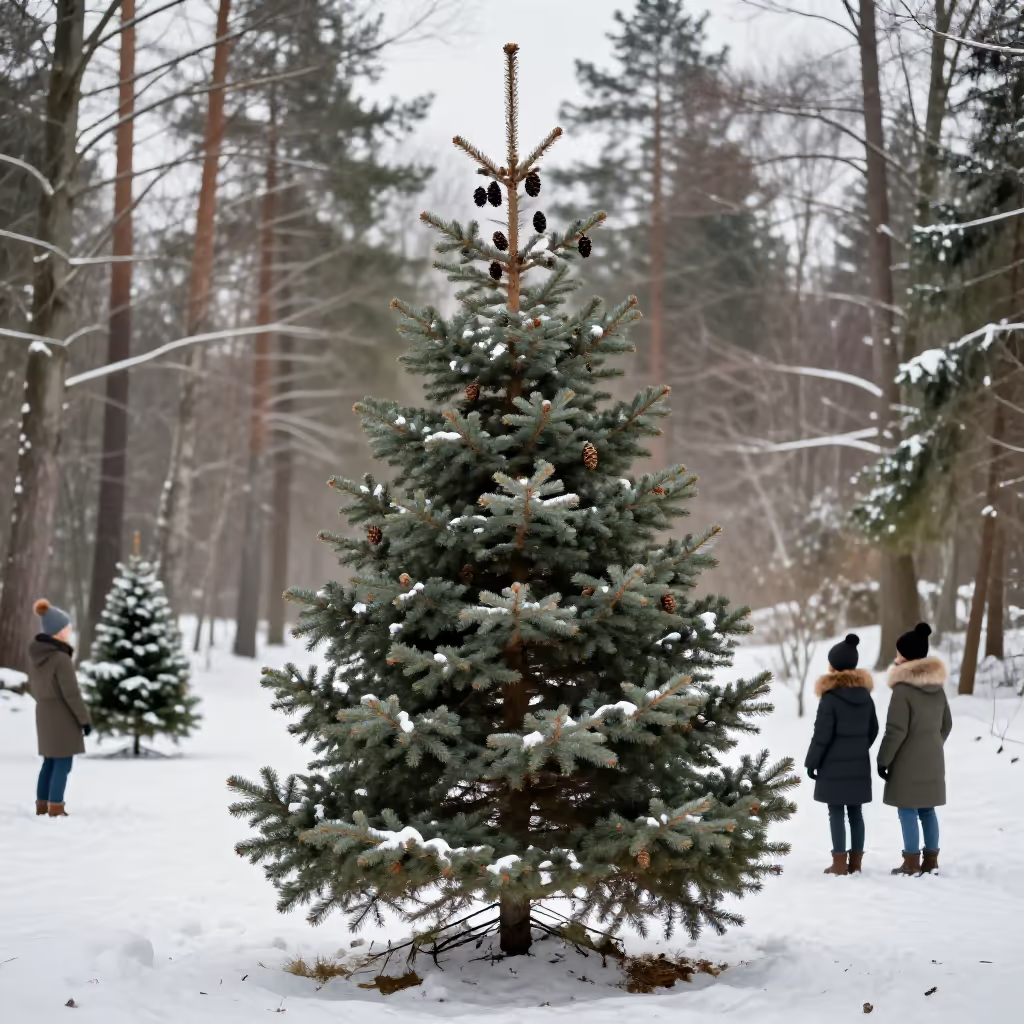
A conifer with flat, soft needles and upright cones. Firs are often used as Christmas trees.
EXAMPLE
Im Wald standen hohe, alte Tannen.
Tall, old firs stood in the forest.
fir
Loading your saved state.
fir
A conifer with flat, soft needles and upright cones. Firs are often used as Christmas trees.
Im Wald standen hohe, alte Tannen.
Tall, old firs stood in the forest.
The word 'Tanne' (fir) is the basis for many compound words that have to do with this tree. These include, for example, 'der Tannenbaum' (fir tree/Christmas tree), 'der Tannenzapfen' (fir cone), or 'der Tannenwald' (fir forest).
Im Herbst sammeln die Kinder Tannenzapfen im Wald.
In autumn, the children collect fir cones in the forest.
In Germany, the fir is closely associated with Christmas. The tradition of decorating a fir and putting it in the house as a Christmas tree is widespread.
Jedes Jahr im Dezember schmücken wir gemeinsam eine Tanne.
Every year in December, we decorate a fir together.
Common adjectives that describe a fir are 'hoch' (tall), 'alt' (old), 'grün' (green), or 'dicht' (dense). These describe the typical appearance of the tree.
Hinter dem Haus steht eine sehr hohe Tanne.
There is a very tall fir behind the house.
spruce
Die Fichte and die Tanne are both conifers and can be found in forests or used as Christmas trees. However, they are different types of trees: the spruce has short, pointed needles and hanging cones, while the fir has flat, soft needles and upright cones. For precise identification, you need to pay attention to these features.

An der Tanne stehen die Zapfen aufrecht auf den Ästen.
The cones stand upright on the branches of the fir.
An der Fichte hängen die Zapfen unter den Ästen.
The cones hang beneath the branches of the spruce.