

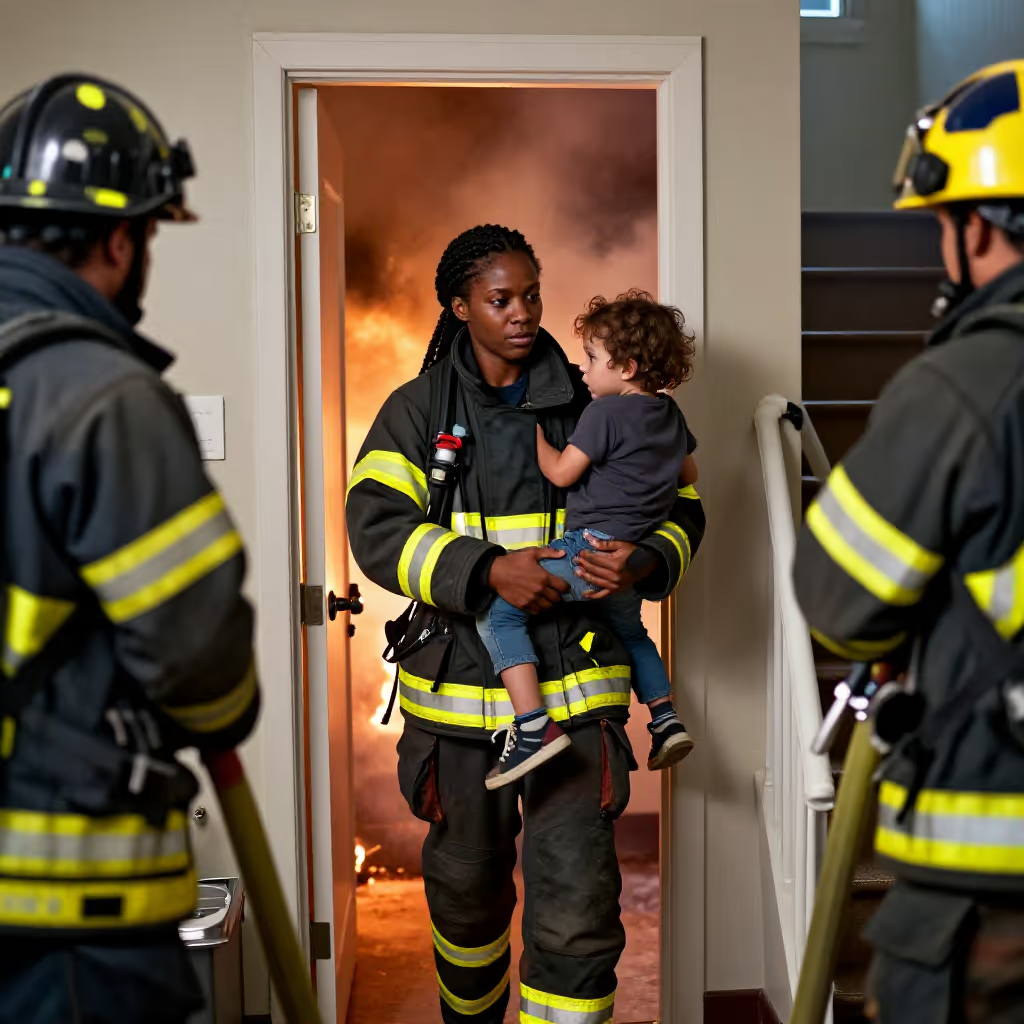
The quality of being courageous and fearless, especially in a dangerous, difficult, or painful situation. It shows itself in overcoming fear.
example
Der Feuerwehrmann wurde für seine außerordentliche Tapferkeit bei dem Einsatz ausgezeichnet.
The firefighter was honored for his extraordinary bravery during the operation.
Usage tips
Word structure
The word is derived from the adjective 'tapfer' (brave). The ending '-keit' is often added to adjectives to form a noun that describes the quality.
EXAMPLE
Ihre Ehrlichkeit ist eine Eigenschaft, die ich sehr schätze.
Her honesty is a quality that I value very highly.
Typical verbs
'Tapferkeit' (bravery) is often combined with verbs that express showing or acknowledging this quality. Typical verbs are 'Tapferkeit beweisen' (to prove/show bravery), 'Tapferkeit zeigen' (to show bravery), or 'jemandes Tapferkeit bewundern' (to admire someone's bravery).
EXAMPLE
Die Soldaten mussten im Kampf große Tapferkeit beweisen.
The soldiers had to show great bravery in battle.
Expressing possession
To express whose bravery is meant, German usually uses the genitive or the preposition 'von' with the dative. Both are correct and common.
EXAMPLE
Die Tapferkeit des Kindes beim Arzt war beeindruckend.
The child's bravery at the doctor's office was impressive.
Compare with
synonym
Tapferkeit vs Mut
courage
'der Mut' and 'die Tapferkeit' both describe someone staying strong despite fear or danger. 'Mut' is more general and fits many situations, for example a conversation, a decision, or a danger. 'Tapferkeit' sounds a little more solemn and especially emphasizes that someone endures pain, fear, or a difficult situation. In everyday life, people often use 'Mut'. 'Tapferkeit' fits especially well when you admire a person's behavior.
Tapferkeit
Die Ärztin lobt das Kind für seine Tapferkeit bei der Behandlung.
The doctor praises the child for their bravery during the treatment.
Mut
Tom braucht Mut, um sich für den Fehler zu entschuldigen.