

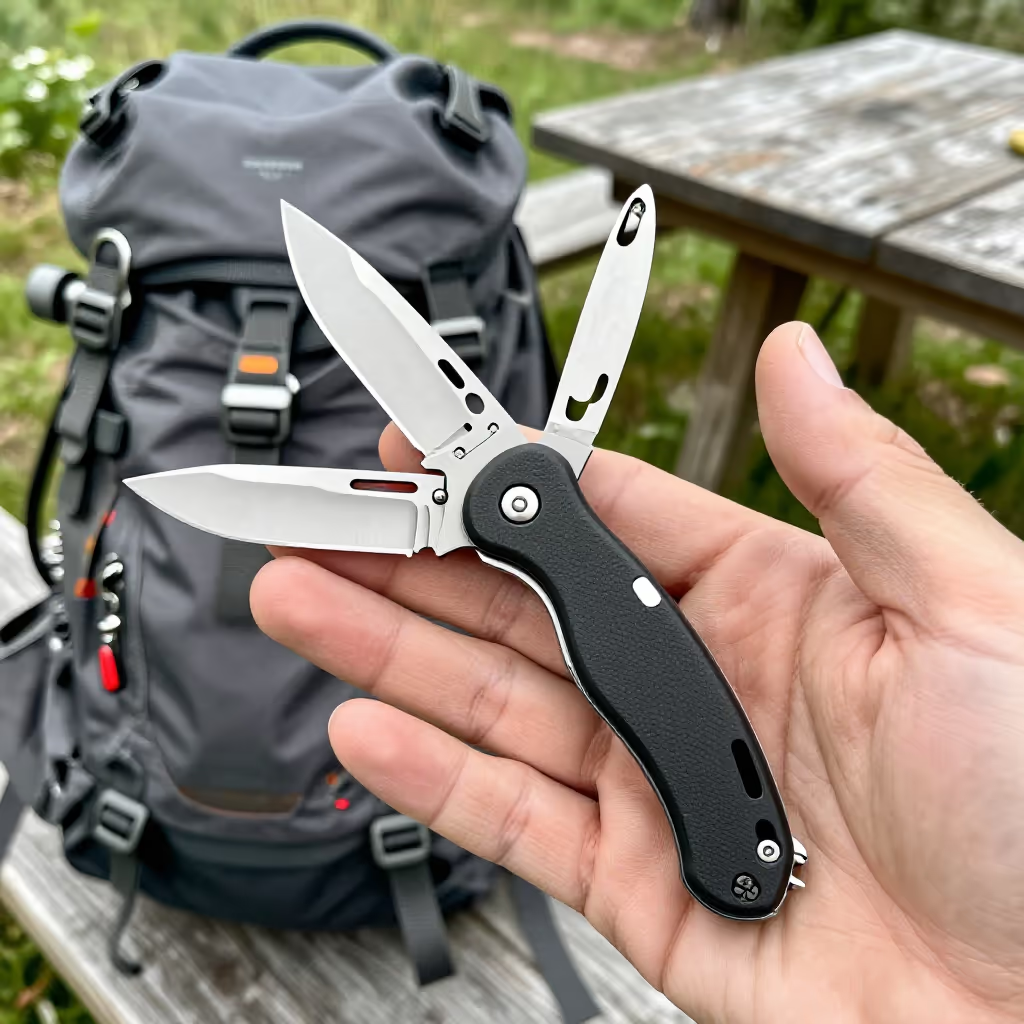
A small folding knife that can be carried in a trouser pocket. It often contains other tools besides the blade, such as a corkscrew or scissors.
example
Er benutzte sein Taschenmesser, um den Apfel zu schälen.
He used his pocketknife to peel the apple.
Usage tips
Word composition
'Taschenmesser' (pocketknife) is made up of 'die Tasche' (pocket/bag) and 'das Messer' (knife). So it is literally a knife that is small enough for a trouser pocket.
EXAMPLE
Bei der Sicherheitskontrolle am Flughafen wurde ihm sein Taschenmesser abgenommen.
At the airport security check, his pocketknife was taken away from him.
Typical verbs
Since pocketknives are foldable, the verbs 'aufklappen' (to fold open) and 'zuklappen' (to fold shut) are often used. Other typical verbs are 'schnitzen' (to carve), 'schneiden' (to cut), or 'öffnen' (to open).
EXAMPLE
Er klappte sein Taschenmesser auf, um die Verpackung zu öffnen.
He folded open his pocketknife to open the package.
Cultural context
The 'Schweizer Taschenmesser' (Swiss Army knife) is an internationally known and protected brand. It is considered a symbol of reliability and versatility.
EXAMPLE
Zum Geburtstag habe ich ein echtes Schweizer Taschenmesser bekommen.
For my birthday, I got a genuine Swiss Army knife.