

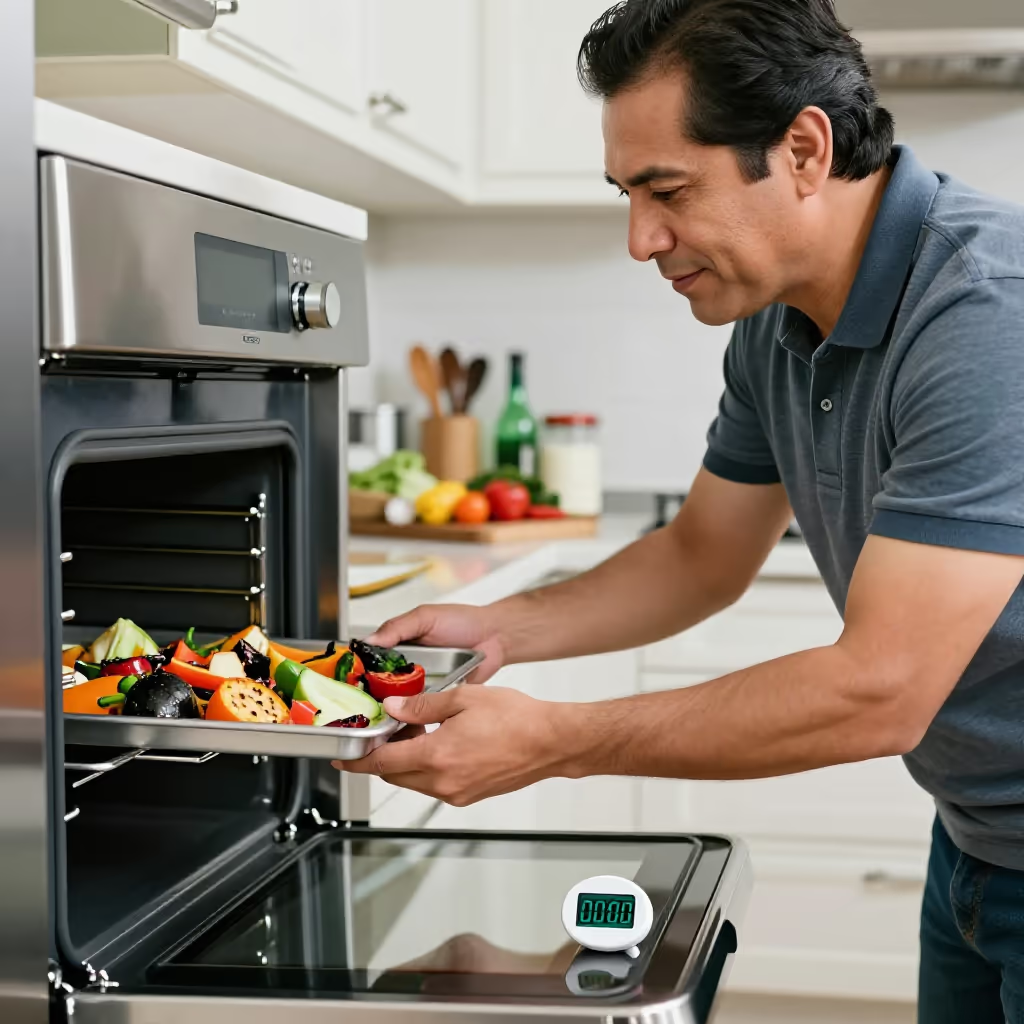
A device or function that gives a signal after a preset period of time has elapsed. It is often used for cooking, during sports, or for time planning.
example
Ich habe den Timer auf 15 Minuten gestellt, damit die Pizza nicht verbrennt.
I set the timer for 15 minutes so the pizza doesn't burn.
Usage tips
English loanword
'Timer' (timer) is a direct loanword from English and has exactly the same meaning. The pronunciation is also based on English.
EXAMPLE
Fast jedes Smartphone hat heute eine integrierte Timer-Funktion.
Almost every smartphone today has an integrated timer function.
Typical verbs
The most common verbs used with 'Timer' (timer) are 'stellen' (to set) or 'einstellen' (to set). When the time is up, the timer 'klingelt' (rings) or 'läuft ab' (runs out/expires).
EXAMPLE
Kannst du bitte den Timer stellen? Das Essen muss 20 Minuten kochen.
Can you please set the timer? The food needs to cook for 20 minutes.
Sentence structure with "auf"
When setting a period of time, you use the preposition 'auf' followed by the accusative. The typical structure is: 'den Timer auf [Zeitspanne] stellen' (to set the timer for [period of time]).
EXAMPLE
Ich stelle den Timer auf eine halbe Stunde.
I'm setting the timer for half an hour.
Compare with
near_synonym · confusable
Timer vs Wecker
alarm clock
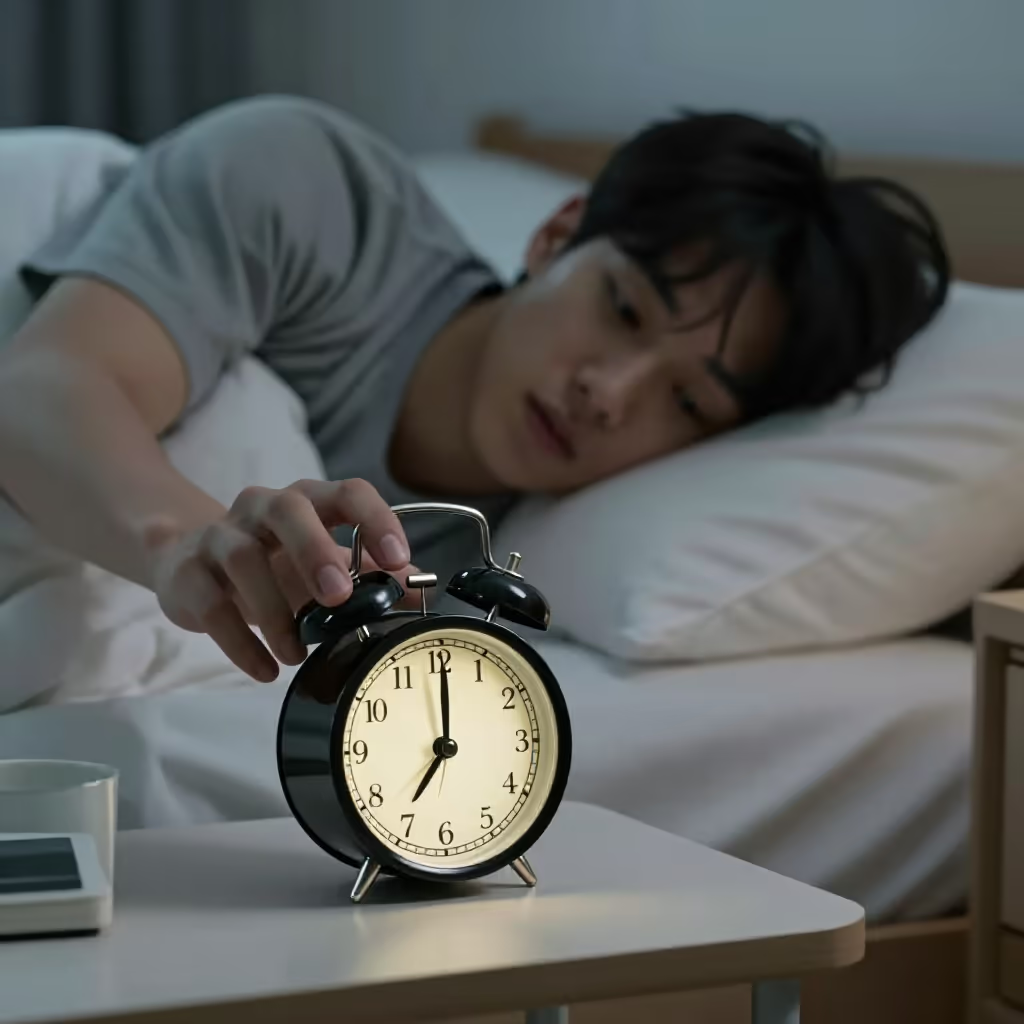
'Wecker' and 'Timer' both give a signal at a set time. The difference lies in the purpose: a Wecker is meant to wake someone up at a specific clock time, for example at seven in the morning. A Timer measures a length of time and rings afterward, for example after ten minutes when cooking or exercising. Learners may confuse the words because both look similar on a phone and ring. When it is about waking up, you say 'Wecker'. When a duration is supposed to run out, you say 'Timer'.
Timer
Für die Nudeln stellt Anna den Timer auf acht Minuten.
For the pasta, Anna sets the timer for eight minutes.
Wecker
Mein Wecker klingelt morgen schon um sechs Uhr.
My alarm clock is going to ring as early as six o'clock tomorrow.