

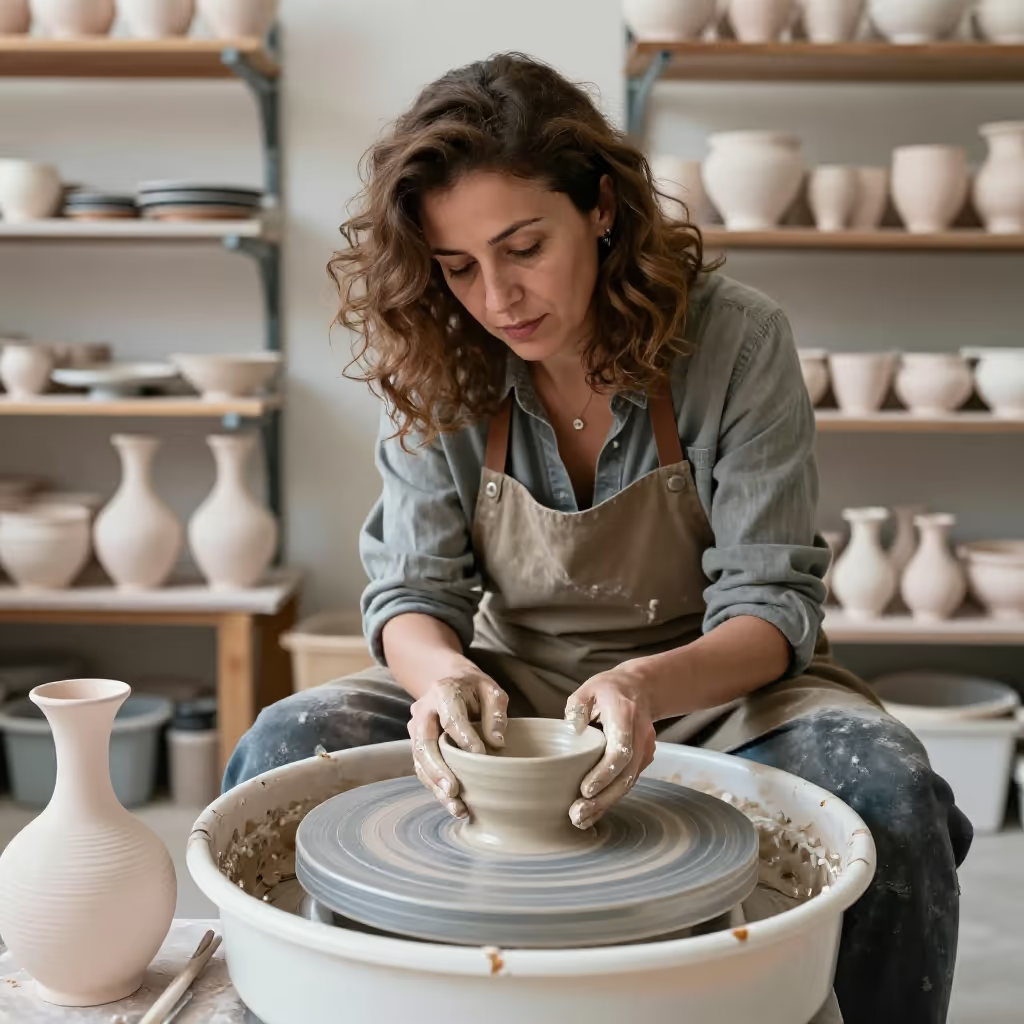
A craftsperson who makes objects such as pots, bowls, or vases out of clay.
example
Auf dem Mittelaltermarkt zeigte ein Töpfer, wie man auf der Scheibe eine Vase formt.
At the medieval market, a potter showed how to shape a vase on the wheel.
Usage tips
Word structure
The word 'Töpfer' (potter) is derived directly from 'der Topf' (pot). The ending '-er' here refers to the person whose profession is making pots and other ceramic objects.
EXAMPLE
Der Töpfer verkaufte seine handgemachten Tassen auf dem Markt.
The potter sold his handmade cups at the market.
Word family
This word belongs to a word family. The related verb is 'töpfern' (to make pottery), and the workshop or the craft itself is called 'die Töpferei' (pottery).
EXAMPLE
In meiner Freizeit lerne ich in einem Kurs zu töpfern.
In my free time, I'm learning to make pottery in a course.
Typical collocations
A potter is often associated with their tools and activities. Typical expressions are 'an der Töpferscheibe arbeiten' (to work at the potter's wheel), 'Ton formen' (to shape clay), or 'Keramik brennen' (to fire ceramics).
EXAMPLE
Wir sahen zu, wie der Töpfer den Ton an der Töpferscheibe formte.
We watched as the potter shaped the clay on the potter's wheel.
Compare with
near_synonym · confusable
Töpfer vs Hafner
stove fitter / potter
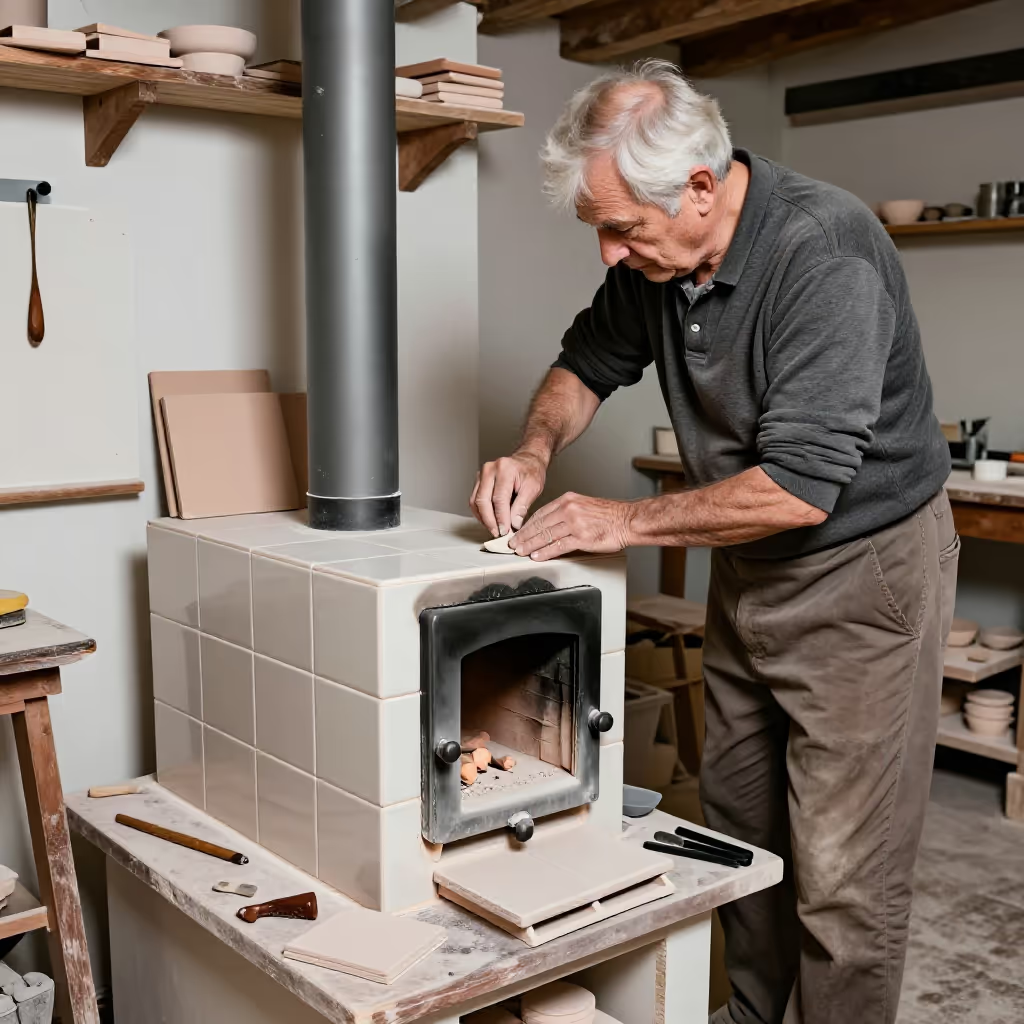
'Töpfer' and 'Hafner' both refer to a craft occupation involving clay or ceramics. 'Töpfer' is the generally understood word today for someone who makes bowls, pots, or vases out of clay, for example. 'Hafner' is regional or outdated and can also mean a craftsperson who builds or repairs tiled stoves. The words can be confused because they partly refer to the same occupation. If you are speaking generally about ceramics, 'Töpfer' is usually the natural choice. 'Hafner' is more likely to be heard in certain regions, in older texts, or when talking about stoves.
Töpfer
Im Ferienkurs zeigt der Töpfer den Kindern, wie man eine kleine Schale formt.
In the holiday course, the potter shows the children how to shape a small bowl.
Hafner
Für den alten Kachelofen ruft die Familie einen Hafner aus dem Nachbarort.
For the old tiled stove, the family calls a stove fitter from the neighboring village.