


trauernd
mourning
Showing or feeling a state of grief, usually because of the loss or death of a person.
EXAMPLE
Die trauernde Familie versammelte sich zur Beerdigung.
The mourning family gathered for the funeral.
mourning
Loading your saved state.
mourning
Showing or feeling a state of grief, usually because of the loss or death of a person.
Die trauernde Familie versammelte sich zur Beerdigung.
The mourning family gathered for the funeral.
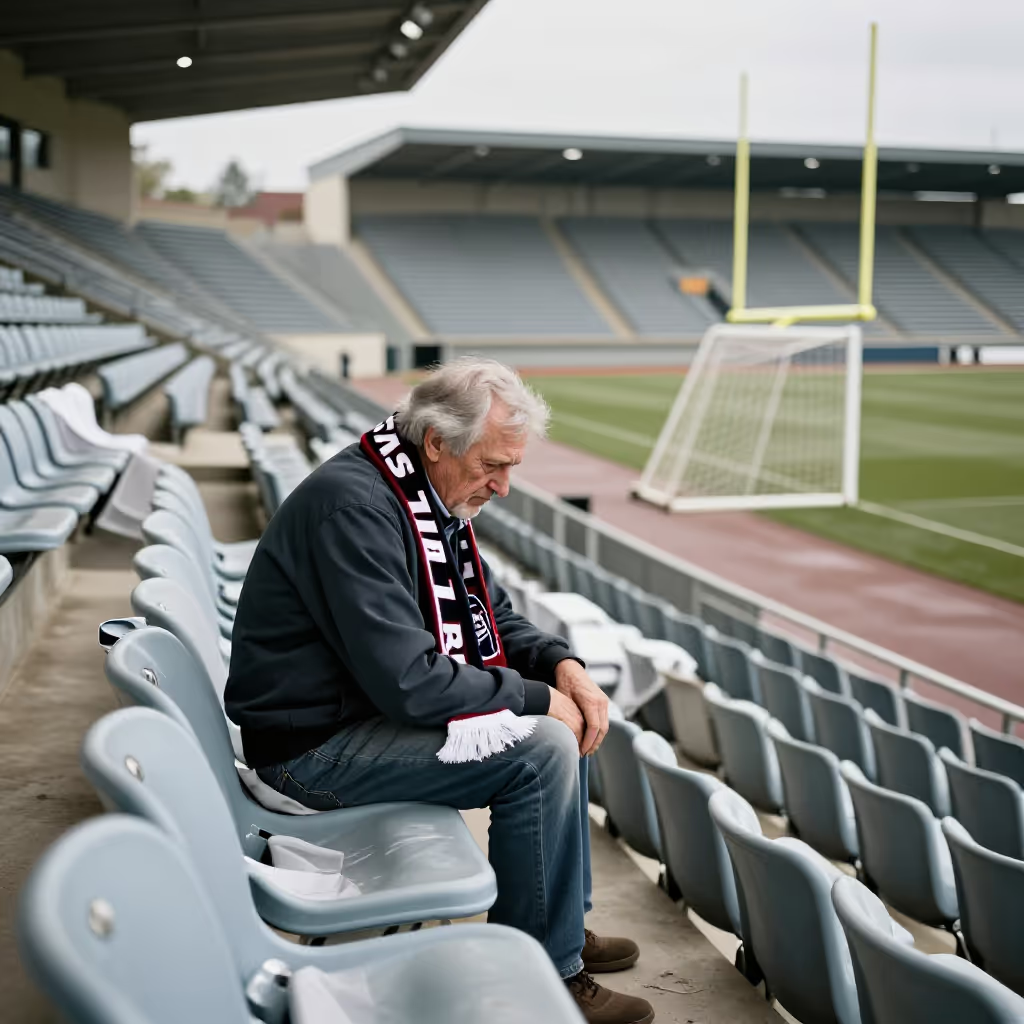
grieving
In a figurative sense, expressing a very saddened or wistful state because of a loss or negative development.
Mit trauernder Miene blickte er auf die Ruinen seines abgebrannten Hauses.
With a grieving expression, he looked at the ruins of his burned-down house.
'Trauernd' (mourning) is the present participle of the verb 'trauern' (to mourn). It is used like a normal adjective before a noun and is declined accordingly.
Ein trauernder Mann stand allein am Grab.
A mourning man stood alone at the grave.
To indicate the reason for the grief, the construction 'trauernd um + accusative' (mourning for + accusative) is used. This is a typical participial construction.
Die um ihren verstorbenen Hund trauernde Frau fand Trost bei Freunden.
The woman mourning her deceased dog found comfort with friends.
In the context of death and loss, 'trauernd' (mourning) is often connected with people or groups. Typical combinations are 'die trauernden Angehörigen' (the mourning relatives), 'die trauernde Witwe' (the mourning widow), or 'die trauernden Eltern' (the mourning parents).
Die trauernden Angehörigen baten um Spenden statt Blumen.
The mourning relatives asked for donations instead of flowers.
sad
„Traurig“ generally describes a state of sorrow or dejection. „Trauernd“ more specifically refers to the reaction to the loss or death of a person. After a specific loss, both words are possible, but „trauernd“ makes the connection with that loss explicit.

Nach dem Tod ihres Großvaters saß Anna trauernd bei der Familie.
After her grandfather's death, Anna sat with the family in mourning.
Nach dem Tod ihres Großvaters war Anna traurig und sprach wenig.
After her grandfather's death, Anna was sad and spoke little.