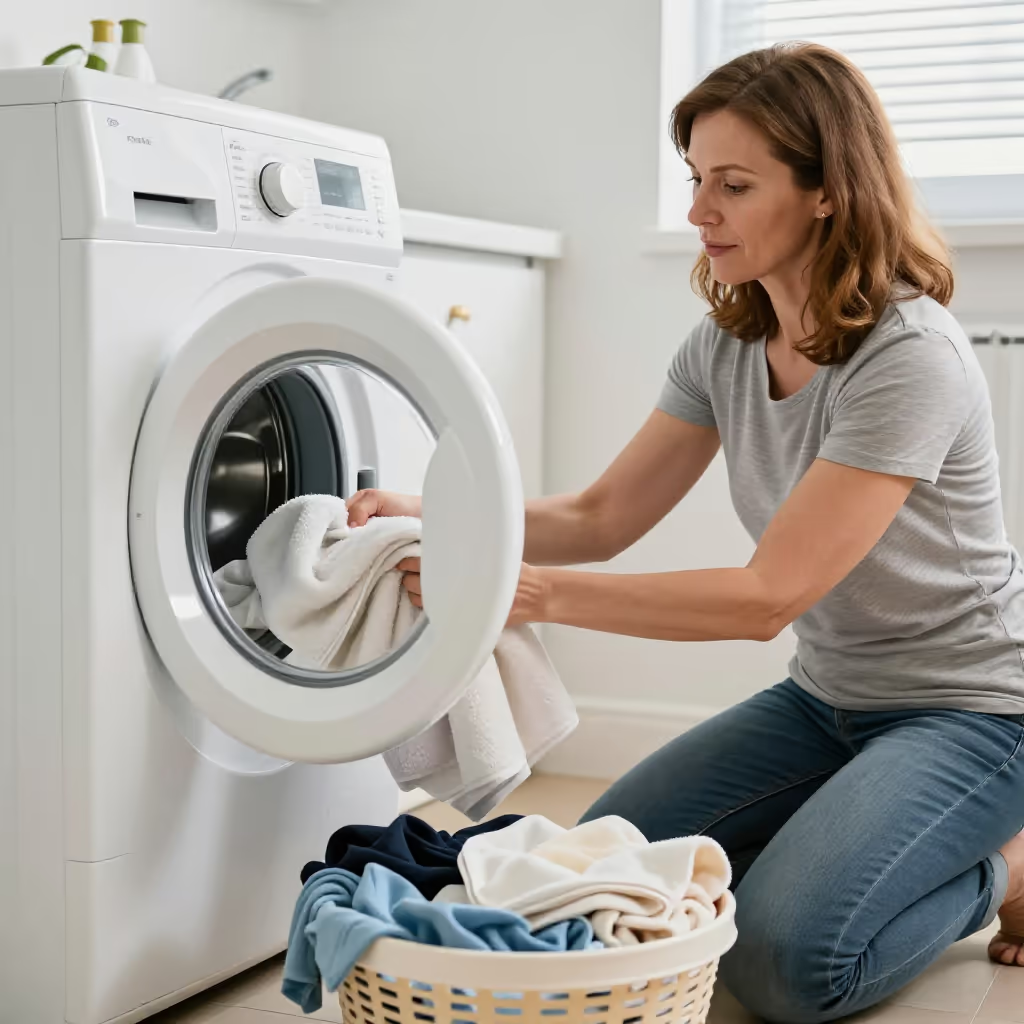
A household appliance used to dry washed laundry with the help of warm air. Also called a tumble dryer.
example
Die Handtücher sind viel weicher, wenn sie aus dem Trockner kommen.
The towels are much softer when they come out of the dryer.
Usage tips
Word structure
'Trockner' (dryer) is derived from the verb 'trocknen' (to dry). The ending '-er' here refers to a device that performs the action of the verb — so, a device that dries.
EXAMPLE
Dieser Pullover darf nicht in den Trockner.
This sweater must not go in the dryer.
Context clue
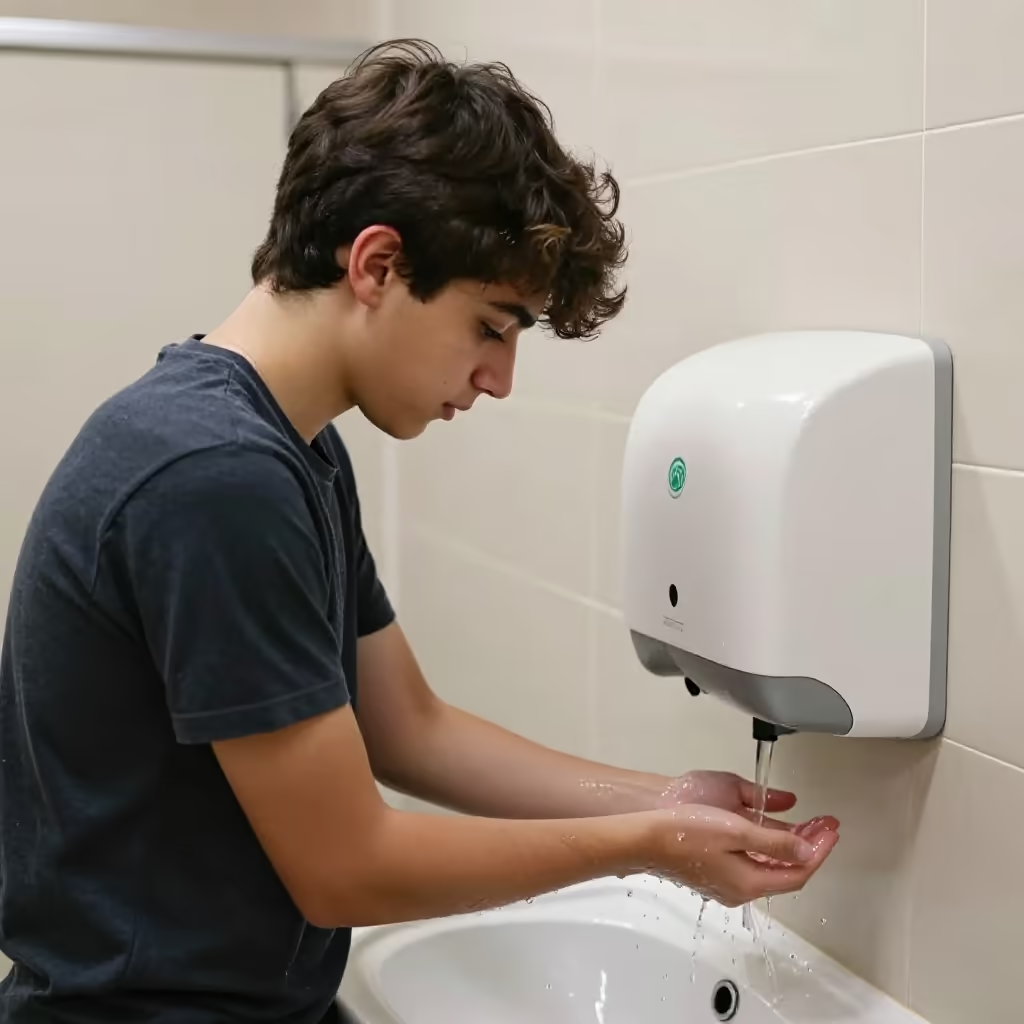
When people talk in everyday life simply about 'dem Trockner' (the dryer), they almost always mean the clothes dryer. Other drying devices are named more specifically, e.g. 'Haartrockner' (hair dryer) or 'Händetrockner' (hand dryer).
EXAMPLE
Ich muss die Wäsche noch aus dem Trockner holen.
I still have to get the laundry out of the dryer.
Typical verbs
In connection with the clothes dryer, the verbs 'laufen' (to run), 'einschalten' (to switch on), 'benutzen' (to use), as well as 'etwas in den Trockner tun' (to put something in the dryer) or 'etwas aus dem Trockner nehmen' (to take something out of the dryer) are often used.
EXAMPLE
Kannst du bitte den Trockner ausräumen?
Can you please empty the dryer?
Compare with
near_synonym · confusable
Trockner vs Föhn
hair dryer / foehn
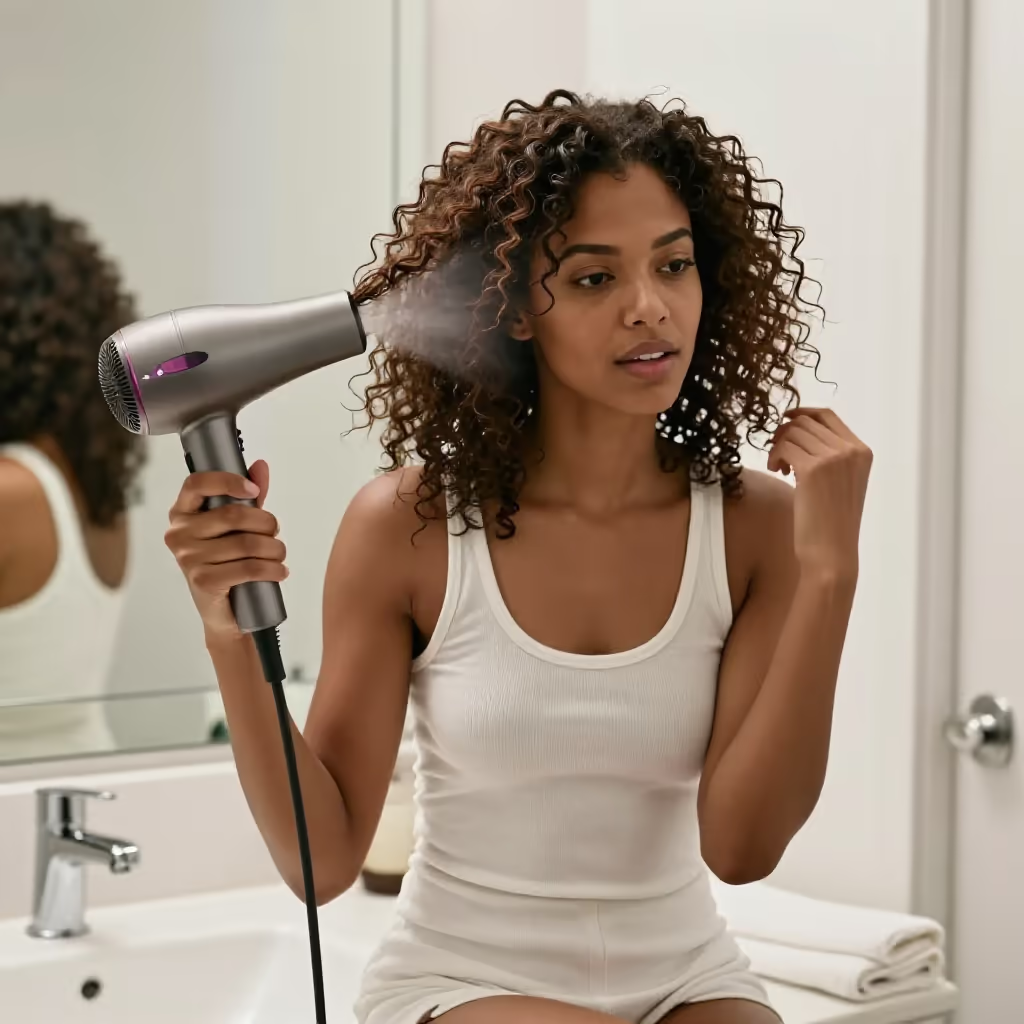
'der Trockner' and 'der Föhn' can both be devices that dry something with warm air. In everyday language, however, 'Trockner' usually means a large appliance for laundry. More generally, a 'Trockner' can also be a device that dries something else. 'Föhn', by contrast, means a small device for drying hair. The words can be confused because both have to do with air and drying. For clothes, you normally say 'Trockner'; for hair, 'Föhn'.
Trockner
Nach dem Waschen kommt die Bettwäsche direkt in den Trockner.
After washing, the bed linen goes straight into the dryer.
Föhn
Vor der Arbeit trocknet Anna ihre Haare schnell mit dem Föhn.
Before work, Anna quickly dries her hair with the hair dryer.