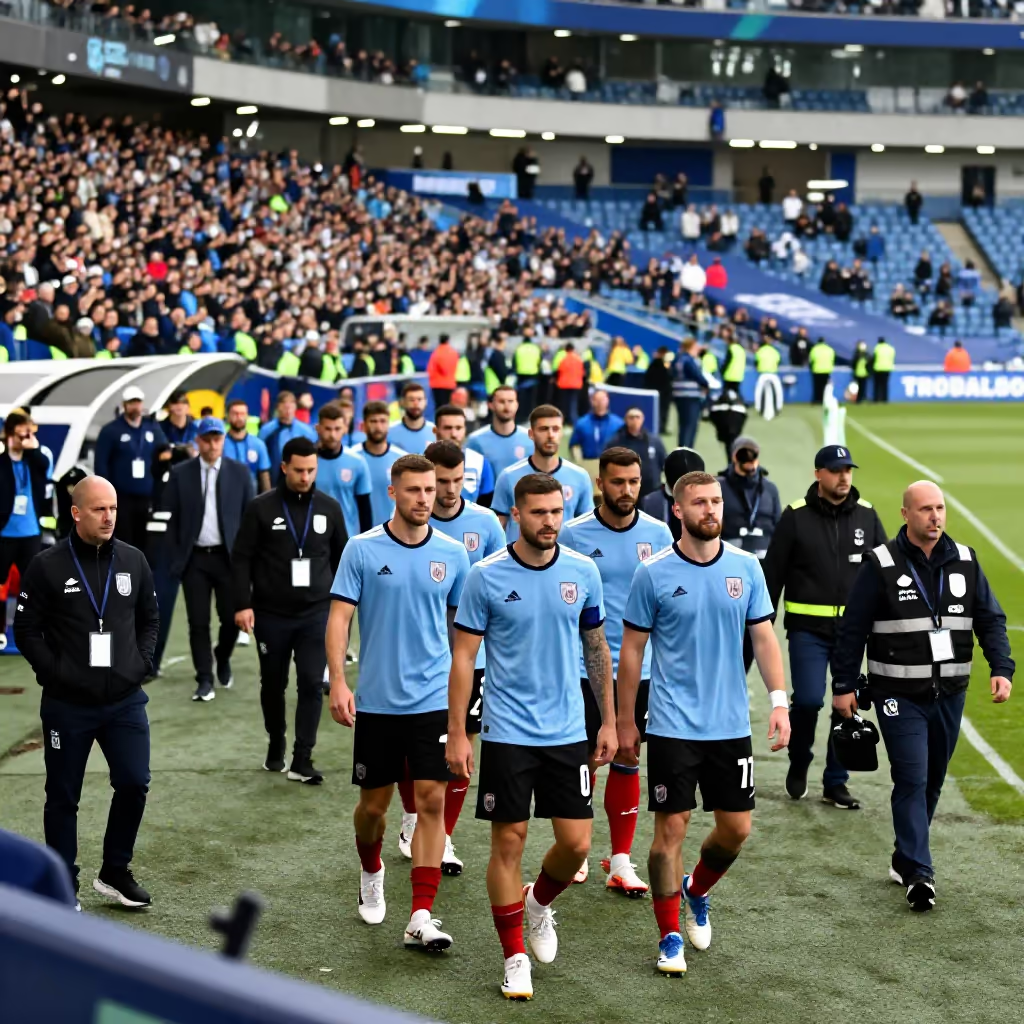
A group of people who follow an important person, a sports team, or a main group. The term often describes a large, hard-to-oversee crowd of people.
example
Der Popstar reist immer mit einem riesigen Tross aus Managern, Assistenten und Bodyguards.
The pop star always travels with a huge entourage of managers, assistants, and bodyguards.

Usage tips
Context clue
The meaning can easily be recognized from the context. In modern usage, 'Tross' refers to the entourage of a prominent person. In historical or military texts, it means the supply section of an army.
EXAMPLE
Der Minister reiste mit einem Tross von Beratern und Journalisten.
The minister traveled with an entourage of advisers and journalists.
Slightly negative tone
When people speak of a 'Tross' (entourage), there is often a slightly negative or critical tone. It emphasizes the size and sometimes also the confusing or bothersome nature of the accompanying group.
EXAMPLE
Überall, wo die Band auftrat, folgte ihr ein riesiger Tross von Fans.
Everywhere the band performed, a huge entourage of fans followed them.
Typical collocations
'Tross' is often used with the preposition 'von' (of) or 'aus' (made up of) to describe the members of the group. Typical phrases are 'ein Tross von Journalisten' (an entourage of journalists) or 'der Tross aus Mitarbeitern' (the entourage made up of staff members).
EXAMPLE
Die Kanzlerin kam mit ihrem ganzen Tross zum Gipfeltreffen.
The chancellor came to the summit with her whole entourage.
Compare with
near_synonym · confusable
Tross vs Begleitung
companion / accompaniment
'die Begleitung' and 'der Tross' can both refer to people who go with someone or follow them. 'Begleitung' is neutral and can also be just one person. It fits many normal situations, for example an appointment or a trip. 'Tross' refers more to a larger group that follows an important person, a team, or a main group. The word can also sound somewhat sprawling or cumbersome. Learners may confuse the words because in both cases it is about people who come along. For everyday situations, 'Begleitung' is usually natural; 'Tross' fits better for large groups around well-known people or teams.
Tross
Nach dem Spiel verließ die Mannschaft mit ihrem ganzen Tross das Stadion.
After the match, the team left the stadium with its whole entourage.
Begleitung
Die ältere Nachbarin geht nur mit Begleitung zum Amt.
The elderly neighbor only goes to the government office with someone accompanying her.