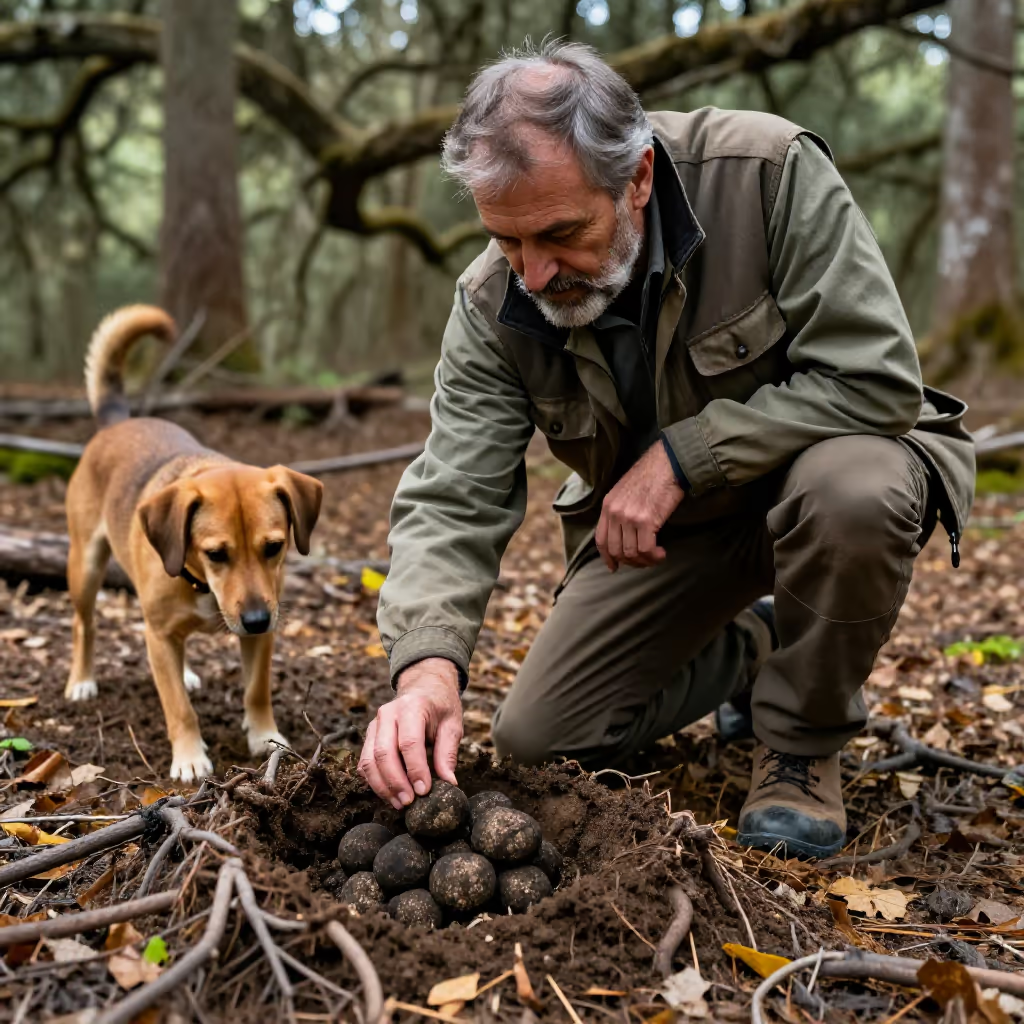
A rare and very expensive edible fungus that grows underground and has an intense, characteristic aroma.
example
In Italien haben wir Pasta mit frisch gehobelter weißer Trüffel gegessen.
In Italy, we ate pasta with freshly shaved white truffle.
Usage tips
Context clue
Context tells you whether the fungus or the praline is meant. If it is about cooking, pasta, or searching in the forest, it is the fungus. If it is about chocolate, dessert, or a gift box, it is the praline.
EXAMPLE
Er bestellte sich ein Risotto mit schwarzer Trüffel.
He ordered a risotto with black truffle.
Typical verbs
The edible fungus is often used with the verbs 'suchen' (to search for; in the forest, often with dogs) and 'hobeln' (to shave in thin slices over a dish).
EXAMPLE
Der Koch hobelte vorsichtig weiße Trüffel über die Eier.
The chef carefully shaved white truffle over the eggs.
Typical combinations
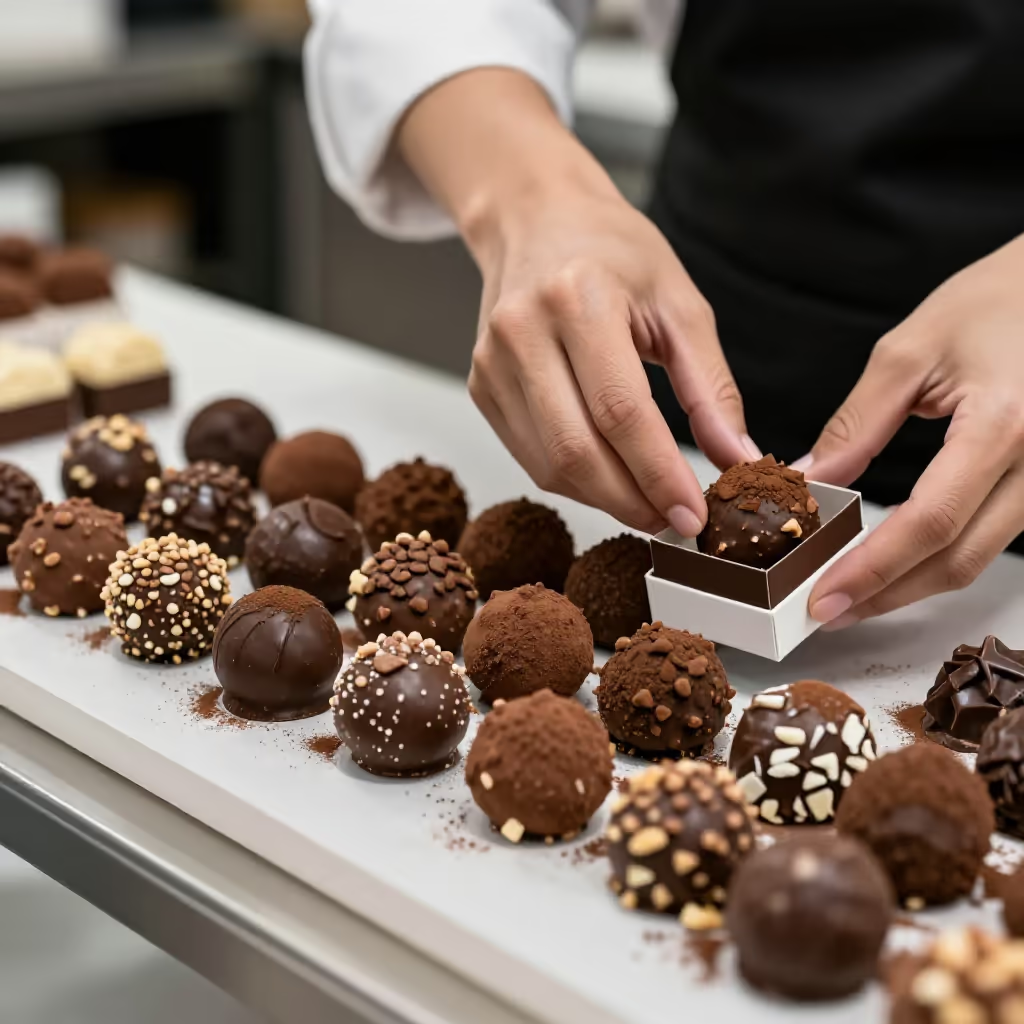
Chocolate truffles are often found in combinations like 'eine Schachtel Trüffel' (a box of truffles), 'eine Auswahl an Trüffeln' (a selection of truffles), or as part of a dessert.
EXAMPLE
Er brachte als Mitbringsel eine kleine Auswahl an Trüffeln mit.
He brought a small selection of truffles as a gift.
Compare with
near_synonym · confusable
Trüffel vs Praline
praline / chocolate
'Praline' and 'Trüffel' can both mean a fine chocolate sweet. In this case, a 'Trüffel' is a special type of praline, often round and made from soft chocolate cream. 'Praline' is more general and can have many shapes and fillings. 'Trüffel' is confusing because the word also means a rare mushroom. Context is therefore important: in a confectionery shop or a box of chocolates, 'Trüffel' usually means the sweet; in a restaurant, it may be the mushroom.
Trüffel
Für die Feier kaufen wir dunkle Trüffel mit Kakaopulver.
For the celebration, we are buying dark chocolate truffles with cocoa powder.
Praline
Nach dem Essen bot Anna jedem Gast eine Praline an.
After the meal, Anna offered each guest a chocolate.