

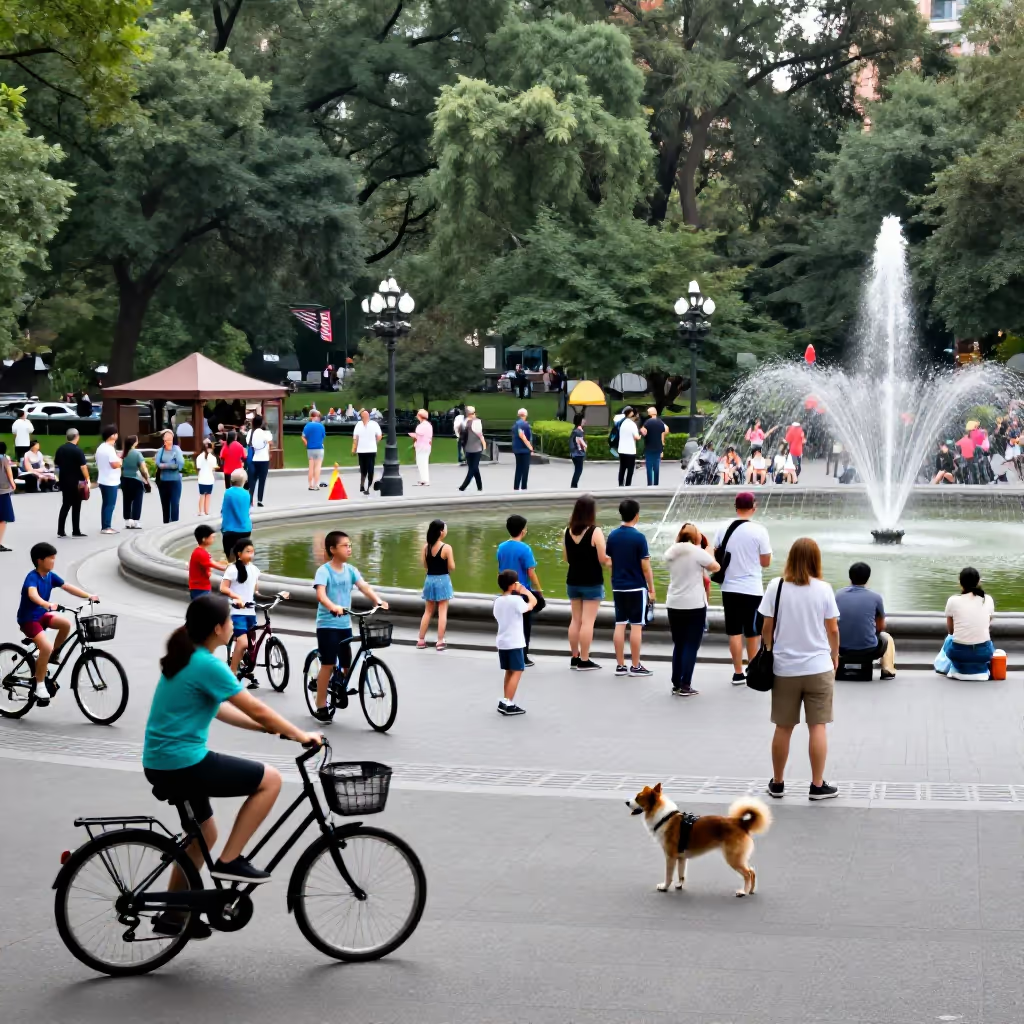
sich tummeln
to swarm
To be present in large numbers, often moving around lively and chaotically in one place.
EXAMPLE
Auf dem Marktplatz tummelten sich Hunderte von Menschen.
Hundreds of people were swarming around the marketplace.
to swarm / hurry
Loading your saved state.
to swarm
To be present in large numbers, often moving around lively and chaotically in one place.
Auf dem Marktplatz tummelten sich Hunderte von Menschen.
Hundreds of people were swarming around the marketplace.

to hurry
Colloquial for 'to hurry up' or 'to get a move on'. This use is somewhat old-fashioned.
Tummel dich, sonst verpassen wir den Anfang des Films!
Hurry up, or we'll miss the beginning of the film!
'Tummeln' (to swarm/hurry) is a reflexive verb and is always used with a reflexive pronoun in the accusative: ich tumm(e)le mich, du tummelst dich, er/sie/es tummelt sich, and so on.
Im Sommer tummeln wir uns oft am See.
In summer, we often hang out at the lake.
In the meaning 'sich an einem Ort aufhalten' (to stay/be in a place), a location is often added with a preposition. Typically, people, children, or animals 'tummeln sich' (swarm/gather) in a certain place.
Im Park tummelten sich viele Familien mit ihren Kindern.
Many families with their children were swarming around the park.
The meaning 'sich beeilen' (to hurry) is colloquial and is rarely used today. You find it almost exclusively in the imperative as a command.
Tummel dich, der Bus wartet nicht auf uns!
Hurry up, the bus won't wait for us!
to teem
Both verbs describe many people or animals in one place. With sich tummeln, the people or animals themselves are the subject and move around there in a lively way. With wimmeln, the place is usually the subject; von is used to say who is present there in large numbers.
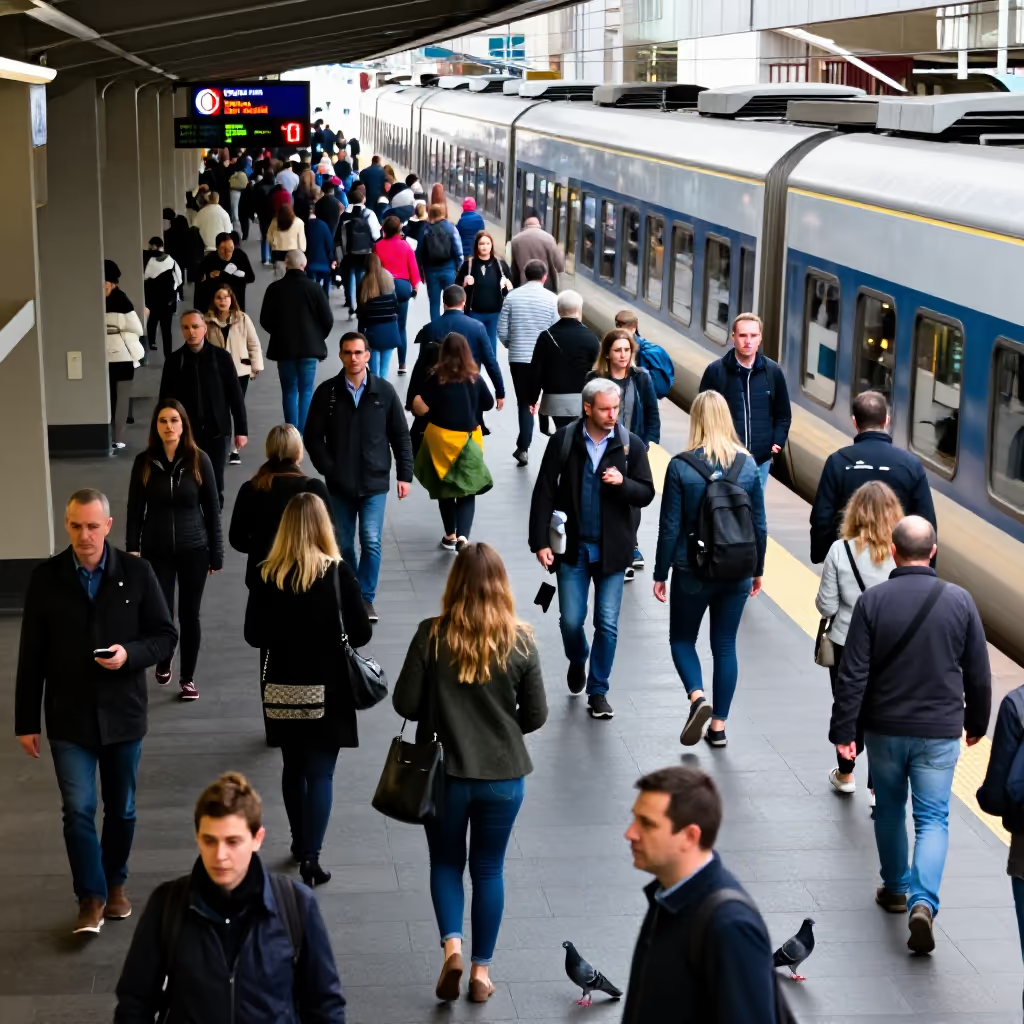
Auf dem belebten Platz tummeln sich am Nachmittag viele Touristen.
Many tourists swarmed around the busy square in the afternoon.
Der belebte Platz wimmelt am Nachmittag von Touristen.
The busy square teemed with tourists in the afternoon.