überholen
to overtake
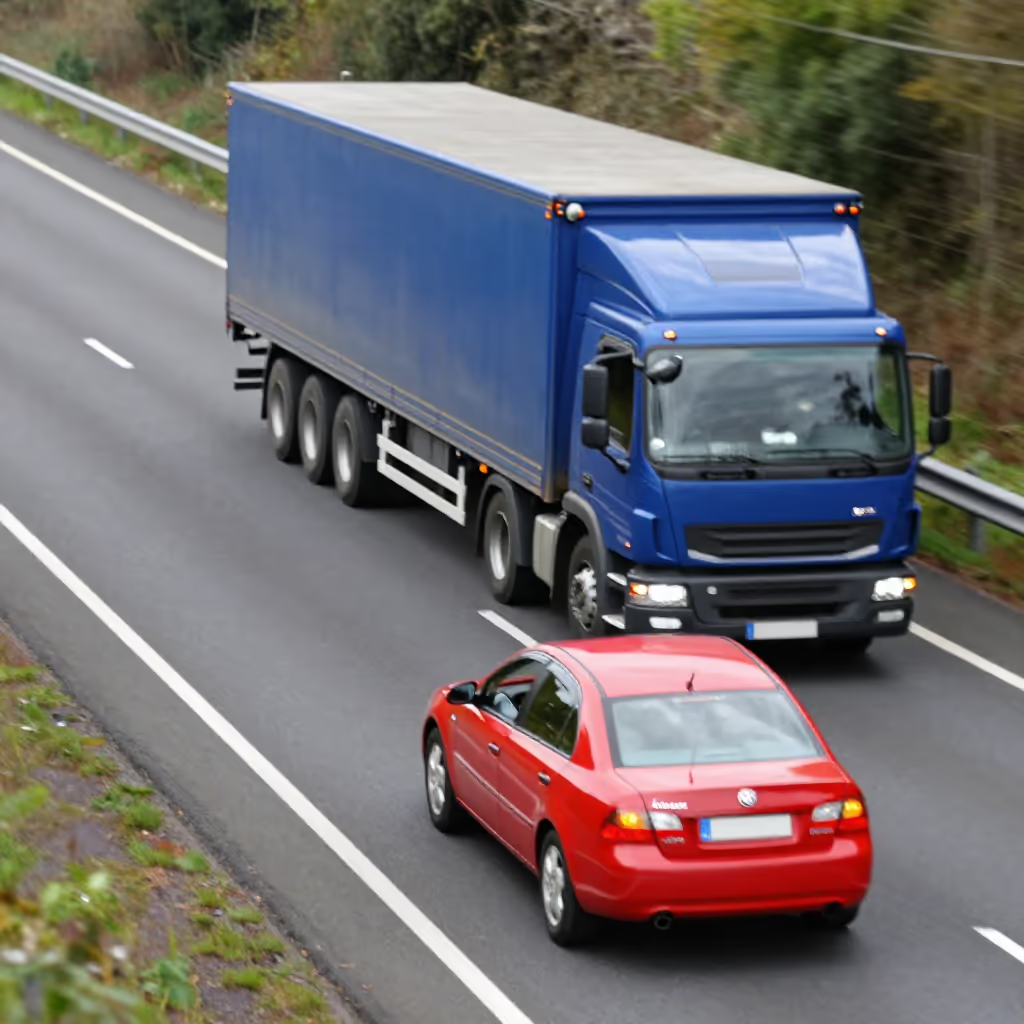
To drive or walk past another vehicle or person moving in the same direction.
Auf dieser schmalen Straße ist es zu gefährlich, den Traktor zu überholen.
On this narrow road, it is too dangerous to overtake the tractor.

to overtake / overhaul
Loading your saved state.
to overtake
To drive or walk past another vehicle or person moving in the same direction.
Auf dieser schmalen Straße ist es zu gefährlich, den Traktor zu überholen.
On this narrow road, it is too dangerous to overtake the tractor.

'Überholen' is an inseparable verb in most meanings (to overtake, to become better, to service). Only in the rare, outdated meaning 'sich etwas anziehen' (to put something on) is it separable.
Er hat den LKW überholt.
He overtook the truck.
Since the verb is usually inseparable, the past participle is formed without 'ge-'. So it is 'hat überholt' (has overtaken/overhauled), not 'hat übergeholt'.
Die Firma hat ihre Konkurrenten technologisch überholt.
The company has technologically overtaken its competitors.
The context makes the meaning clear: If it is about vehicles, 'vorbeifahren' (to drive past/overtake) is meant. If it is about competition or performance, it means 'besser werden' (to become better). If it is about machines or devices, 'warten/reparieren' (to service/repair) is meant.
Der Radfahrer überholt das Auto im Stau.
The cyclist overtakes the car in the traffic jam.
In this meaning, the verb is often used with an accusative object that indicates who or what is being overtaken. Giving the direction is also common.
Man darf hier nicht rechts überholen.
You are not allowed to overtake on the right here.
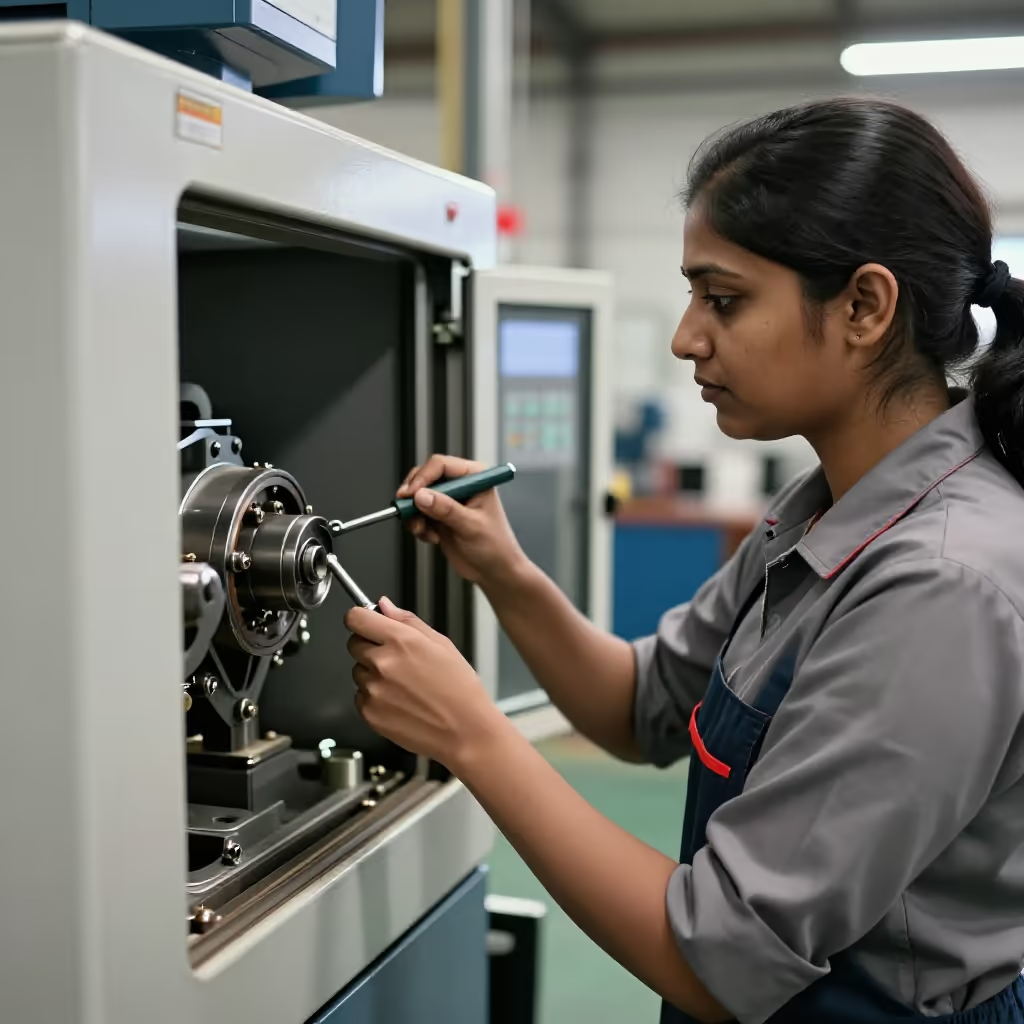
When it means 'warten/reparieren' (to service/repair), the objects are typically technical devices or vehicles, for example 'den Motor überholen' (to overhaul the engine), 'die Bremsen überholen' (to overhaul the brakes), or 'die Software überholen' (to overhaul/update the software).
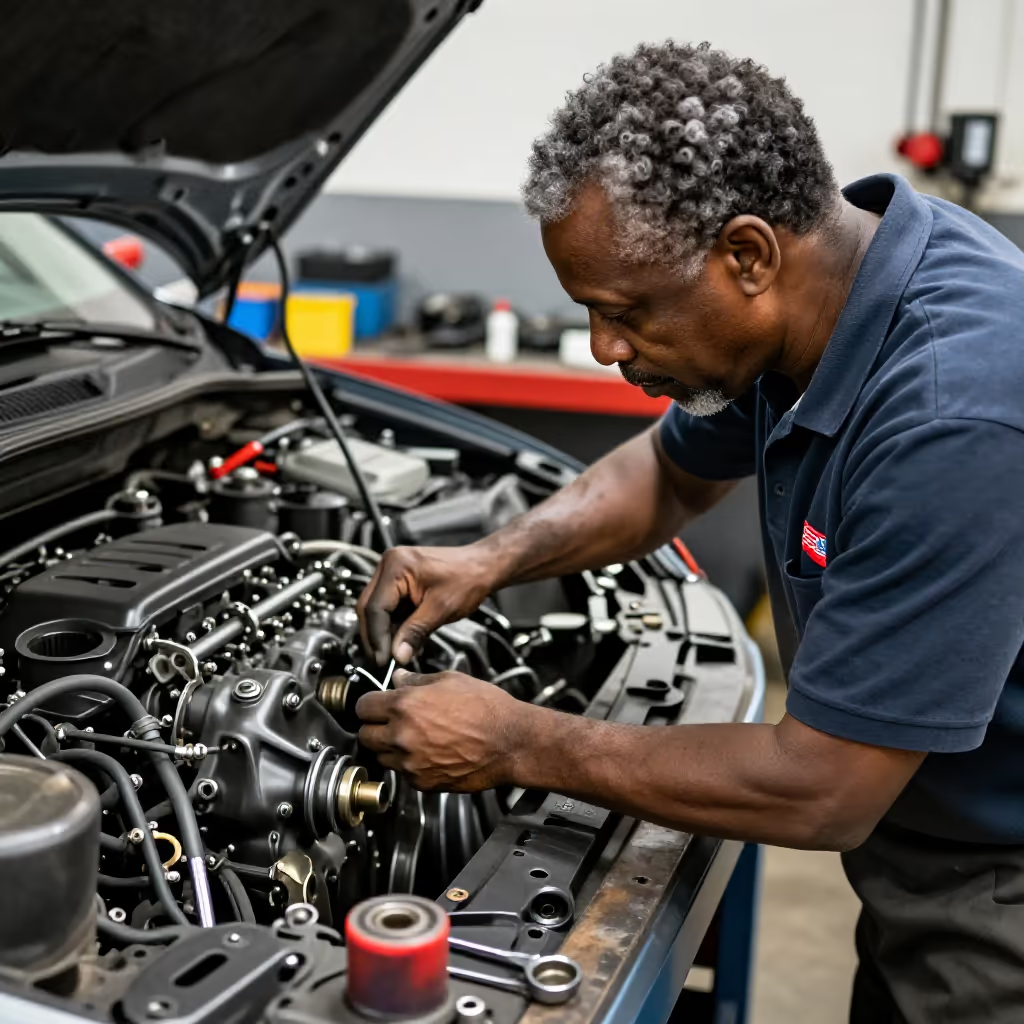
Die Werkstatt hat den Motor komplett überholt.
The repair shop completely overhauled the engine.
to wait / maintain
'warten' and 'überholen' can both refer to machines or technical devices. 'warten' means regularly checking and servicing a device so that it continues to work well. 'überholen' means more: a machine is thoroughly checked, often repaired, and restored to a very good condition. Learners may confuse the words because both occur in workshops or with technical systems. 'Warten' is regular maintenance; 'überholen' is a larger job, often after long use or when there are problems.

Die alte Maschine wird morgen in der Werkstatt überholt.
The old machine will be overhauled in the workshop tomorrow.
Der Techniker wartet die Heizung vor dem Winter.
The technician maintains the heating system before winter.