

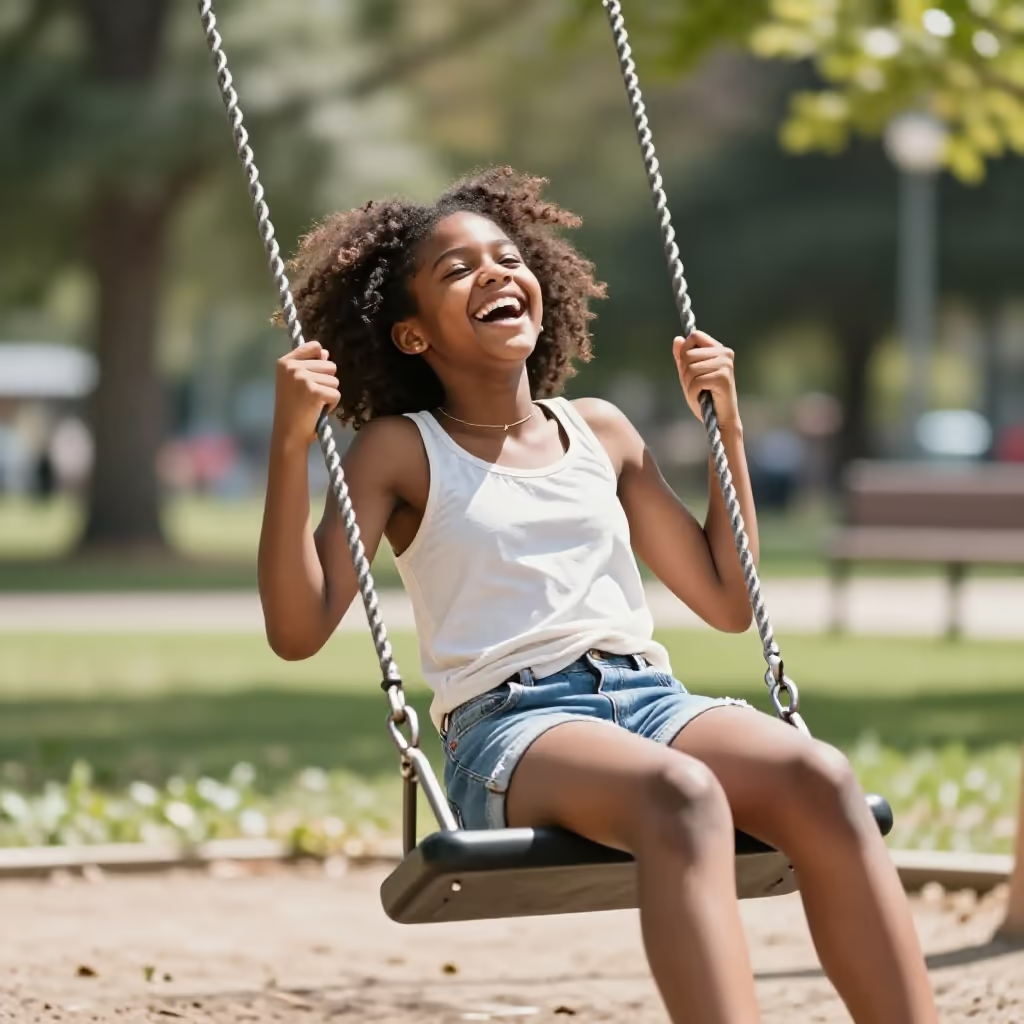
unbeschwert
carefree
Free from worries, problems, or fears; lighthearted and cheerful.
EXAMPLE
Die Kinder spielten unbeschwert im Garten.
The children played carefree in the garden.
carefree
Loading your saved state.
carefree
Free from worries, problems, or fears; lighthearted and cheerful.
Die Kinder spielten unbeschwert im Garten.
The children played carefree in the garden.
The word consists of the prefix 'un-' and 'beschwert' (burdened). 'Beschwert' means 'loaded with a burden or worry.' So 'unbeschwert' literally means 'without a burden' or 'without worries.'
Nach der bestandenen Prüfung fühlte er sich leicht und unbeschwert.
After passing the exam, he felt light and carefree.
'Unbeschwert' is often used to describe a positive, worry-free time. Common combinations are 'eine unbeschwerte Kindheit' (a carefree childhood), 'unbeschwerte Tage' (carefree days), or 'ein unbeschwerter Urlaub' (a carefree vacation).
Wir verbrachten einen unbeschwerten Nachmittag am See.
We spent a carefree afternoon by the lake.
The word is often used as an adverb to describe an action that is carried out cheerfully and without worries. It then stands directly with the verb.
Die Kinder lachten und sangen unbeschwert.
The children laughed and sang carefree.
carefree / careless
Sorglos and unbeschwert both describe a state without worries or fears. Unbeschwert places more emphasis on a pleasant, carefree feeling, whereas sorglos simply emphasizes the absence of worries and can also sound critical depending on the context. For a positive mood, unbeschwert is often the more suitable choice.

Im Urlaub genossen wir eine Woche lang eine unbeschwerte Zeit mit viel Freude.
On vacation, we enjoyed a carefree week filled with happiness.
Im Urlaub lebten wir eine Woche lang sorglos ohne Gedanken an die Arbeit.
On vacation, we spent a week carefree, without thinking about work.