

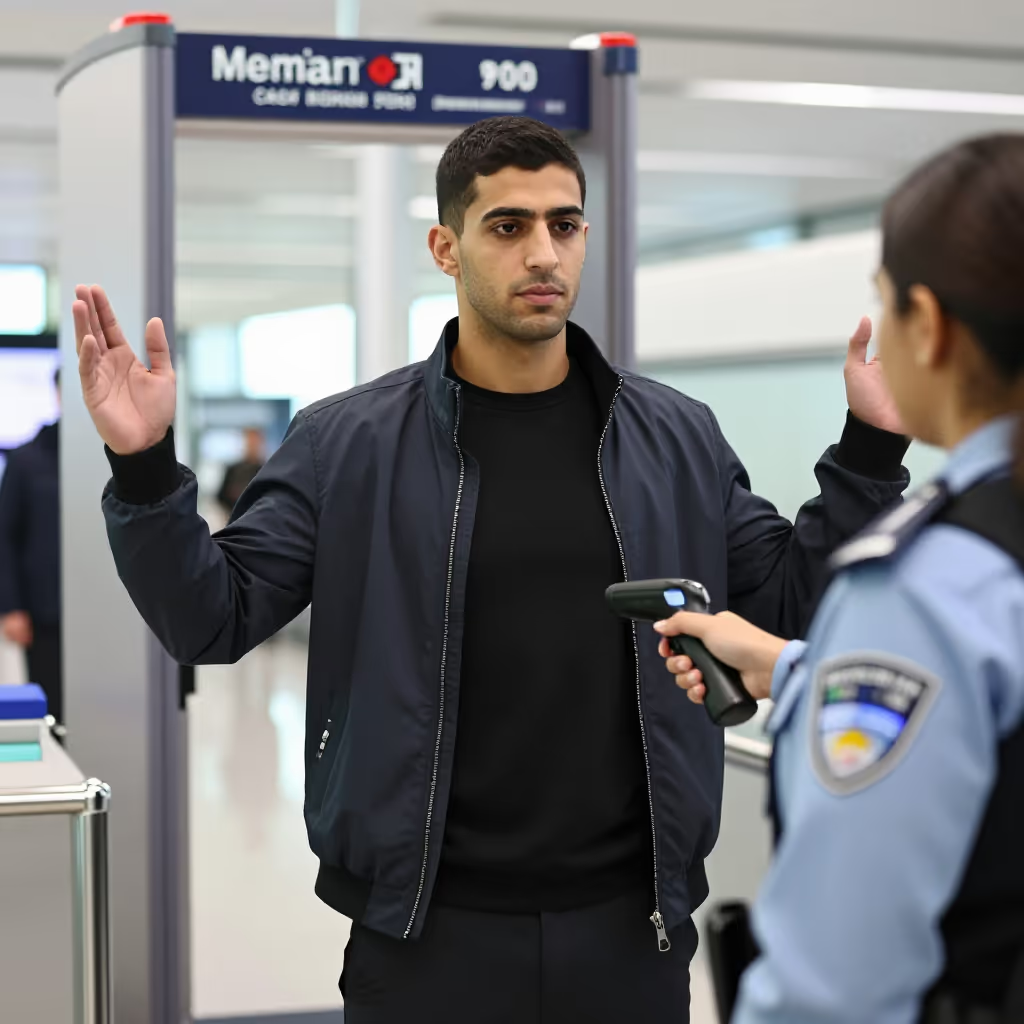
unbewaffnet
unarmed
Describes a person who is not carrying any weapons.
EXAMPLE
Der Verdächtige war bei seiner Festnahme unbewaffnet.
The suspect was unarmed when he was arrested.
unarmed
Loading your saved state.
unarmed
Describes a person who is not carrying any weapons.
Der Verdächtige war bei seiner Festnahme unbewaffnet.
The suspect was unarmed when he was arrested.
The word consists of three parts: the prefix 'un-' negates 'bewaffnet' (armed). 'Bewaffnet' is the past participle of 'bewaffnen' (to arm), which is derived from 'die Waffe' (weapon). So 'unbewaffnet' literally means 'not equipped with a weapon.'
Die Demonstranten betonten, dass sie friedlich und unbewaffnet seien.
The demonstrators emphasized that they were peaceful and unarmed.
'Unbewaffnet' can be used as an adjective in two ways: it can stand after a verb like 'sein' (to be), or directly before a noun. When it stands before a noun, it must be declined.
Der Einbrecher war zum Glück unbewaffnet.
Fortunately, the burglar was unarmed.
This adjective is mainly used in contexts related to police, the military, crime, or security. It often describes the condition of civilians, suspects, or police officers in a particular situation.
Der Polizist trat dem Mann unbewaffnet entgegen, um die Situation zu deeskalieren.
The police officer approached the man unarmed in order to de-escalate the situation.
defenseless
Both words can describe a person in a dangerous situation. „Unbewaffnet“ only says that the person is not carrying any weapons; „wehrlos“ goes further and emphasizes that the person cannot defend themselves. Choose „unbewaffnet“ when the issue is only weapons and „wehrlos“ when fighting back is not possible.
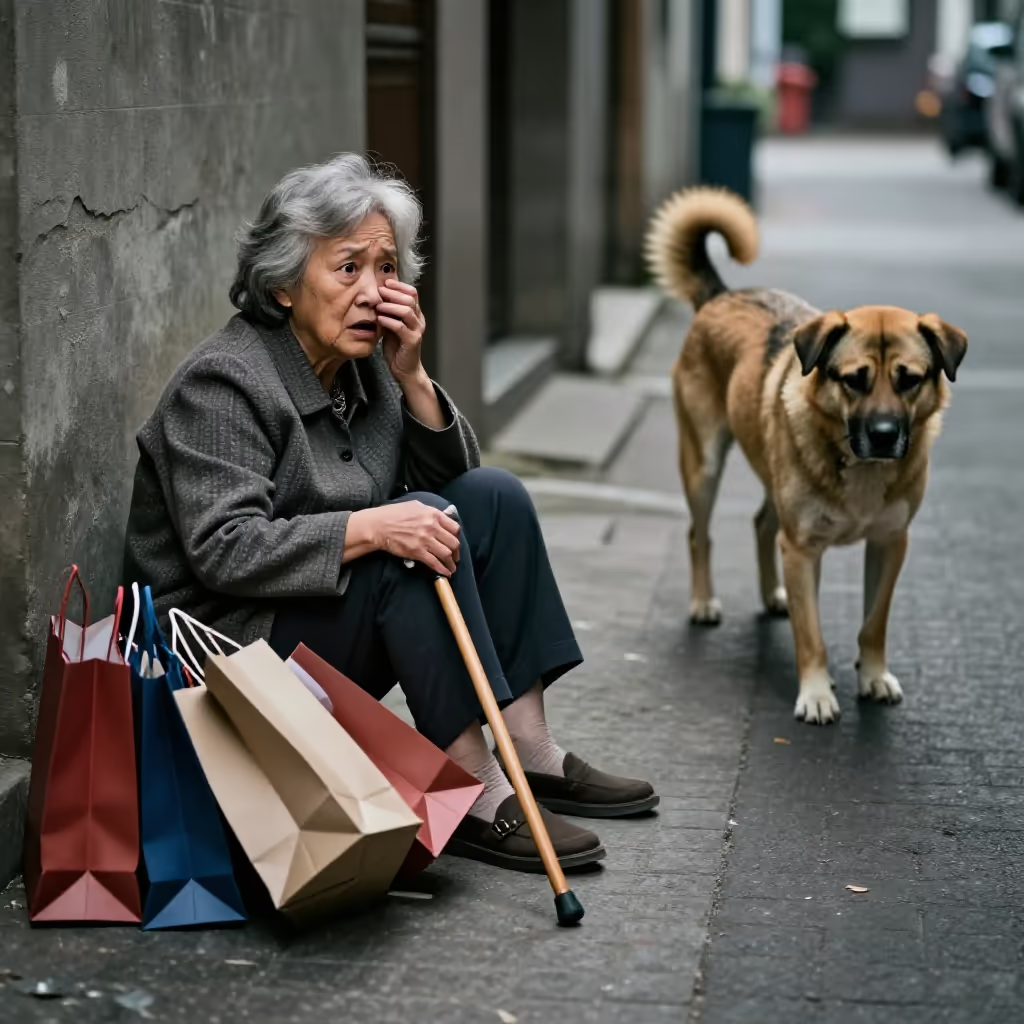
Der Wanderer war unbewaffnet, konnte sich aber mit seinen Freunden gegen die Gefahr schützen.
The hiker was unarmed, but he could protect himself from the danger with his friends.
Der verletzte Mann war dem Angreifer wehrlos ausgeliefert und konnte sich nicht verteidigen.
The injured man was at the attacker’s mercy and could not defend himself.