

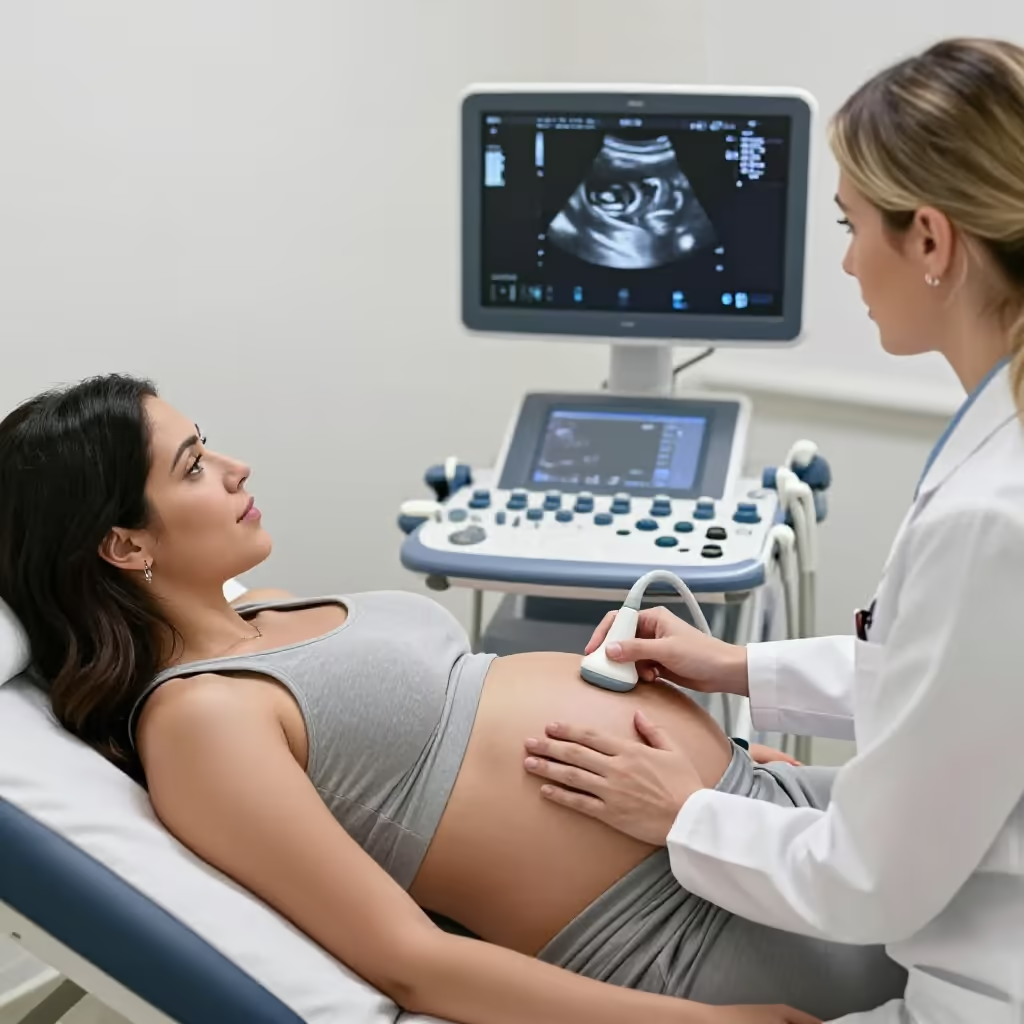
Referring to a living being that has not yet been born and is still in the womb.
example
Schwangere sollten auf Alkohol verzichten, um ihr ungeborenes Kind zu schützen.
Pregnant women should avoid alcohol in order to protect their unborn child.
Usage tips
Word structure
The structure of the word is very direct: it consists of the negation 'un-' and the past participle 'geboren' (born). So it literally means 'not yet born'.
EXAMPLE
Die Ausstellung zeigt Skulpturen von ungeborenen Tieren.
The exhibition shows sculptures of unborn animals.
Sentence structure and usage
'Ungeboren' (unborn) is almost exclusively used as an adjective before a noun (attributive use). The standalone form, as in 'Das Kind ist ungeboren' (The child is unborn), is grammatically correct but very unusual.
EXAMPLE
Die Forschung untersucht die Entwicklung des ungeborenen Lebens.
The research examines the development of unborn life.
Typical collocation
By far the most common and important combination for this word is 'das ungeborene Kind' (the unborn child). It is mainly used in medical, ethical, or legal discussions about pregnancy.
EXAMPLE
Der Arzt überwacht die Gesundheit des ungeborenen Kindes.
The doctor monitors the health of the unborn child.
Compare with
antonym · confusable
ungeboren vs geboren
born
'geboren' and 'ungeboren' are clear opposites. 'geboren' is used when a person or animal has already come into the world. 'ungeboren' means a living being that is still in the womb and has not yet been born. The words can be confused because they both talk about the time around birth. Pay attention to 'un-': here it makes the opposite. A born child is already here; an unborn child is not yet.
ungeboren
Die Ärztin untersucht das ungeborene Kind regelmäßig.