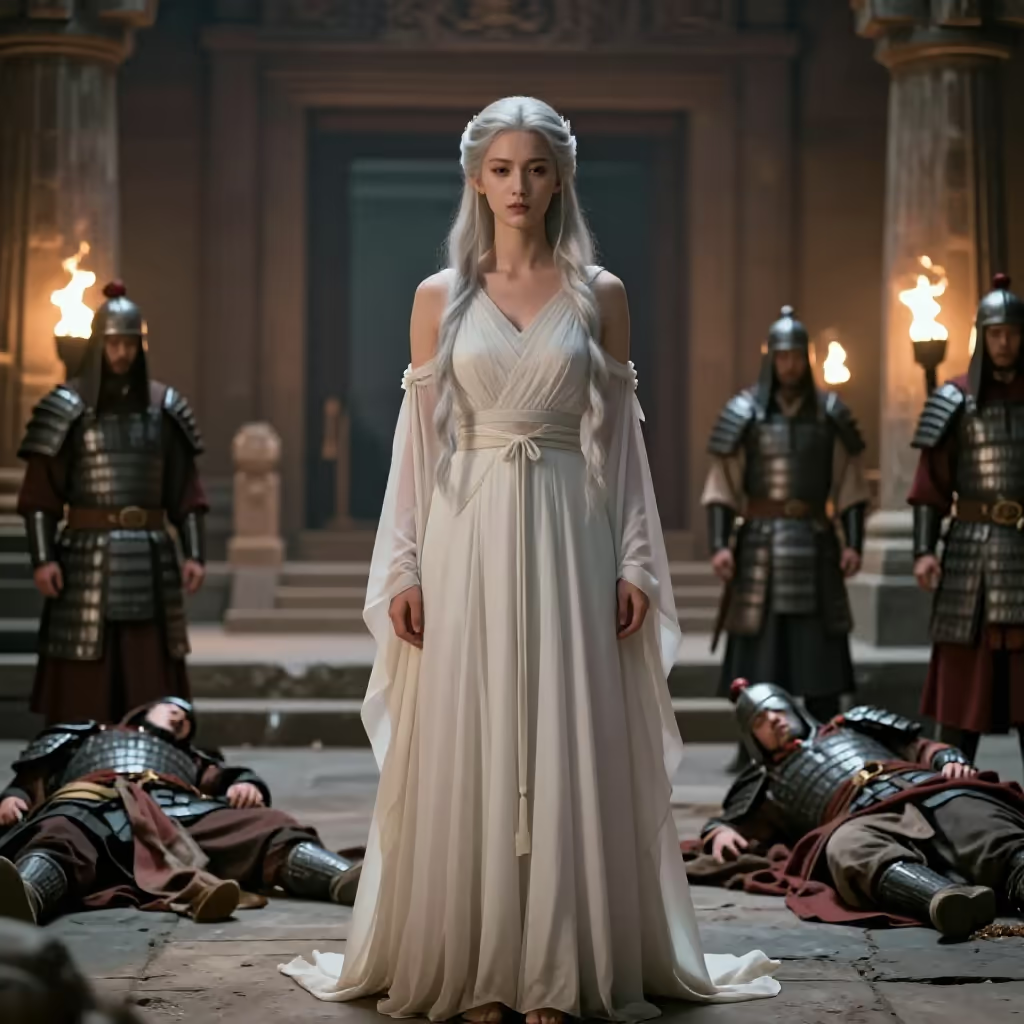
Not subject to death; living forever. This often refers to mythological beings, gods, or fictional characters.
example
In den alten Sagen waren die Götter unsterblich und allmächtig.
In the old legends, the gods were immortal and all-powerful.
Usage tips
Word structure
The adjective 'unsterblich' (immortal) has a simple structure. The prefix 'un-' negates the word 'sterblich' (mortal), which comes from the verb 'sterben' (to die). So 'unsterblich' literally means 'not mortal'.
EXAMPLE
Vampire gelten als unsterbliche Wesen.
Vampires are considered immortal beings.
Literal vs. figurative
The literal meaning (living forever) is rare and mostly limited to fiction or mythology. In everyday language, the figurative meanings ('unforgettable' or 'very much in love') are much more common.
EXAMPLE
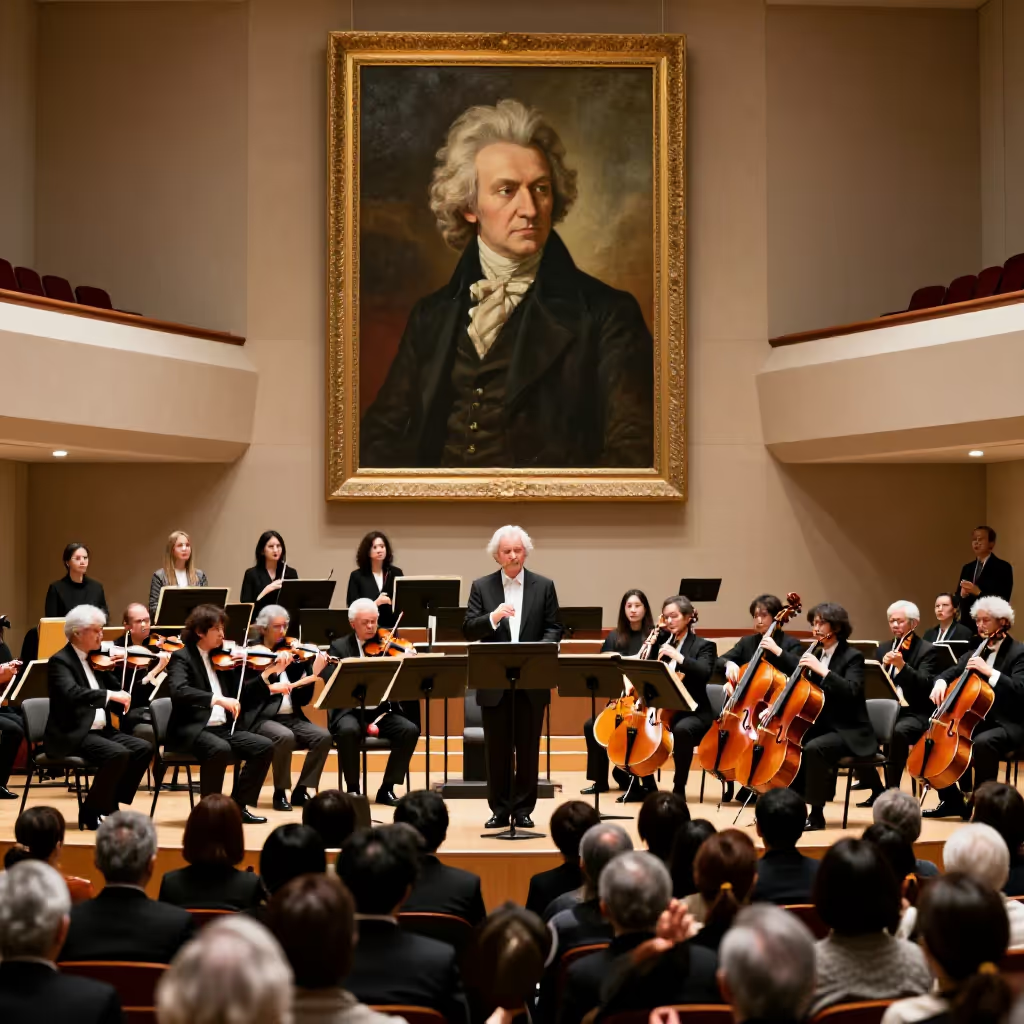
Die Musik von Mozart ist unsterblich.
Mozart's music is immortal.
Typical collocations
In its literal meaning, 'unsterblich' (immortal) is mostly used for beings from myths, religions, or fantasy. Typical nouns are gods, vampires, elves, or the soul.
EXAMPLE
Der Legende nach ist der Geist dieses Königs unsterblich.
According to legend, the spirit of this king is immortal.
To make oneself immortal
The construction 'sich unsterblich machen' (to make oneself immortal) means to become famous and unforgettable through a special achievement. The person is the subject, and the achievement is often introduced with 'mit' (with).
EXAMPLE
Mit seiner Erfindung hat sich der Wissenschaftler unsterblich gemacht.
With his invention, the scientist made himself immortal.
Fixed expression
The expression 'sich unsterblich in jemanden verlieben' (to fall madly in love with someone) is a fixed expression. It means to fall very deeply and passionately in love and is often used as a romantic exaggeration.
EXAMPLE
Im Film verliebt sich der Held unsterblich in die Prinzessin.
In the film, the hero falls madly in love with the princess.
Compare with
near_synonym · confusable
unsterblich vs ewig
eternal / ages
'ewig' and 'unsterblich' both have to do with something that does not simply end. 'ewig' mainly describes time: something lasts forever or has no end in time. 'unsterblich' is used especially for beings that cannot die, or for people and works that remain in memory. Learners may confuse the words because both come close to 'forever'. But 'unsterblich' only fits when death, life, or memory of people and works plays a role. 'ewig' is more general for duration.
unsterblich
Durch ihre Lieder wurde die Sängerin für viele Fans unsterblich.
Through her songs, the singer became immortal to many fans.
ewig
In der Geschichte sucht der König nach dem ewigen Leben.