

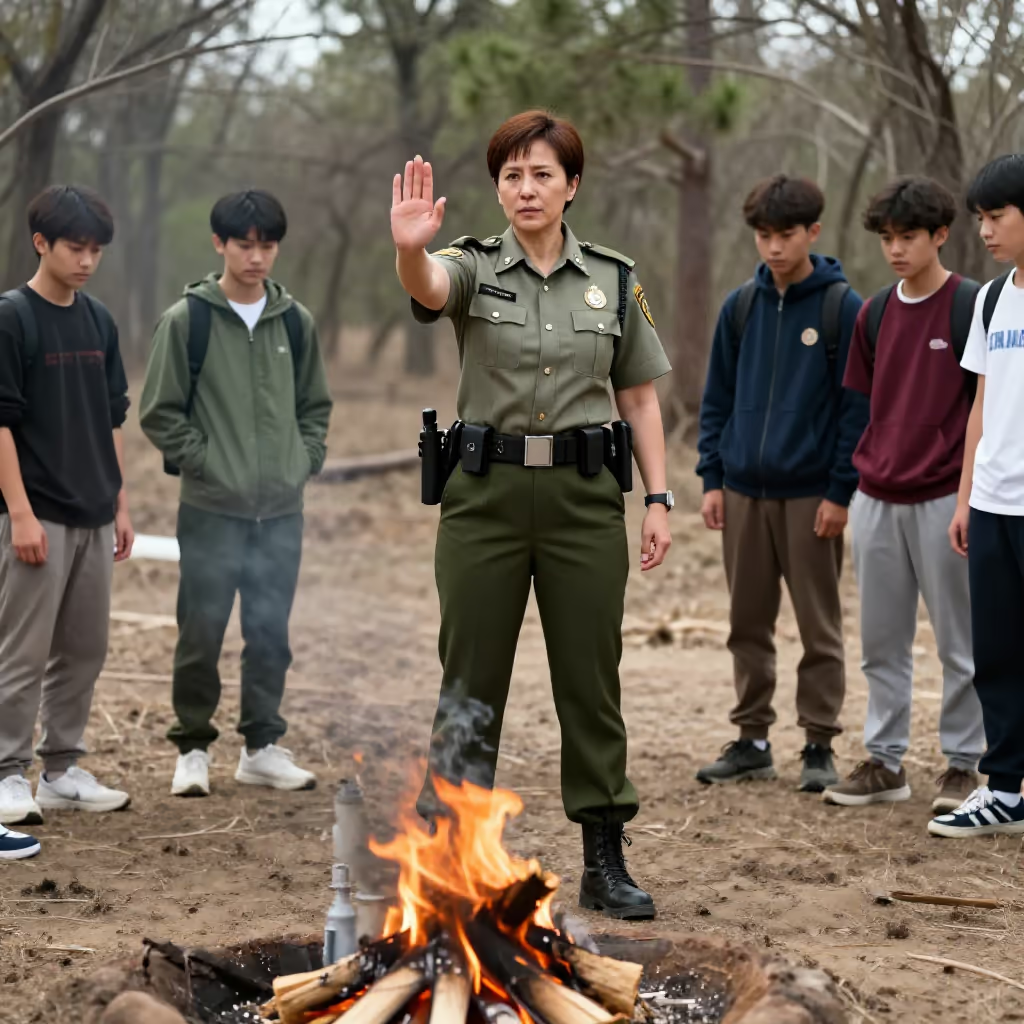
To officially or authoritatively forbid someone from doing something. It is a more formal word for 'verbieten' (to forbid).
example
Das Gericht hat dem Unternehmen die weitere Nutzung des Logos untersagt.
The court prohibited the company from continuing to use the logo.
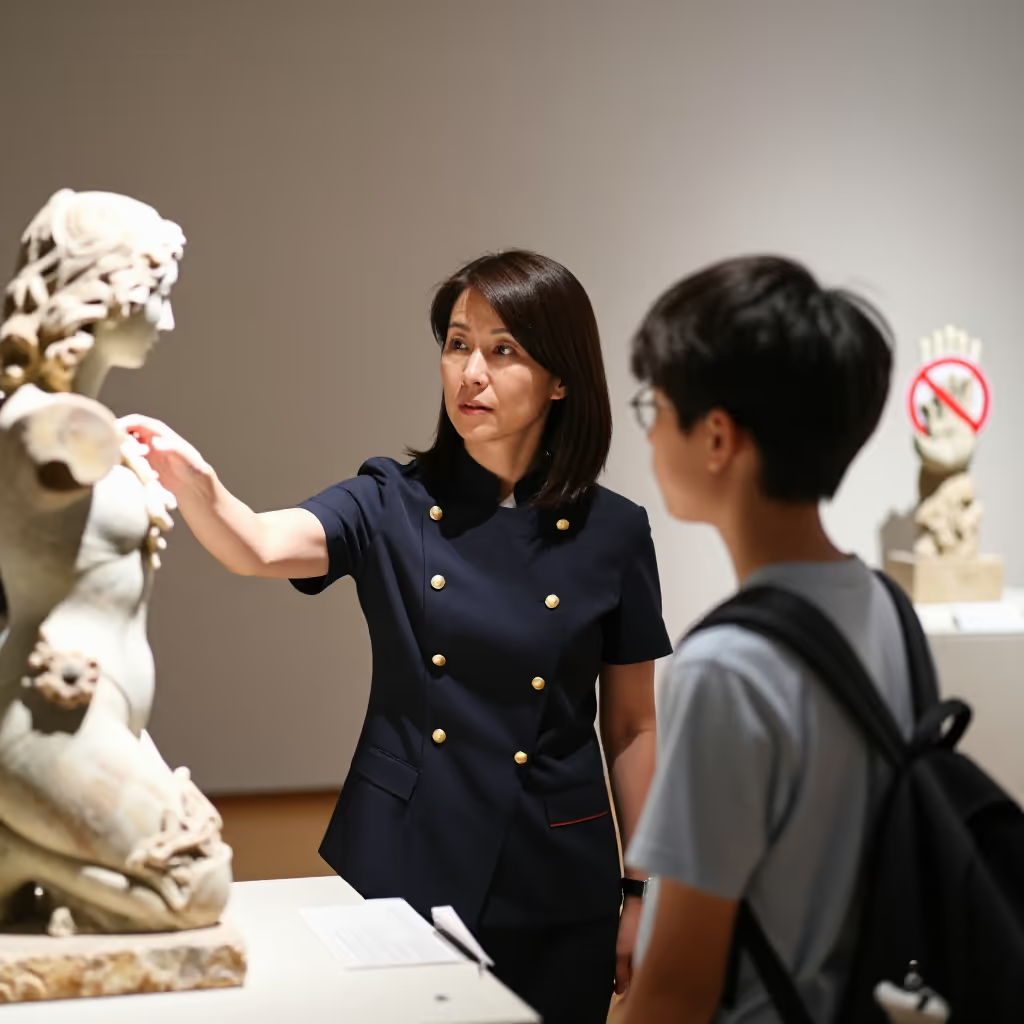
Usage tips
Inseparable verb
'Untersagen' (to prohibit) is an inseparable verb. The prefix 'unter-' remains firmly attached to the verb in all tenses and sentence constructions and is not stressed.
EXAMPLE
Er hat ihm den Zutritt untersagt.
He prohibited him from entering.
Sentence structure with dative
The verb 'untersagen' (to prohibit) requires a person in the dative and a thing in the accusative. The structure is: someone (nominative) prohibits someone (dative) something (accusative).
EXAMPLE
Der Arzt untersagte dem Patienten strengstens das Rauchen.
The doctor strictly prohibited the patient from smoking.
Register: official
'Untersagen' (to prohibit) is a very formal word. It is mainly used by authorities such as courts, government agencies, or in official rules to issue a prohibition.
EXAMPLE
Die Hausordnung untersagt das Grillen auf dem Balkon.
The house rules prohibit grilling on the balcony.
Compare with
antonym
untersagen vs erlauben
to allow
'erlauben' and 'untersagen' are direct opposites when it comes to rules or permissions. With 'erlauben', someone gives approval for something to be done. With 'untersagen', someone forbids something, usually officially or with clear authority. 'erlauben' fits in everyday life and also in formal situations. 'untersagen' sounds more formal than 'verbieten' and fits well with authorities, schools, companies, or official rules.
untersagen
Die Stadt hat das Grillen im Park wegen der Trockenheit untersagt.
The city has prohibited barbecuing in the park because of the dry conditions.
erlauben
Die Lehrerin erlaubt den Schülern, ihre Wörterbücher zu benutzen.
The teacher allows the students to use their dictionaries.