

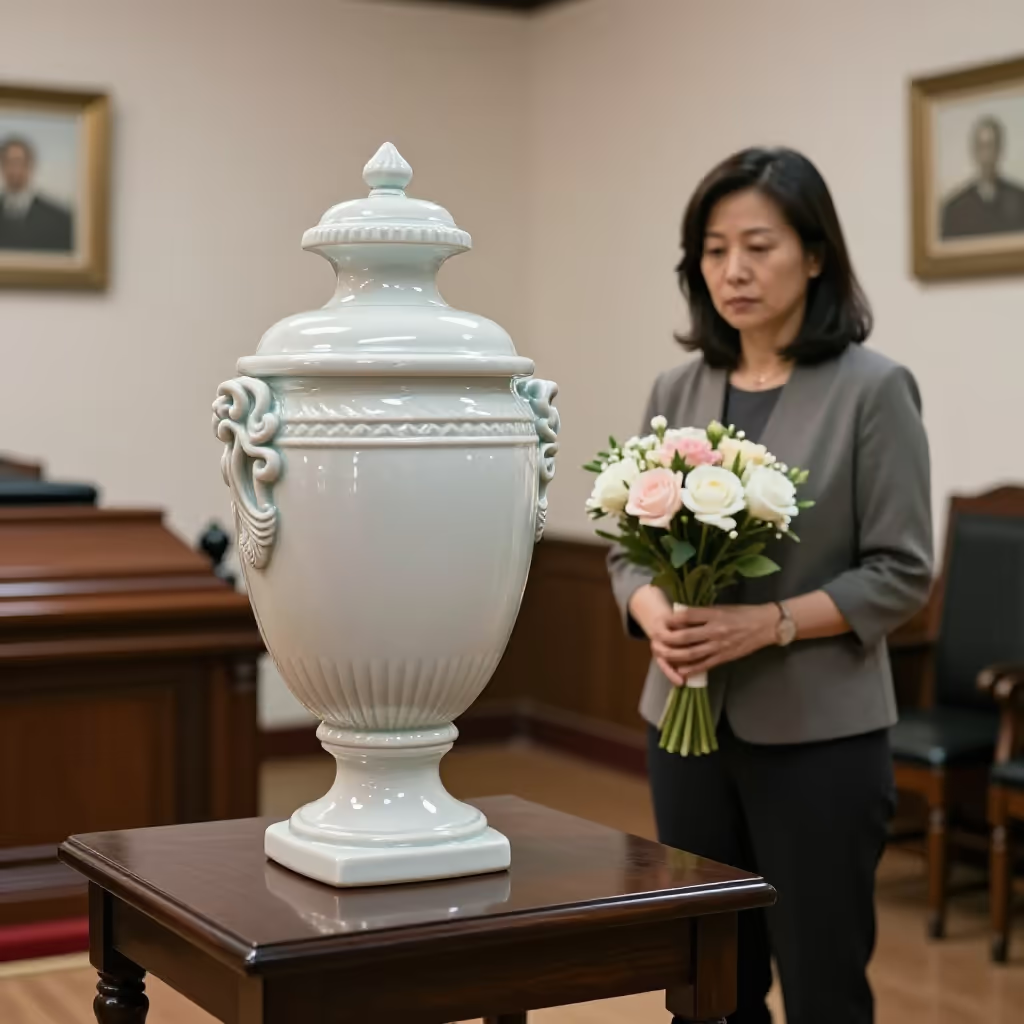
die Urne
urn
A vessel in which the ashes of a deceased person are kept after cremation.
EXAMPLE
Die Urne wurde im Familiengrab beigesetzt.
The urn was buried in the family grave.
urn / ballot box
Loading your saved state.
urn
A vessel in which the ashes of a deceased person are kept after cremation.
Die Urne wurde im Familiengrab beigesetzt.
The urn was buried in the family grave.
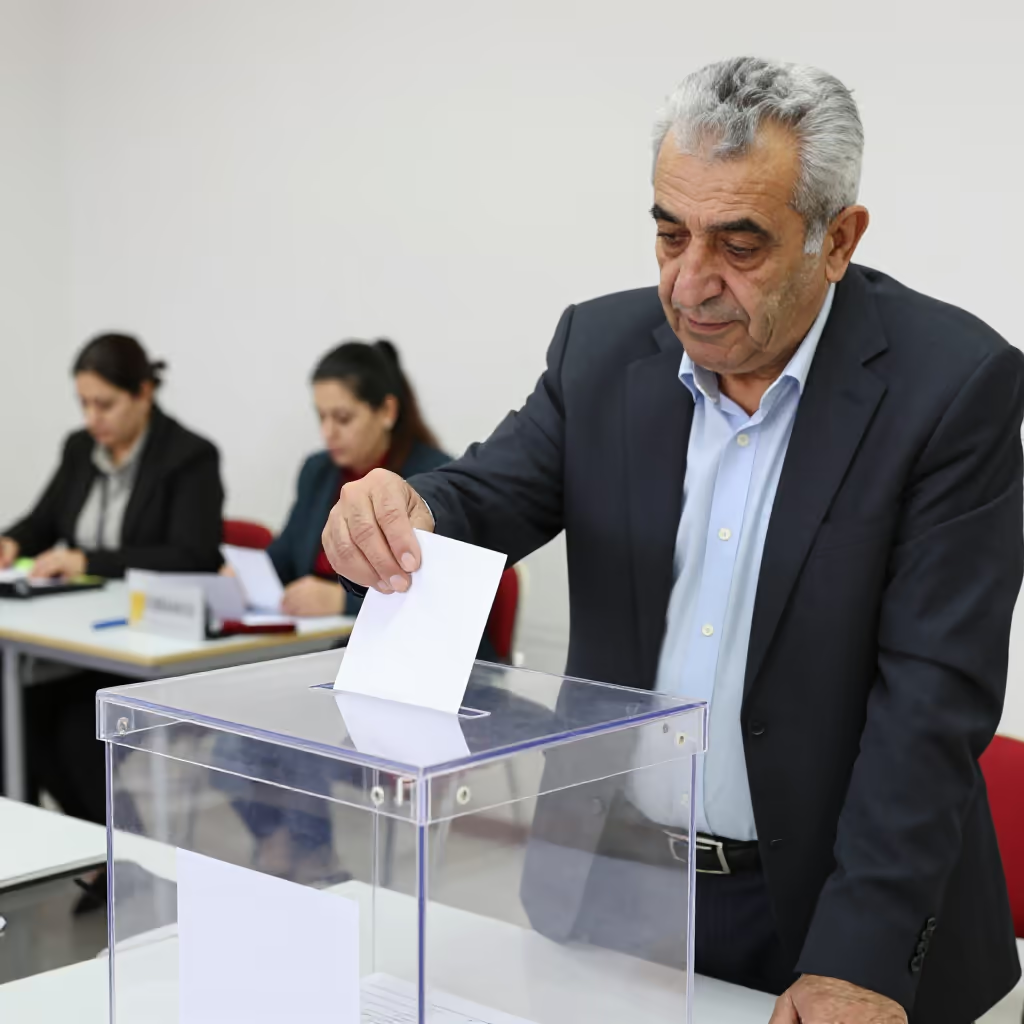
ballot box
A container into which voters place their ballots during an election; a ballot box.
Die Bürger wurden aufgerufen, zur Urne zu gehen und ihre Stimme abzugeben.
The citizens were called upon to go to the polls and cast their votes.
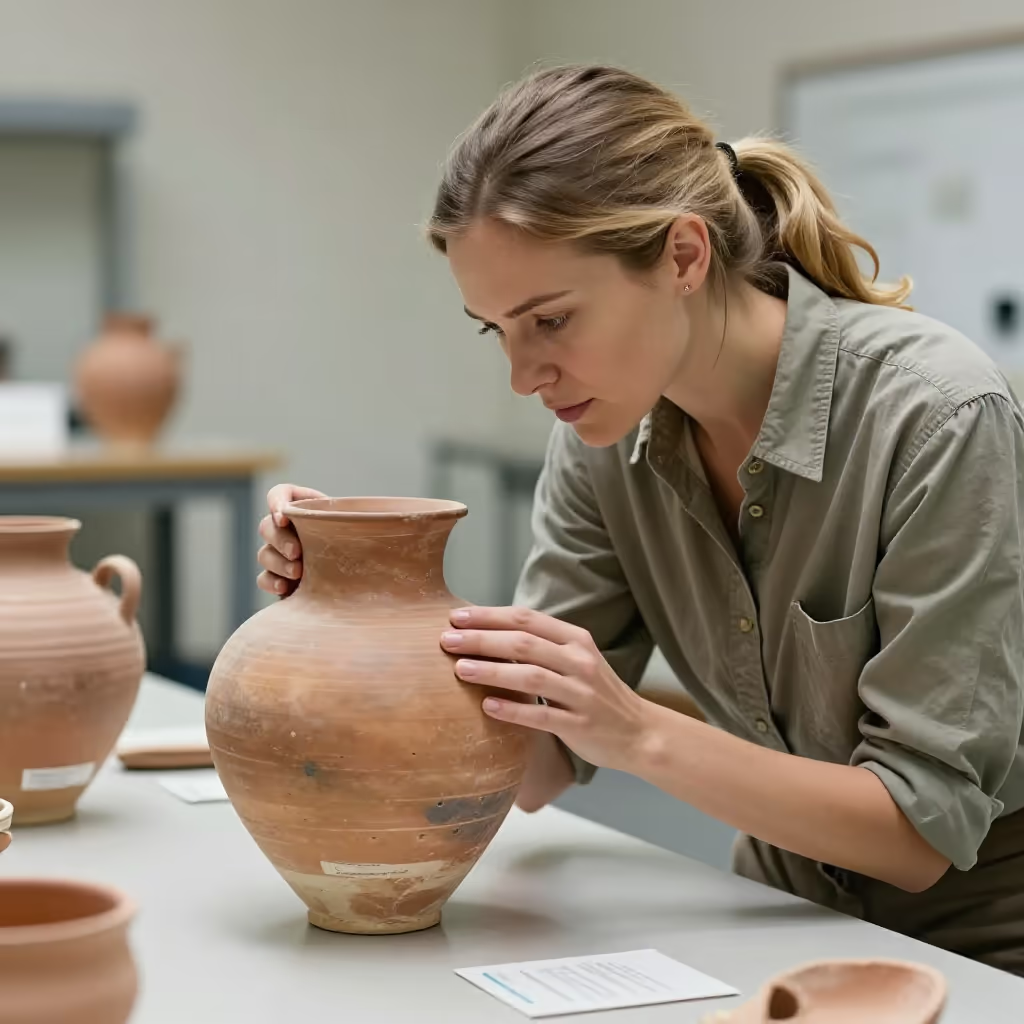
urn
In archaeology, a historical, often bulbous vessel made of clay or metal that was used for burials or for storage.
Bei den Ausgrabungen fand man eine gut erhaltene römische Urne.
During the excavations, a well-preserved Roman urn was found.
The context makes clear which 'Urne' (urn/ballot box) is meant. Words like 'Wahl' (election) or 'Stimme' (vote) point to the ballot box. Terms like 'Asche' (ashes), 'Beisetzung' (burial), or 'Friedhof' (cemetery) refer to a funeral context. 'Ausgrabung' (excavation) or 'antike' (ancient) indicate the archaeological meaning.
Die Wahlbeteiligung war hoch, die Urnen waren voll.
Voter turnout was high; the ballot boxes were full.
In connection with a burial, the verbs 'beisetzen' (to bury/inter) and 'aufbewahren' (to keep/store) are typical. People also speak of an 'Urnenbestattung' (urn burial) or an 'Urnengrab' (urn grave).
Immer mehr Menschen entscheiden sich für eine Urnenbestattung.
More and more people are choosing an urn burial.
In a political context, there are fixed expressions such as 'zur Urne gehen' (to go to the polls) or 'an die Urnen treten' (to go to the polls), both of which mean 'wählen gehen' (to go vote).
Am Sonntag sind die Bürger aufgerufen, an die Urnen zu treten.
On Sunday, citizens are called upon to go to the polls.