

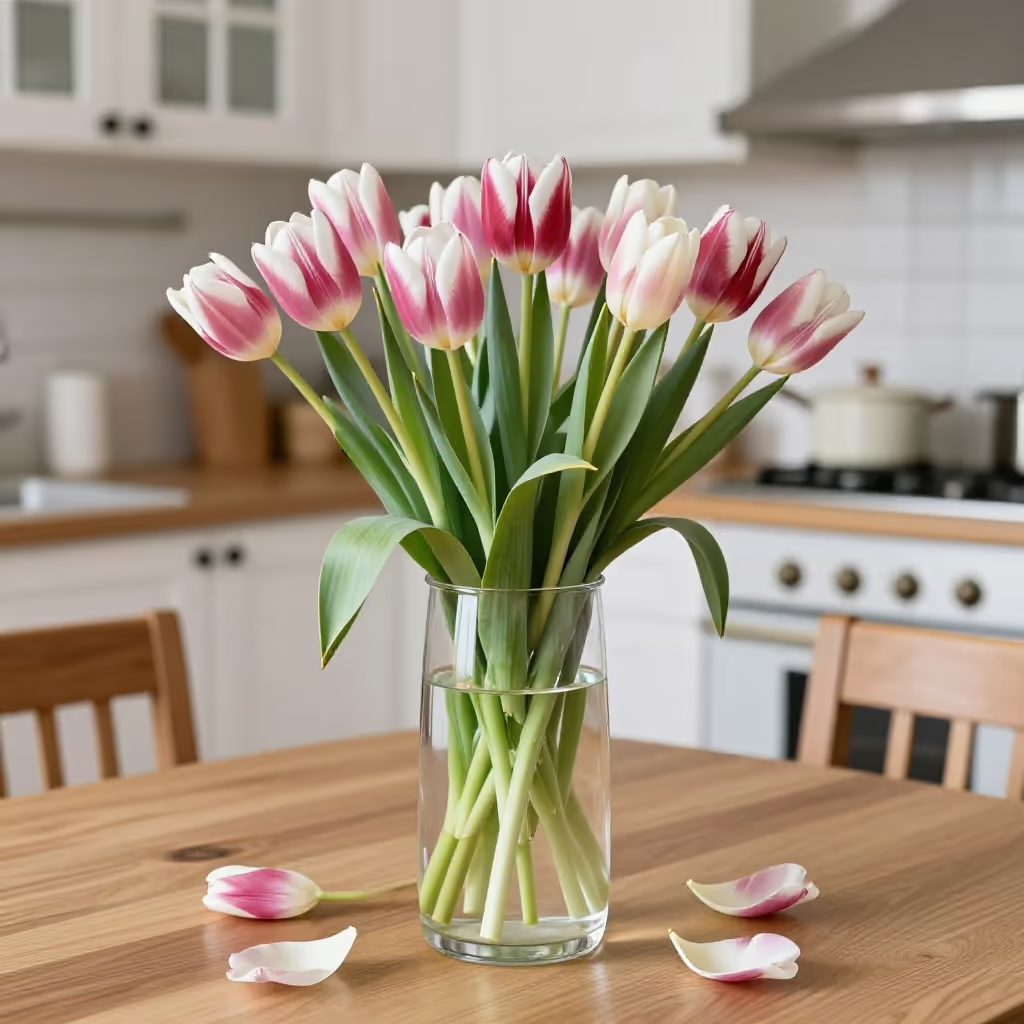
die Vase
vase
A container, usually made of glass, ceramic, or porcelain, used to hold cut flowers with water.
EXAMPLE
Stell die Rosen bitte in die große Vase auf dem Tisch.
Please put the roses in the large vase on the table.
vase
Loading your saved state.
vase
A container, usually made of glass, ceramic, or porcelain, used to hold cut flowers with water.
Stell die Rosen bitte in die große Vase auf dem Tisch.
Please put the roses in the large vase on the table.
Pay attention to the case after the preposition 'in'. If you put flowers into a vase (direction), use the accusative: 'in die Vase' (into the vase). If the flowers are already in it (location), use the dative: 'in der Vase' (in the vase).
Kannst du diese Tulpen bitte in die Vase stellen?
Can you please put these tulips in the vase?
Common verbs used with 'Vase' (vase) describe what you do with it. These include 'Blumen in eine Vase stellen' (to put flowers in a vase), 'eine Vase füllen' (to fill a vase), 'eine Vase umwerfen' (to knock over a vase), or 'eine Vase zerbrechen' (to break a vase).
Die Katze hat beim Spielen die Vase vom Tisch gestoßen.
The cat knocked the vase off the table while playing.
When describing the material of a vase, the preposition 'aus' is used. Typical materials are glass, porcelain, ceramic, or crystal.
Sie hat eine wunderschöne Vase aus böhmischem Glas geerbt.
She inherited a beautiful vase made of Bohemian glass.