

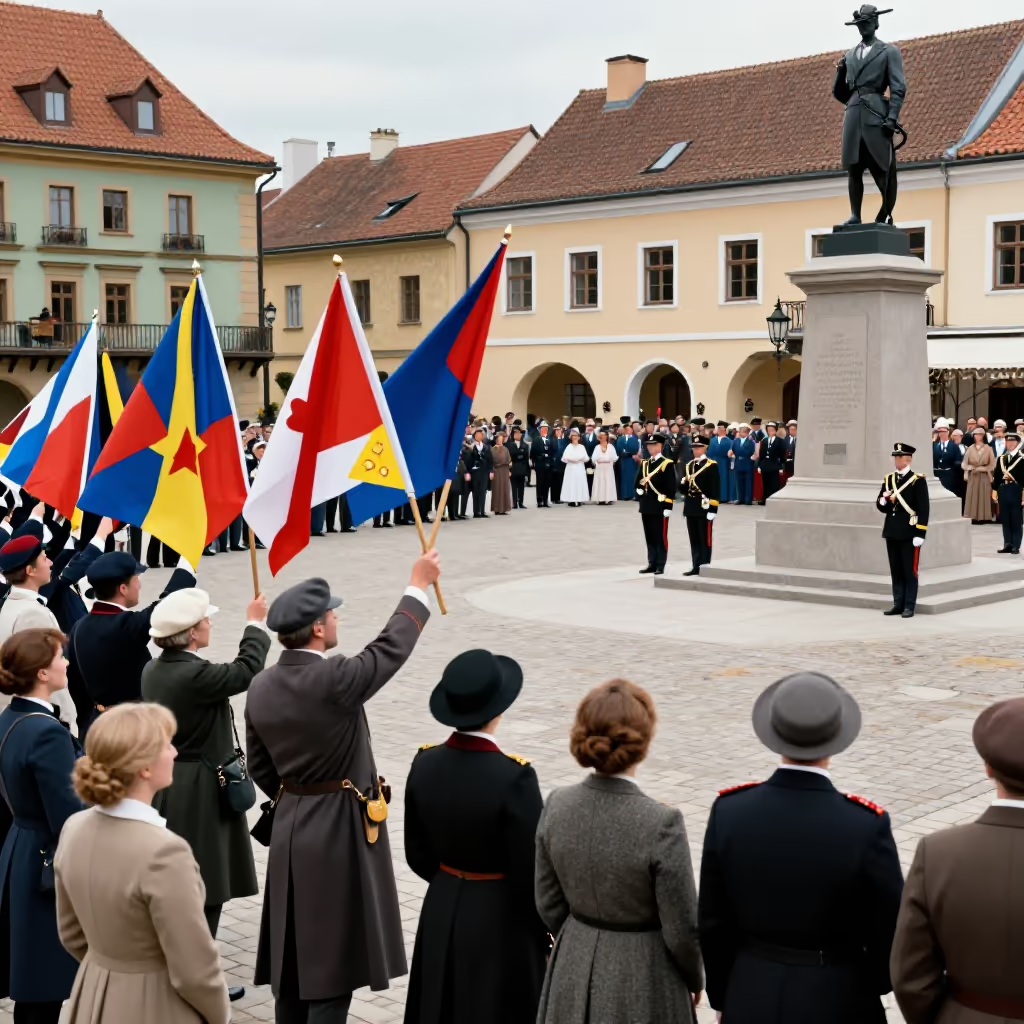
Relating to the fatherland (the country where one was born or to which one feels one belongs); patriotic. The term is often used in historical contexts and can have a nationalist connotation.
example
Er sang mit lauter Stimme vaterländische Lieder aus dem 19. Jahrhundert.
He sang patriotic songs from the 19th century in a loud voice.

Usage tips
Word structure
The word is derived from 'das Vaterland' (the fatherland), which itself is composed of 'Vater' (father) and 'Land' (land/country). The ending '-isch' turns the noun 'Vaterland' into an adjective.
EXAMPLE
Er fühlte eine tiefe vaterländische Verbundenheit mit seiner Heimat.
He felt a deep patriotic bond with his homeland.
Register and style
This word is considered old-fashioned today and is strongly associated with the nationalism of the 19th and early 20th centuries. In modern usage, it often sounds detached or ironic.
EXAMPLE
In alten Büchern findet man oft den Begriff der vaterländischen Pflicht.
In old books, you often find the concept of patriotic duty.
Typical collocations
'Vaterländisch' (patriotic) is often used in fixed combinations, especially in historical contexts. Typical phrases are 'vaterländische Geschichte' (patriotic history), 'vaterländische Gesinnung' (patriotic attitude), or 'vaterländische Pflicht' (patriotic duty).
EXAMPLE
Der Historiker hielt einen Vortrag über die vaterländische Kunst des 19. Jahrhunderts.
The historian gave a lecture on the patriotic art of the 19th century.
Compare with
antonym · confusable
vaterländisch vs international
international
'international' and 'vaterländisch' both have to do with countries or nations, but they point in different directions. Use 'international' when several countries are involved or something happens across borders. 'vaterländisch' refers to one's own country and often sounds patriotic, sometimes also historical or nationalistic. Learners may confuse the words because both are connected with states. In practice: when several countries are involved, 'international' fits; when referring to one's own fatherland, 'vaterländisch' is more likely.
vaterländisch
Im Museum hörten wir ein altes vaterländisches Lied aus dem 19. Jahrhundert.
At the museum, we heard an old patriotic song from the 19th century.
international
Die Konferenz ist international, weil Gäste aus zwölf Ländern kommen.
The conference is international because guests from twelve countries are coming.