

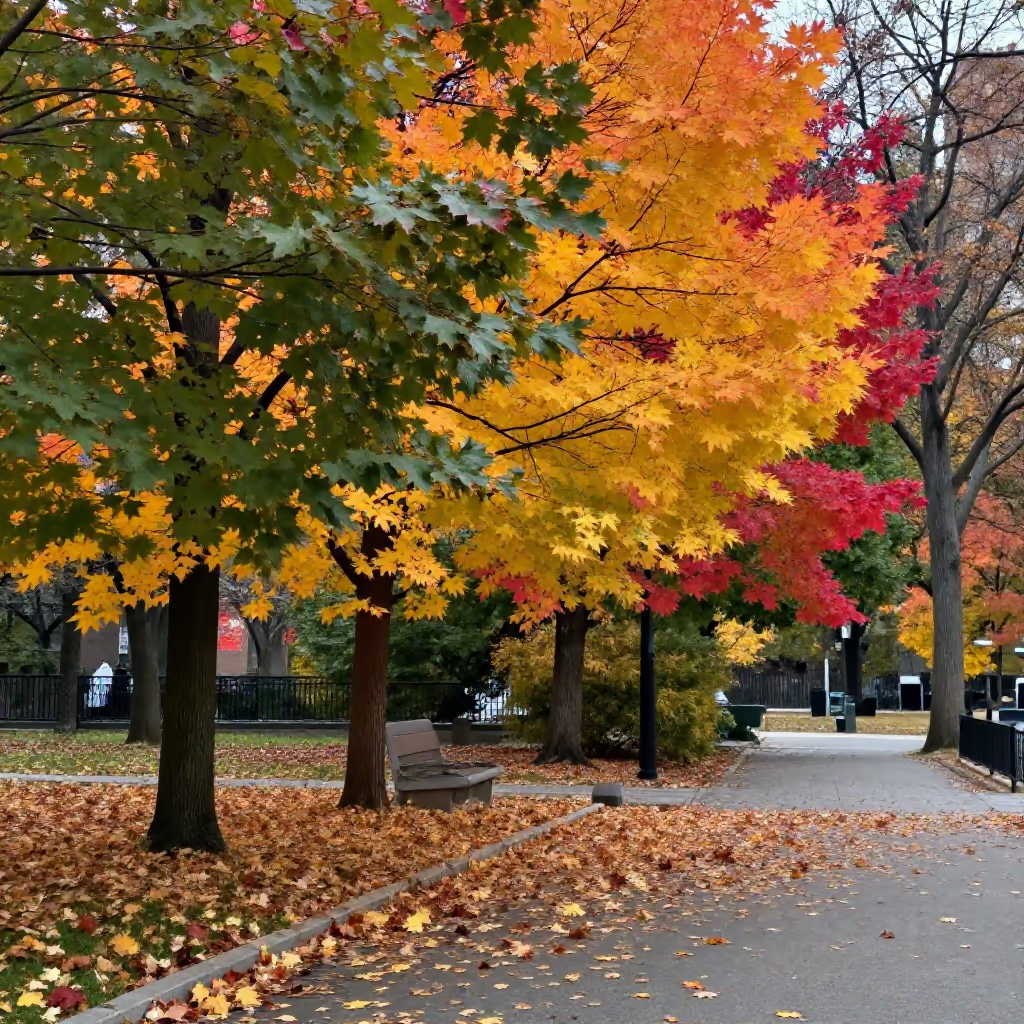
To change one's own color. This can be a natural process (e.g., leaves in autumn, the face during emotions) or an unintended result (e.g., clothes discolored in the wash).
example
Die Blätter des Ahorns verfärben sich im Herbst leuchtend rot.
The maple leaves change color to a bright red in autumn.

Usage tips
Word structure
The verb is derived from the noun 'die Farbe' (color). The prefix 'ver-' here describes the process of a color change that is often complete or unwanted.
EXAMPLE
Pass auf, dass die neue Jeans die anderen Kleidungsstücke nicht verfärbt.
Be careful that the new jeans don't discolor the other clothes.
Reflexive or transitive
Pay attention to the difference: 'sich verfärben' (to change color) means that something changes its own color. 'Etwas verfärben' (to discolor something) means that something colors another object.
EXAMPLE
Sein Gesicht verfärbte sich vor Wut.
His face changed color with anger.
Typical contexts
When something 'sich verfärbt' (changes color), it often happens in specific situations: leaves in autumn, the sky at sunset, the face during strong emotions, or laundry during washing.
EXAMPLE
Als sie die schlechte Nachricht hörte, verfärbte sich ihr Gesicht.
When she heard the bad news, her face changed color.
Compare with
near_synonym · confusable
verfärben vs färben
to dye / color
'färben' and 'verfärben' both have to do with a change in color. 'färben' usually sounds planned or neutral: you deliberately give something a new color, or something changes its color naturally. 'verfärben' is often used when the new color is unwanted or appears unexpectedly, for example with laundry or because of a stain. For natural processes, 'sich verfärben' can also fit, such as with leaves in autumn. The words can be confused because both describe a color change. As a guide: when you change the color deliberately, you usually say 'färben'; when something unintentionally takes on a different color, 'verfärben' often fits.
verfärben
In der Küche hat der rote Saft die Tischdecke verfärbt.
In the kitchen, the red juice discolored the tablecloth.
färben
Meine Schwester färbt das weiße T-Shirt blau, weil ihr die Farbe besser gefällt.
My sister dyes the white T-shirt blue because she likes that color better.