


verfilmen
to film / adapt
To use a book, play, or real event as the basis for a film and produce it.
EXAMPLE
Der Regisseur plant, den berühmten Roman als nächstes zu verfilmen.
The director plans to adapt the famous novel for film next.
to film / adapt
Loading your saved state.
to film / adapt
To use a book, play, or real event as the basis for a film and produce it.
Der Regisseur plant, den berühmten Roman als nächstes zu verfilmen.
The director plans to adapt the famous novel for film next.
The verb is made up of the prefix 'ver-' and the noun 'Film' (film). Here, the prefix 'ver-' expresses a transformation: something is made into a film.
Es ist oft eine Herausforderung, ein komplexes Buch zu verfilmen.
It is often a challenge to adapt a complex book for film.
'Verfilmen' (to film / adapt) is an inseparable verb because it begins with 'ver-'. The prefix remains firmly attached to the verb stem in all sentence forms and tenses.
Man verfilmte die Geschichte ihres Lebens.
They filmed the story of her life.
This verb is very often used in the passive in order to put the source material (the book, the story) in focus. The person making the film is then often unimportant.
Dieser Bestseller wurde bereits mehrfach erfolgreich verfilmt.
This bestseller has already been successfully adapted for film several times.
to turn / film
Drehen refers here to the actual filming of a movie or program. Verfilmen goes further: it means using a book, play, or event as the basis for a film. With a specific source, verfilmen is the appropriate word; for the ongoing production or filming, drehen is usually used.
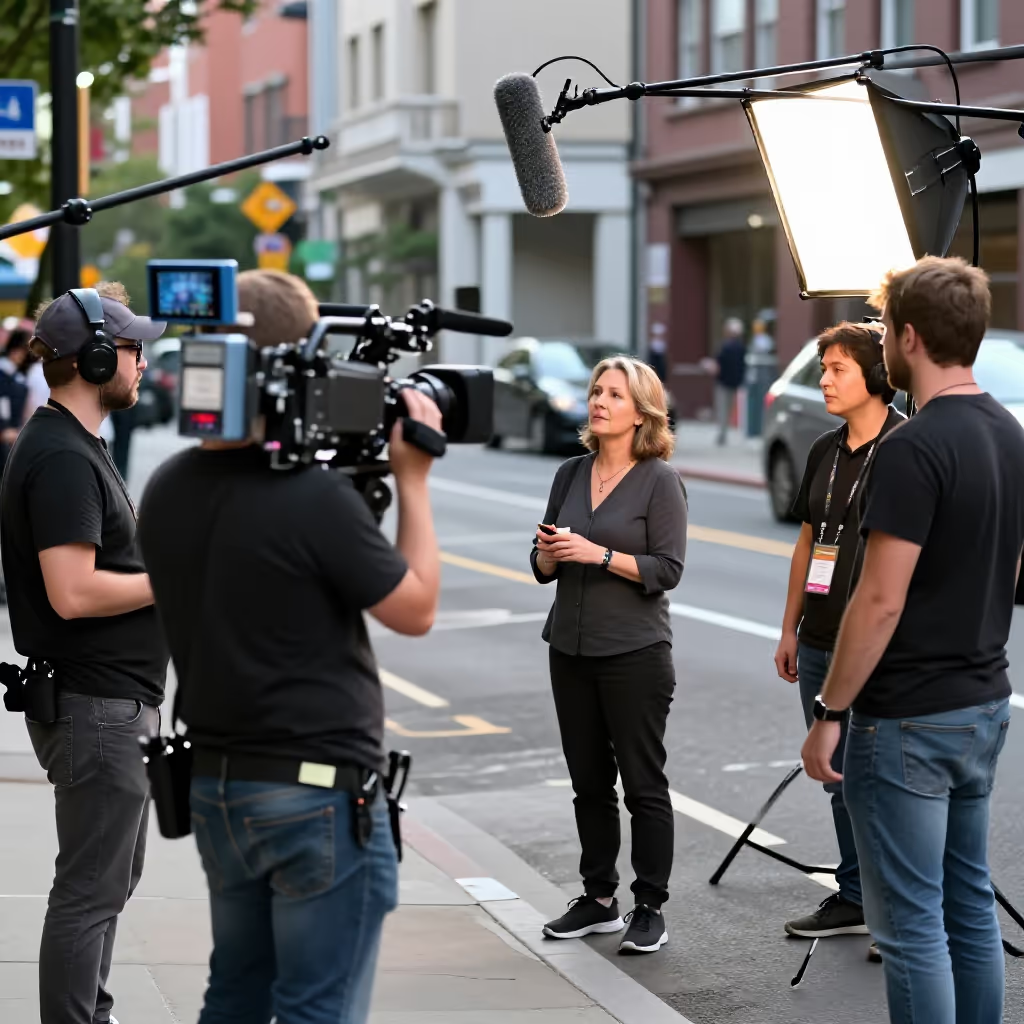
Die Regisseurin verfilmt heute den erfolgreichen Roman.
The director is filming an adaptation of the successful novel today.
Das Filmteam dreht heute die letzte Szene nach dem Roman.
The film crew is filming the last scene based on the novel today.