

verheerend
devastating
Having a catastrophic, destructive effect; resulting in very serious consequences.
EXAMPLE
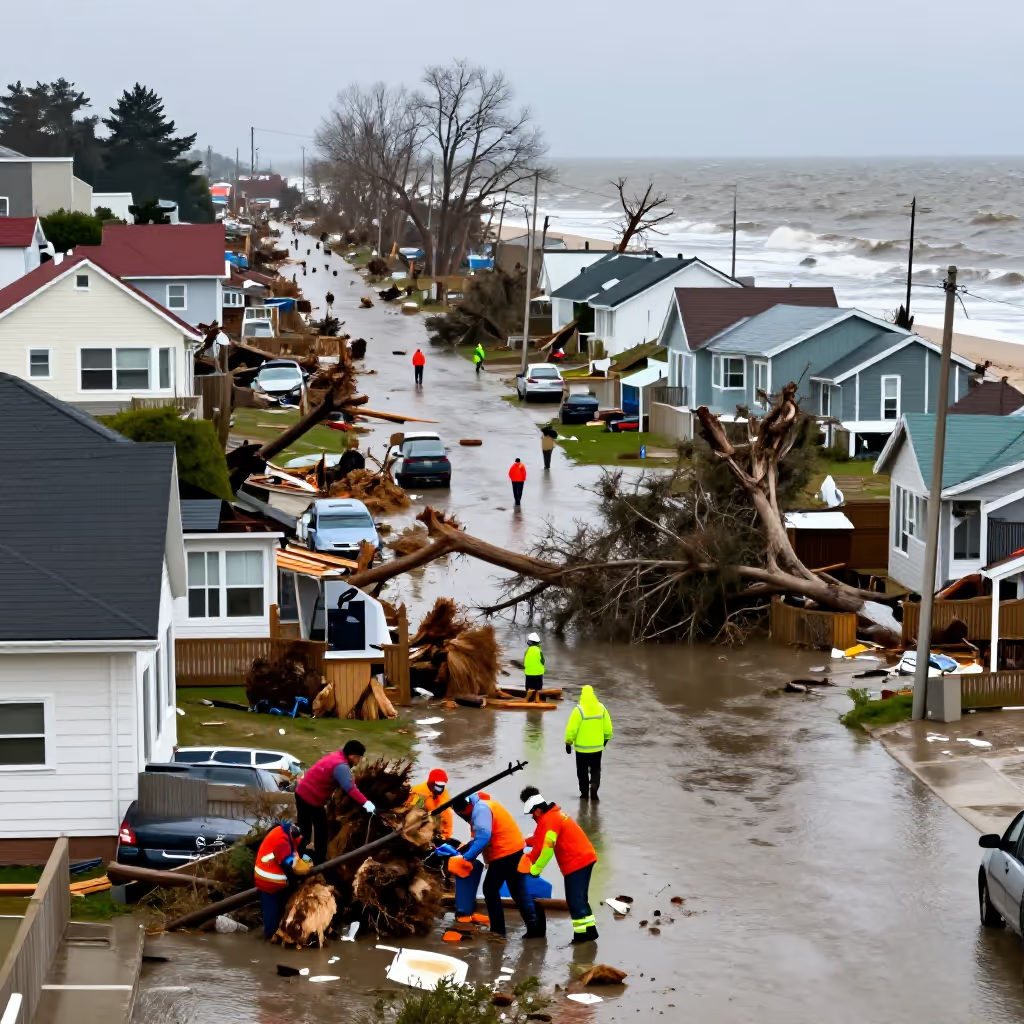
Der Sturm hatte verheerende Auswirkungen auf die Küstenregion.
The storm had devastating effects on the coastal region.
devastating
Loading your saved state.
devastating
Having a catastrophic, destructive effect; resulting in very serious consequences.
Der Sturm hatte verheerende Auswirkungen auf die Küstenregion.
The storm had devastating effects on the coastal region.

devastating
Used figuratively for something that is extremely bad, embarrassing, or disastrous.
Sein erster Auftritt vor der Presse war verheerend.
His first appearance before the press was devastating.
The adjective 'verheerend' (devastating) derives from the verb 'verheeren' (to lay waste / to destroy), which means 'verwüsten' (to devastate) or 'zerstören' (to destroy). This destructive force is present in both meanings of the adjective.
Der Krieg verheerte das ganze Land.
The war devastated the entire country.
You can recognize the meaning from the noun: with concrete events such as 'Brand' (fire), 'Sturm' (storm), or 'Unfall' (accident), literal destruction is meant. With abstract terms such as 'Kritik' (criticism), 'Eindruck' (impression), or 'Ergebnis' (result), the figurative, disastrous meaning is meant.
Das Erdbeben hatte verheerende Folgen für die Stadt.
The earthquake had devastating consequences for the city.
In the literal meaning, 'verheerend' (devastating) is often combined with the nouns 'Folgen' (consequences), 'Auswirkungen' (effects), 'Schäden' (damage), or 'Verluste' (losses).
Die Dürre hatte verheerende Auswirkungen auf die Landwirtschaft.
The drought had devastating effects on agriculture.
In the figurative meaning, 'verheerend' (devastating) is often used with words that express an evaluation, such as 'Urteil' (judgment), 'Kritik' (criticism), 'Bilanz' (balance sheet / assessment), or 'Eindruck' (impression).
Die finanzielle Bilanz des Unternehmens für das letzte Quartal war verheerend.
The company's financial results for the last quarter were devastating.
disastrous / fatal
Both words describe consequences as extremely bad. Fatal describes a disastrous outcome and, especially when referring to people, can also mean fatal. Verheerend emphasizes the destructive effect or extent without by itself saying that someone dies.

Der Behandlungsfehler hatte verheerende Folgen, doch der Patient überlebte.
The medical error had devastating consequences, but the patient survived.
Der Behandlungsfehler war fatal: Der Patient starb wenig später.
The medical error was fatal: the patient died shortly afterward.