

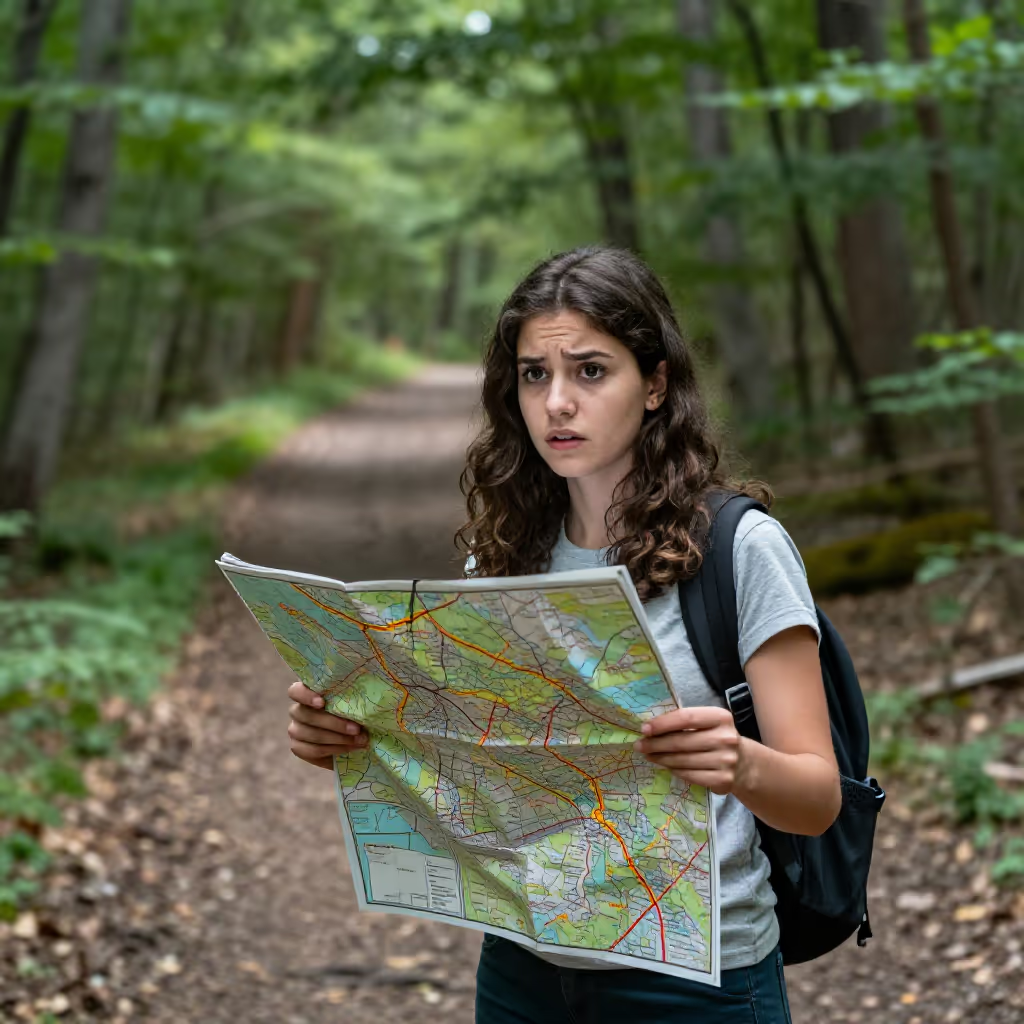
sich verirren
to get lost
To lose the way and no longer know where you are or how to get to your destination.
Wir haben uns im Wald verirrt und mussten die Nacht im Freien verbringen.
We got lost in the forest and had to spend the night outdoors.

to get lost
Loading your saved state.
to get lost
To lose the way and no longer know where you are or how to get to your destination.
Wir haben uns im Wald verirrt und mussten die Nacht im Freien verbringen.
We got lost in the forest and had to spend the night outdoors.

The verb is made up of the prefix 'ver-' and the stem 'irren' (to wander around; to be mistaken). 'Irren' means to wander around or to be mistaken. The prefix 'ver-' here indicates that the action leads to a negative result—you lose your way.
Ohne Karte kann man sich in den kleinen Gassen leicht verirren.
Without a map, you can easily get lost in the small alleyways.
This verb is always used with a reflexive pronoun: 'sich verirren' (to get lost). It is a common mistake to forget the pronoun ('mich', 'dich', 'sich', etc.).
Ich habe mich auf dem Rückweg vom Gipfel verirrt.
I got lost on the way back from the summit.
The perfect tense for the action of getting lost is formed with 'haben'. To describe the state of being lost, use 'sein' + past participle as an adjective.
Die Wanderer haben sich im Nebel verirrt.
The hikers got lost in the fog.
In its literal meaning, 'sich verirren' (to get lost) is often combined with places where it is easy to lose your orientation, for example 'im Wald' (in the forest), 'in den Bergen' (in the mountains), or 'in einer fremden Stadt' (in an unfamiliar city).
Als Kind habe ich mich einmal in einem großen Kaufhaus verirrt.
As a child, I once got lost in a large department store.
to get into / turn out
'geraten' and 'sich verirren' can both express that someone ends up in a place or situation unintentionally. 'sich verirren' is used especially when someone loses their way and no longer knows where they are or how to continue. 'geraten' is broader: you can 'in eine schwierige Lage geraten' (get into a difficult situation), 'in Gefahr geraten' (get into danger), or end up in an unexpected place, without it necessarily being about the route. Learners confuse the words because both often describe something unintentional. In practical terms: if the problem is taking the wrong way, 'sich verirren' fits. If it is about an unpleasant situation, 'geraten' usually fits.

Im alten Stadtteil haben wir uns trotz Karte verirrt.
We got lost in the old part of town despite having a map.
Beim Wandern gerieten wir plötzlich in ein starkes Gewitter.
While hiking, we suddenly got caught in a heavy thunderstorm.