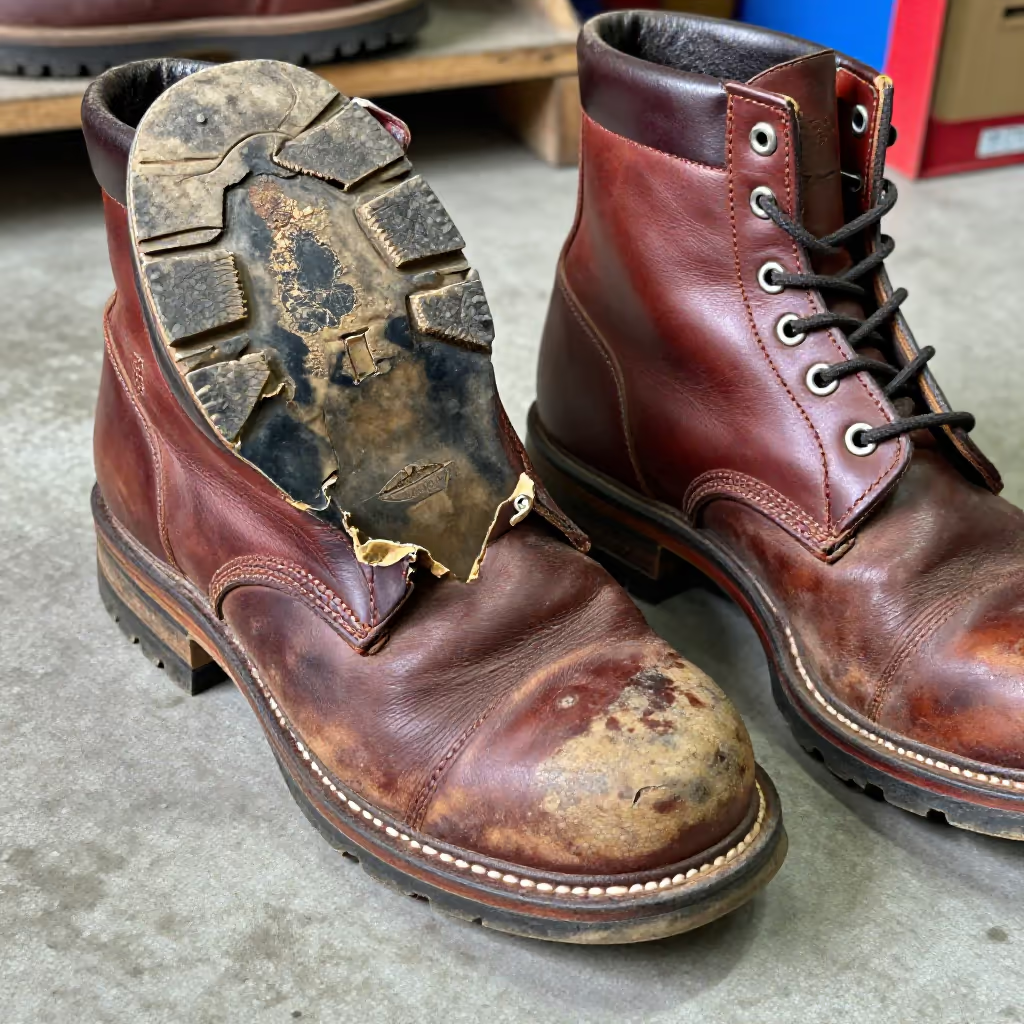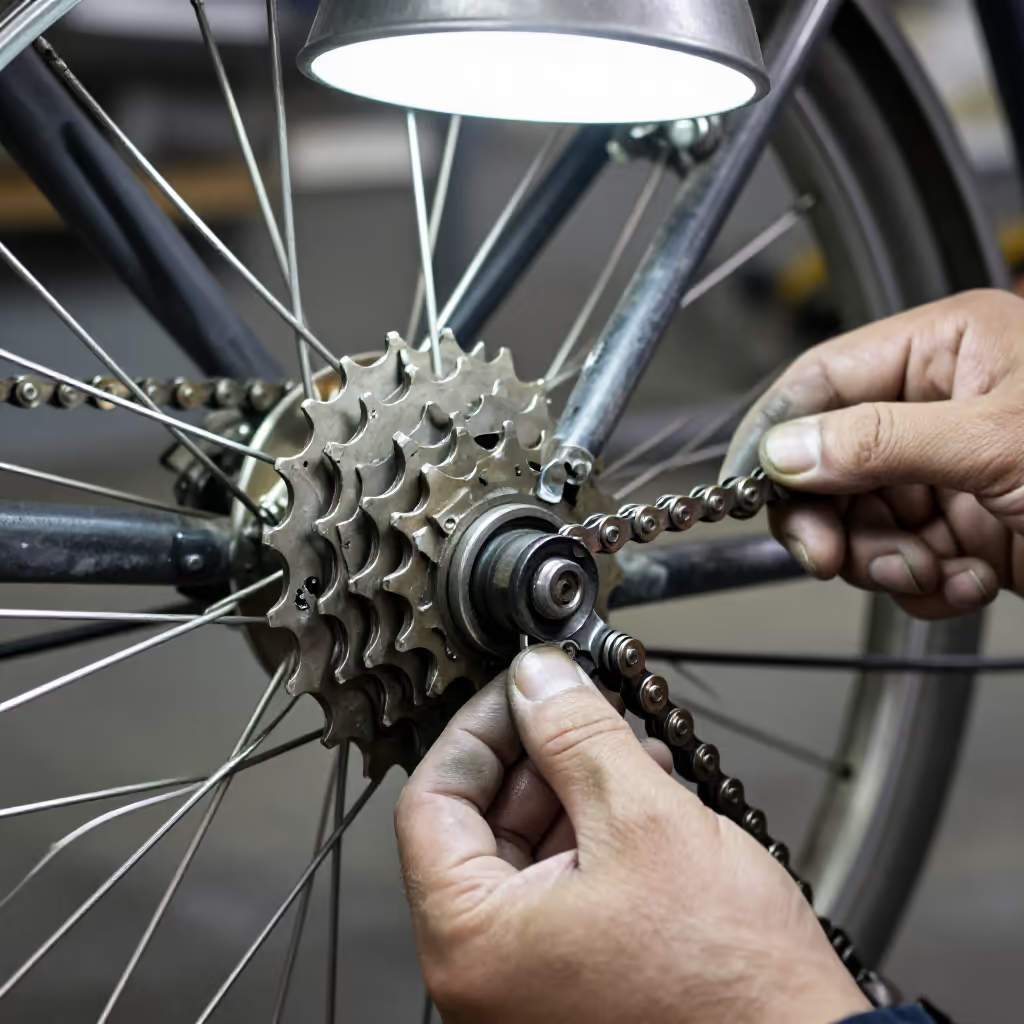
The gradual wearing down or loss of material from objects through regular use, friction, or aging.
example
Die Bremsbeläge am Auto zeigen nach 50.000 Kilometern deutlichen Verschleiß.
The brake pads on the car show clear wear after 50,000 kilometers.

Usage tips
Word family
The noun 'der Verschleiß' (wear) is derived directly from the verb 'verschleißen', which means 'to wear out'. If you know the verb, you immediately understand the noun as the result of this process.
EXAMPLE
Diese Schuhe sind aus einem Material, das nur langsam verschleißt.
These shoes are made of a material that wears out only slowly.
Register and style
'Verschleiß' (wear) is a rather technical and neutral term. It describes the gradual process of wearing down and is often used in technical, mechanical, or medical contexts.
EXAMPLE
Der Techniker prüfte den Motor auf Anzeichen von Verschleiß.
The technician checked the engine for signs of wear.
Typical collocations
Common adjectives are 'hoher' (high), 'geringer' (low), or 'natürlicher' (natural) Verschleiß. An important compound is 'das Verschleißteil' (wear part), meaning a component that is intended to wear down regularly and be replaced.
EXAMPLE
Bei der Inspektion wurde ein hoher Verschleiß an den Reifen festgestellt.
During the inspection, high wear on the tires was found.
Context clue
This meaning is limited to the medical field. You can recognize it from words like 'Gelenk' (joint), 'Knie' (knee), 'Hüfte' (hip), 'Arzt' (doctor), or 'Diagnose' (diagnosis) in the same sentence or context.
EXAMPLE
Die Diagnose lautete Verschleiß der Halswirbelsäule.
The diagnosis was wear and tear of the cervical spine.
Compare with
confusable
Verschleiß vs Verbrauch
consumption
'der Verbrauch' and 'der Verschleiß' can be confused because both have to do with use. But the difference is important: 'der Verbrauch' means the amount of a resource that is used or used up, for example gasoline, water, or electricity. 'der Verschleiß' means the wear on an object caused by long-term use, for example on tires, machines, or shoes. With 'Verbrauch', there is often less of something afterward. With 'Verschleiß', an object becomes worse or breaks.
Verschleiß
Nach vielen Kilometern sieht man den Verschleiß an den Reifen.
After many kilometers, you can see the wear on the tires.
Verbrauch
Bei langen Fahrten steigt der Verbrauch von Benzin deutlich.
On long journeys, gasoline consumption rises significantly.