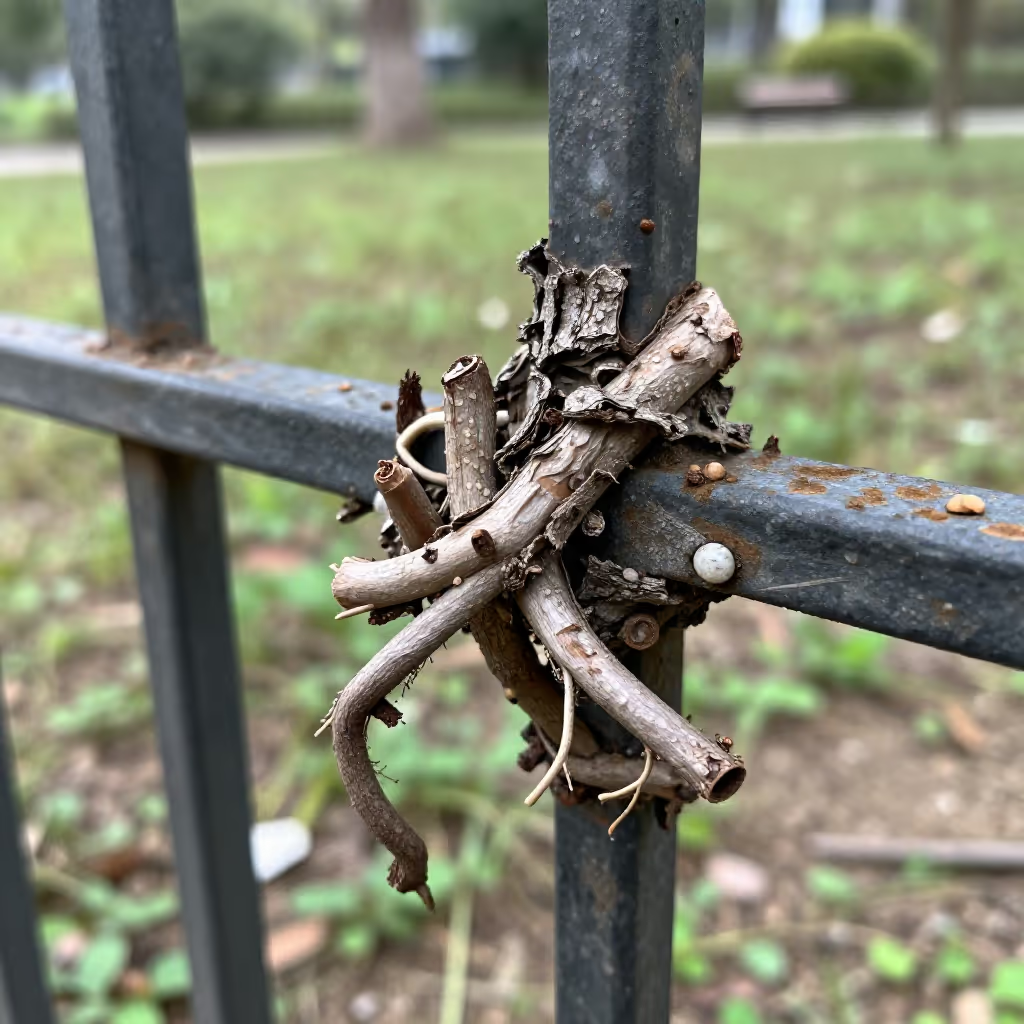
To become firmly joined together through growth. This can refer to plants, bones after a fracture, or other organic structures.
example
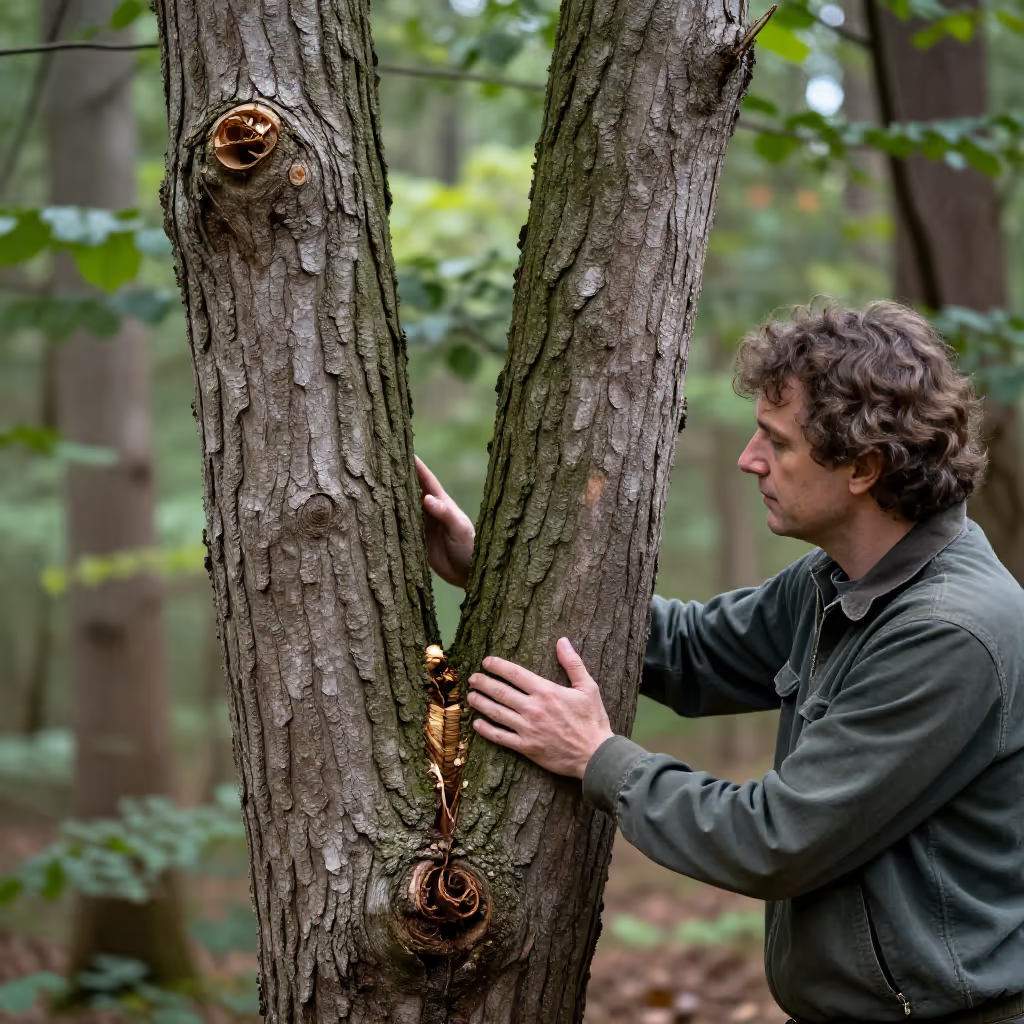
Die beiden Bäume sind über die Jahre fest miteinander verwachsen.
The two trees have grown firmly together over the years.
Usage tips
Word structure
'Verwachsen' is an inseparable verb made up of the prefix 'ver-' and the verb 'wachsen' (to grow). The prefix 'ver-' can mean here that something grows incorrectly (becomes deformed) or that a process is fully completed (grown over).
EXAMPLE
Der Garten war nach dem Urlaub völlig mit Unkraut verwachsen.
After the vacation, the garden was completely overgrown with weeds.
Perfect tense with 'sein'
Because 'verwachsen' describes a change of state, the perfect tense is always formed with the auxiliary verb 'sein' (to be), not with 'haben' (to have).
EXAMPLE
Die Wurzeln der beiden Pflanzen sind fest miteinander verwachsen.
The roots of the two plants have grown firmly together.
Typical collocations
When a place is 'verwachsen' (overgrown), it is often combined with the plants that cover it. Typical formulations are 'mit Efeu verwachsen' (overgrown with ivy), 'mit Gras verwachsen' (overgrown with grass), or 'mit Unkraut verwachsen' (overgrown with weeds).
EXAMPLE
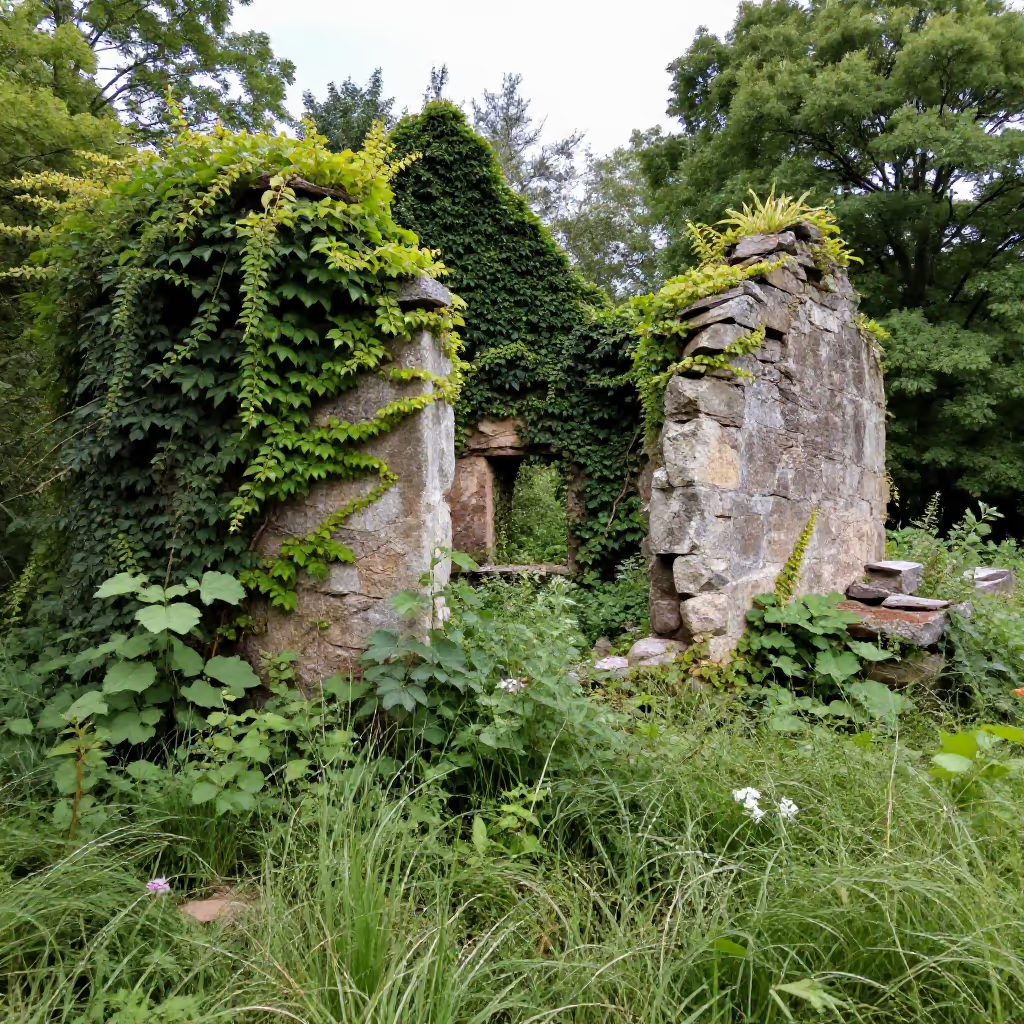
Die alte Schlossruine ist fast vollständig mit Efeu verwachsen.
The old castle ruin is almost completely overgrown with ivy.
Sentence structure and register
The colloquial meaning 'herauswachsen' (to outgrow) is always used reflexively: 'etwas verwächst sich' (something will be outgrown). The thing that disappears is the subject of the sentence.
EXAMPLE
Die Schüchternheit bei Kindern verwächst sich meistens mit der Zeit.
Shyness in children usually goes away with time.
Use as an adjective
The past participle 'verwachsen' is very often used as an adjective to describe that something has an irregular or deformed shape. It then stands directly before a noun.
EXAMPLE
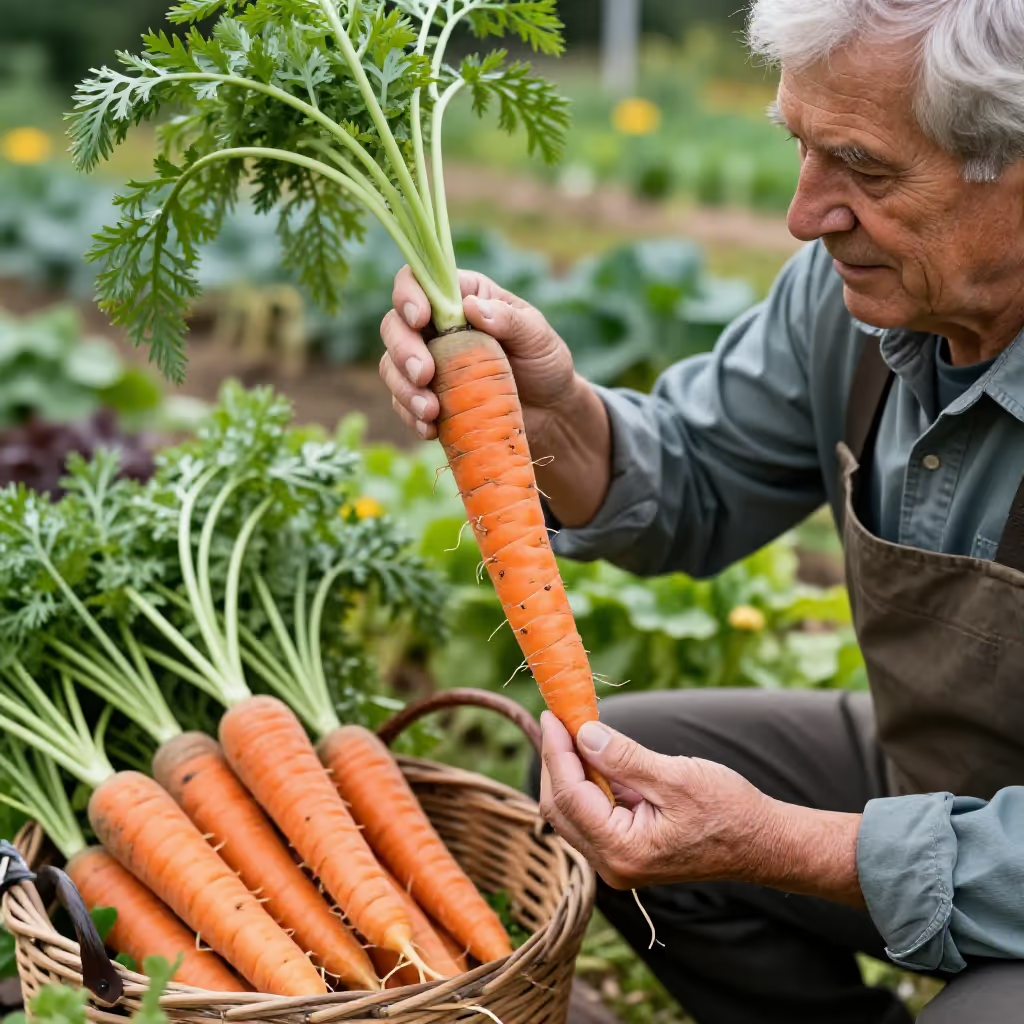
Im Garten haben wir eine seltsam verwachsene Karotte gefunden.
In the garden, we found a strangely deformed carrot.
Compare with
near_synonym · confusable
verwachsen vs verschmelzen
to fuse / merge
'verschmelzen' and 'verwachsen' can both mean that two things become firmly joined together. The difference lies in how that happens. 'verschmelzen' fits when substances become soft or liquid through heat and form one mass, or when things merge into a new unit in a figurative sense. 'verwachsen' is used more for living or organic things that come together through growth, for example plants or bones. The words can be confused because in the end something is firmly joined together. A simple guide is: heat, material, or a new unit: 'verschmelzen'. Growth and nature: 'verwachsen'.
verwachsen
Nach dem Bruch sind die Knochen langsam wieder richtig verwachsen.
After the fracture, the bones slowly grew back together properly.
verschmelzen
Beim Schweißen verschmelzen die Metallteile zu einer festen Verbindung.
During welding, the metal parts fuse into a solid joint.