
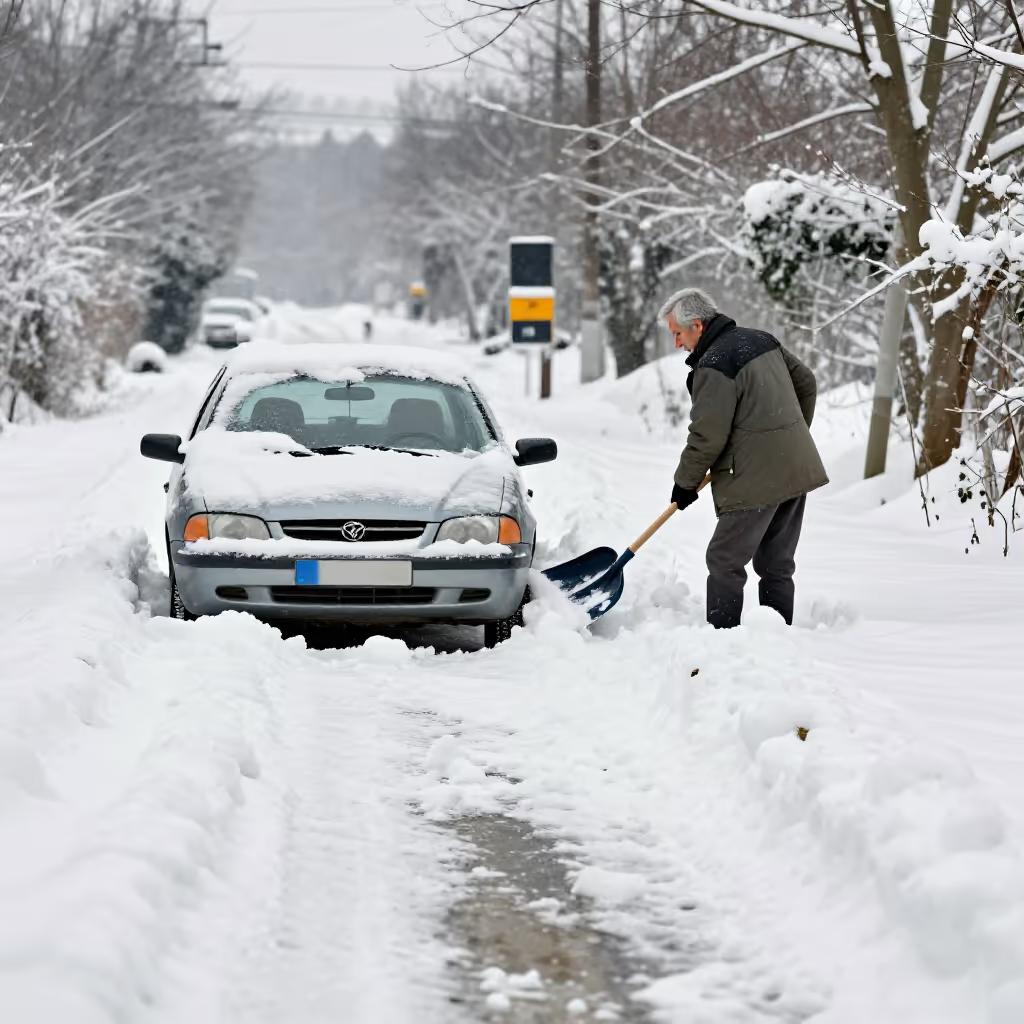
To be carried away or scattered by the wind. Often refers to light materials such as sand, snow, or leaves.
example
Die Spuren im Schnee waren über Nacht vollständig verweht.
The tracks in the snow had been completely blown away overnight.
Usage tips
Inseparable verb
'Verwehen' (to be blown away / to drift over) is an inseparable verb. The prefix 'ver-' remains firmly attached to the verb 'wehen' (to blow) in all sentence forms. Here it often suggests that something disappears or changes in a negative way.
EXAMPLE
Ich hoffe, der Wind verweht die dunklen Wolken bald.
I hope the wind blows the dark clouds away soon.
Perfect tense with 'sein'
The perfect tense of 'verwehen' (to be blown away / to drift over) is formed with the auxiliary verb 'sein' (to be), because it describes a change of state or location. The subject is moved or changed by the wind.
EXAMPLE
Der feine Sand ist vom Strand bis auf die Promenade verweht.
The fine sand has been blown from the beach onto the promenade.
Context clue
When 'verwehen' (to be blown away / to drift over) is used without an object, it means that something is carried away by the wind. When it has an object or is used in the passive, it means that something is covered by sand or snow.
EXAMPLE
Die leichten Papiere verwehten im Sturm.
The light papers were blown away in the storm.
Typical subjects
In the meaning 'davongetragen werden' (to be carried away), the subjects are typically light things that the wind can move, for example tracks, leaves, sand, dust, or snow.
EXAMPLE
Der Duft der Blumen verwehte im leichten Wind.
The scent of the flowers drifted away in the light wind.
Compare with
confusable
verwehen vs wehen
to blow / flutter / waft
'wehen' and 'verwehen' both have to do with wind. 'wehen' describes the wind itself or something moving in the wind, such as a flag. 'verwehen', on the other hand, means that the wind carries something away, scatters it, or covers it with snow, sand, or leaves. Learners may confuse the words because they look similar and both express wind. If only movement caused by wind is meant, 'wehen' fits. If something disappears, is spread around, or is covered up by wind, 'verwehen' fits.
verwehen
Nach dem Sturm sind die Spuren im Sand fast ganz verweht.
After the storm, the tracks in the sand have been almost completely blown away.