

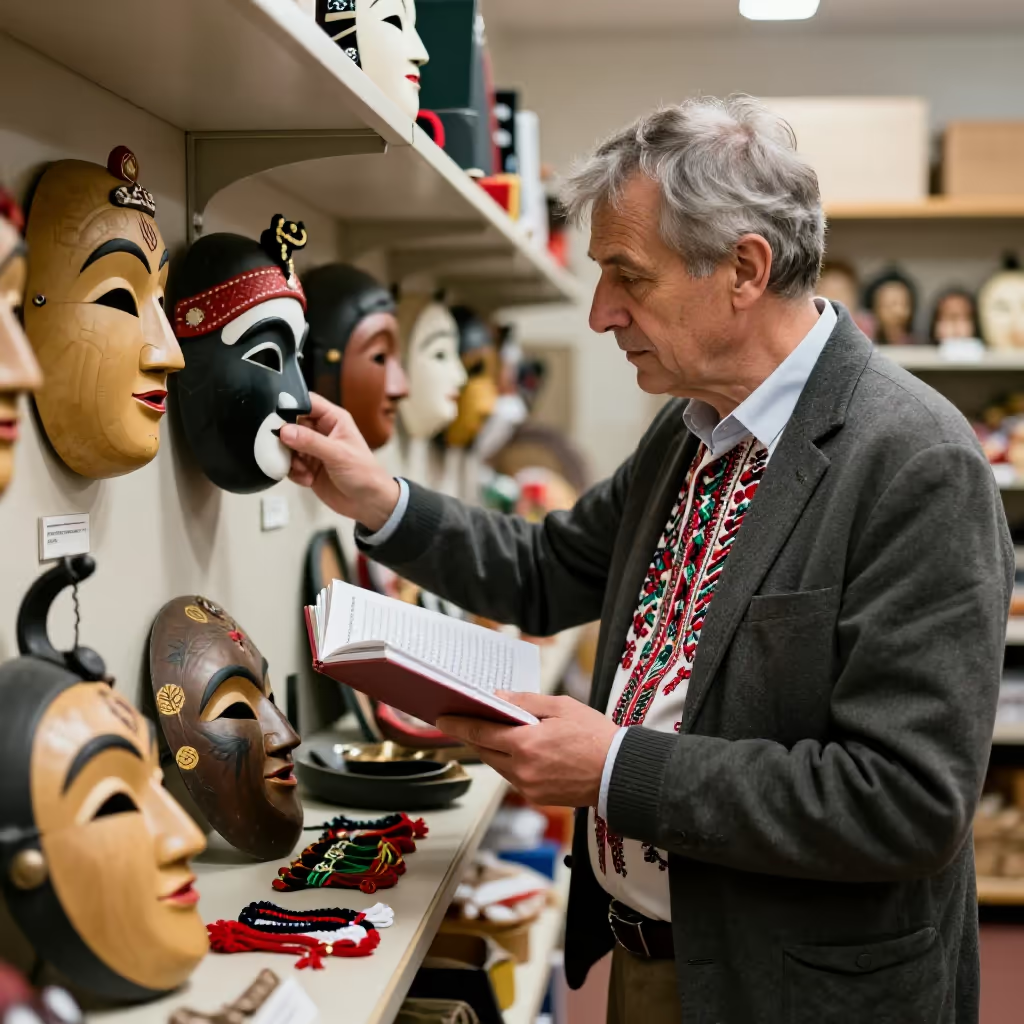
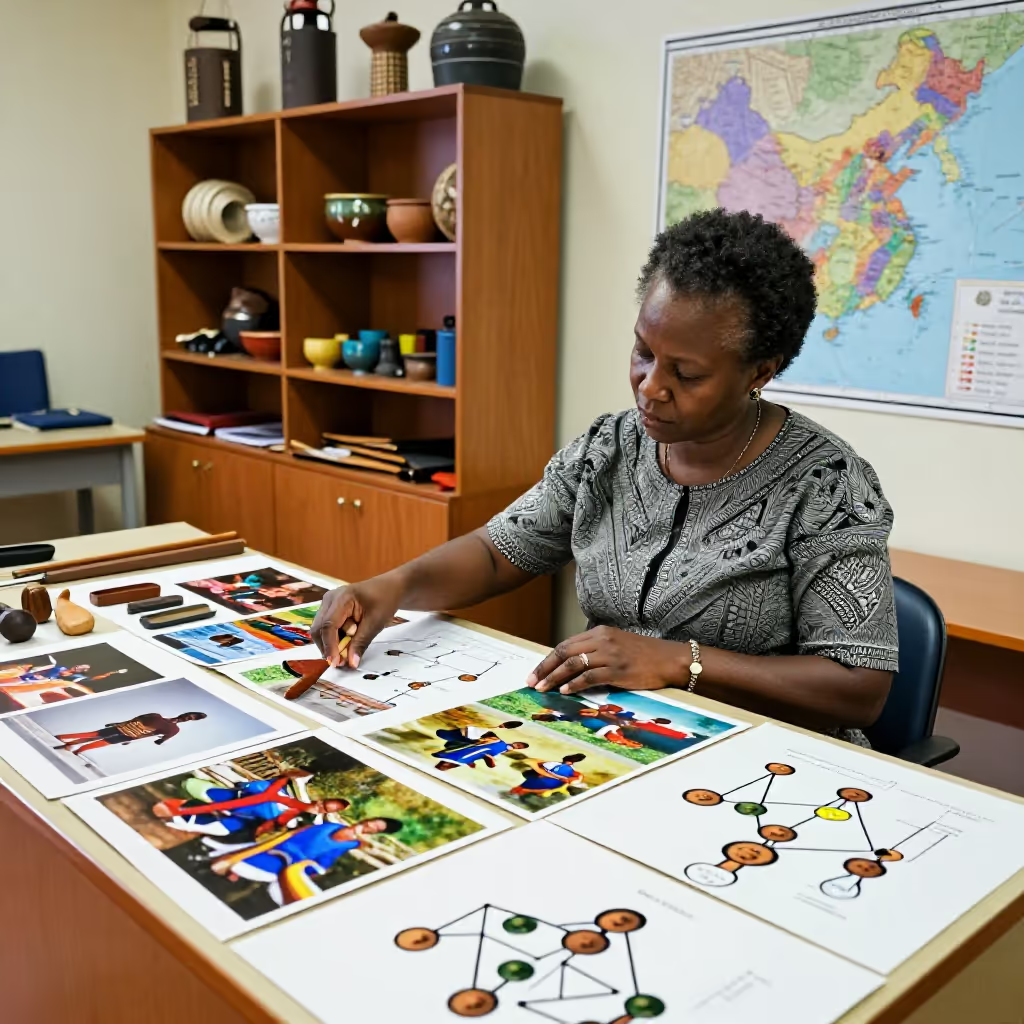
An academic discipline concerned with researching the culture of a people, especially traditions, customs, everyday life, and festivals. Today it is often also referred to as European ethnology.
example
Im Studium der Volkskunde analysierte sie alte Märchen und Sagen.
In her folklore studies program, she analyzed old fairy tales and legends.
Usage tips
Word composition
The word is made up of 'Volk' (people) and 'Kunde' (knowledge/studies). Here, 'Kunde' means 'science' or 'field of study', as also in 'Erdkunde' (geography). Volkskunde is therefore literally the 'study of the people'.
EXAMPLE
Die Erdkunde beschreibt die Erde, die Volkskunde beschreibt die Kultur des Volkes.
Geography describes the earth; folklore studies describes the culture of the people.
Academic context
'Volkskunde' (folklore studies) is the traditional name for an academic discipline. The word is therefore used almost exclusively in the context of universities, research, and museums.
EXAMPLE
Sie hat an der Universität Wien Volkskunde studiert.
She studied folklore studies at the University of Vienna.
Typical collocations
Since it is a field of study, 'Volkskunde' (folklore studies) is often combined with verbs such as 'studieren' (to study), 'lehren' (to teach), 'erforschen' (to research), or 'sich befassen mit' (to deal with/be concerned with).
EXAMPLE
Der Professor befasst sich seit Jahren mit der regionalen Volkskunde.
The professor has been working on regional folklore studies for years.
Compare with
confusable
Volkskunde vs Folklore
folklore
'die Folklore' and 'die Volkskunde' both have to do with traditions, customs, and the life of a community. 'Folklore' refers to the traditional content itself, for example songs, dances, legends, or handicrafts. Sometimes the word is also used critically when something seems very artificial or touristy. 'Volkskunde', on the other hand, is the academic field that studies such topics. Learners may confuse the words because both often appear in contexts involving culture and tradition. Put simply: folklore is what is lived or shown; folklore studies is the research about it.
Volkskunde
Frau Krüger arbeitet in der Volkskunde und erforscht Bräuche in kleinen Dörfern.
Ms. Krüger works in folklore studies and researches customs in small villages.
Folklore
Auf dem Fest wurden alte Lieder und Tänze aus der regionalen Folklore gezeigt.
At the festival, old songs and dances from the regional folklore were performed.