

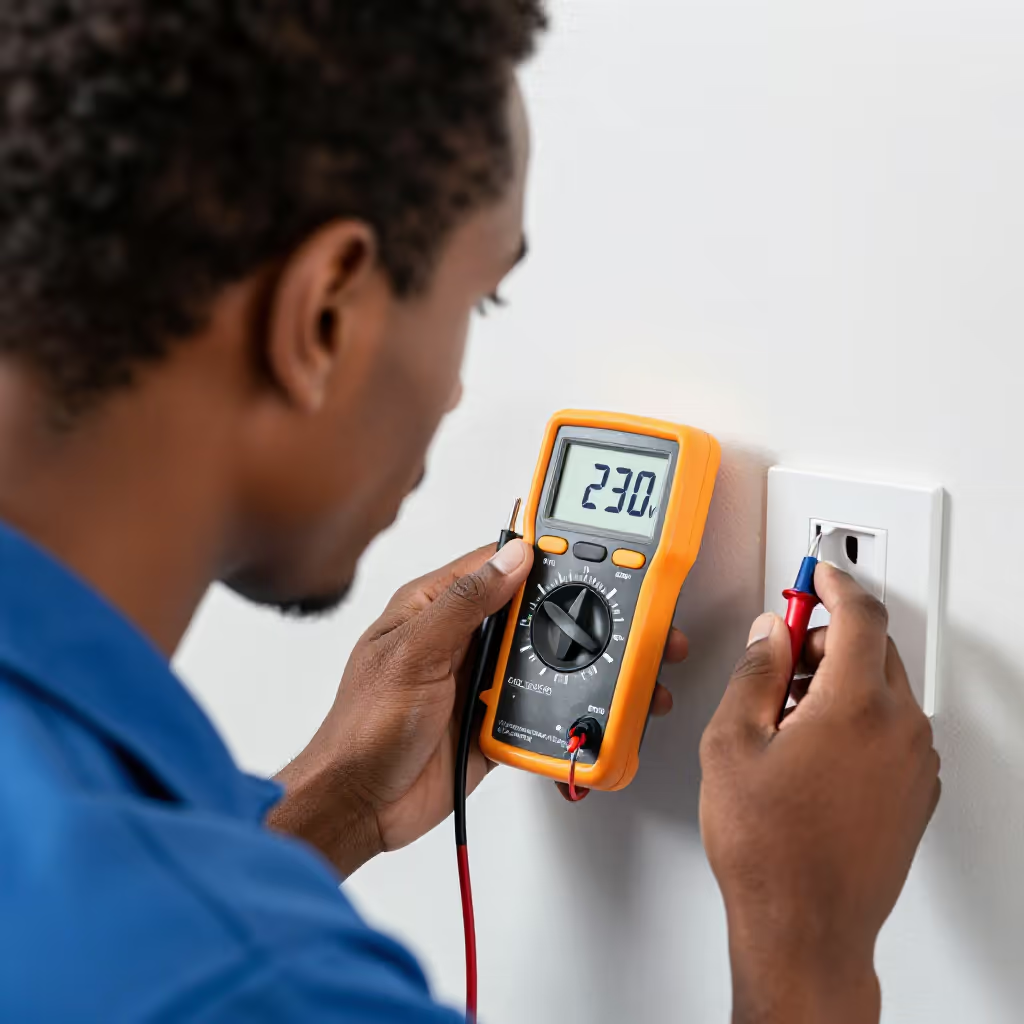
The physical unit of measurement for electrical voltage, which indicates the potential for the flow of electric current.
example
Eine Standard-Haushaltssteckdose in Europa liefert eine Spannung von 230 Volt.
A standard household outlet in Europe provides a voltage of 230 volts.
Usage tips
Use as a unit of measurement
When 'Volt' (volt) is used with a number greater than one, the word usually remains in the singular and is not declined. You say '230 Volt' (230 volts), not '230 Volte'.
EXAMPLE
Diese Batterie hat nur 1,5 Volt.
This battery has only 1.5 volts.
Typical collocations
'Volt' (volt) is the unit of measurement for 'die elektrische Spannung' (electrical voltage). A typical formulation is therefore 'eine Spannung von X Volt' (a voltage of X volts).
EXAMPLE
Das Netzteil liefert eine Spannung von 12 Volt.
The power supply provides a voltage of 12 volts.
Register and style
'Volt' (volt) is a technical term from physics and electrical engineering. In everyday life, it is used when talking about batteries, outlets, or electrical devices.
EXAMPLE
Prüfe bitte, wie viel Volt das Gerät benötigt.
Please check how many volts the device requires.
Compare with
confusable
Volt vs Spannung
tension / suspense / voltage
'die Spannung' and 'das Volt' both belong to the topic of electricity, but they have different roles. 'Spannung' is the physical quantity, that is, what is being measured. 'Volt' is the unit in which this voltage is given. So you do not say that a device has 'ein Volt' as a thing; rather, it has a voltage of, for example, 230 volts. The words can be confusing because they often appear together in technical specifications. Memory aid: 'Spannung' is the quantity, 'Volt' is the unit of measurement.
Volt
Die Steckdose in Deutschland hat normalerweise 230 Volt.
The wall outlet in Germany normally has 230 volts.