

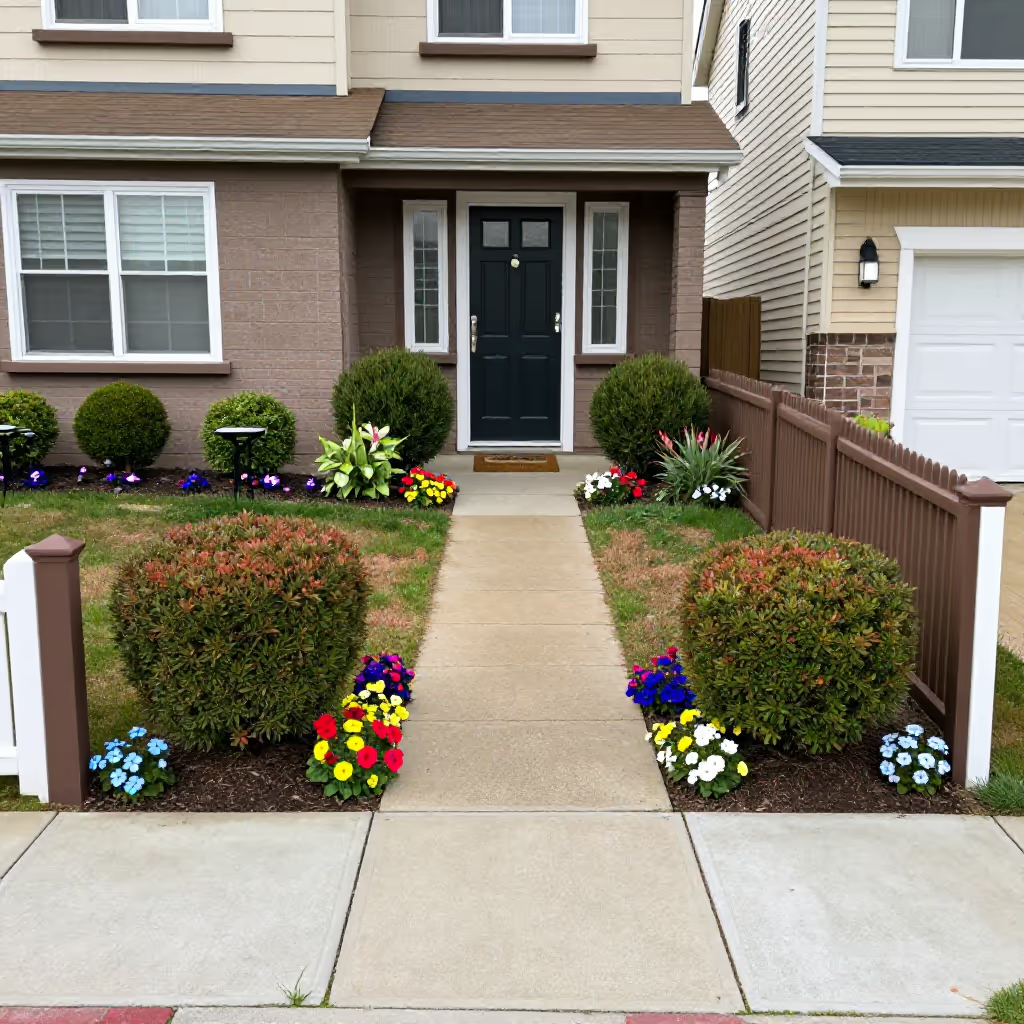
der Vorgarten
front garden
A small garden or planted area located between the front of a house and the street.
EXAMPLE
Im Vorgarten blühen bunte Tulpen und Narzissen.
Colorful tulips and daffodils are blooming in the front garden.
front garden
Loading your saved state.
front garden
A small garden or planted area located between the front of a house and the street.
Im Vorgarten blühen bunte Tulpen und Narzissen.
Colorful tulips and daffodils are blooming in the front garden.
The word 'Vorgarten' is made up of 'vor' (in front of) and 'Garten' (garden). So it literally describes a garden that is located in front of the house.
Unser Vorgarten ist klein, aber wir haben viele Blumen gepflanzt.
Our front garden is small, but we have planted lots of flowers.
In connection with a front garden, the verbs 'anlegen' (to lay out/create), 'pflegen' (to maintain/take care of), and 'bepflanzen' (to plant) are often used.
Im Frühling wollen wir unseren Vorgarten neu anlegen.
In spring, we want to redesign our front garden.
To describe a position or activity in the front garden, you use the preposition 'in' with the dative: im Vorgarten (in the front garden).
Die Kinder spielen im Vorgarten.
The children are playing in the front garden.